
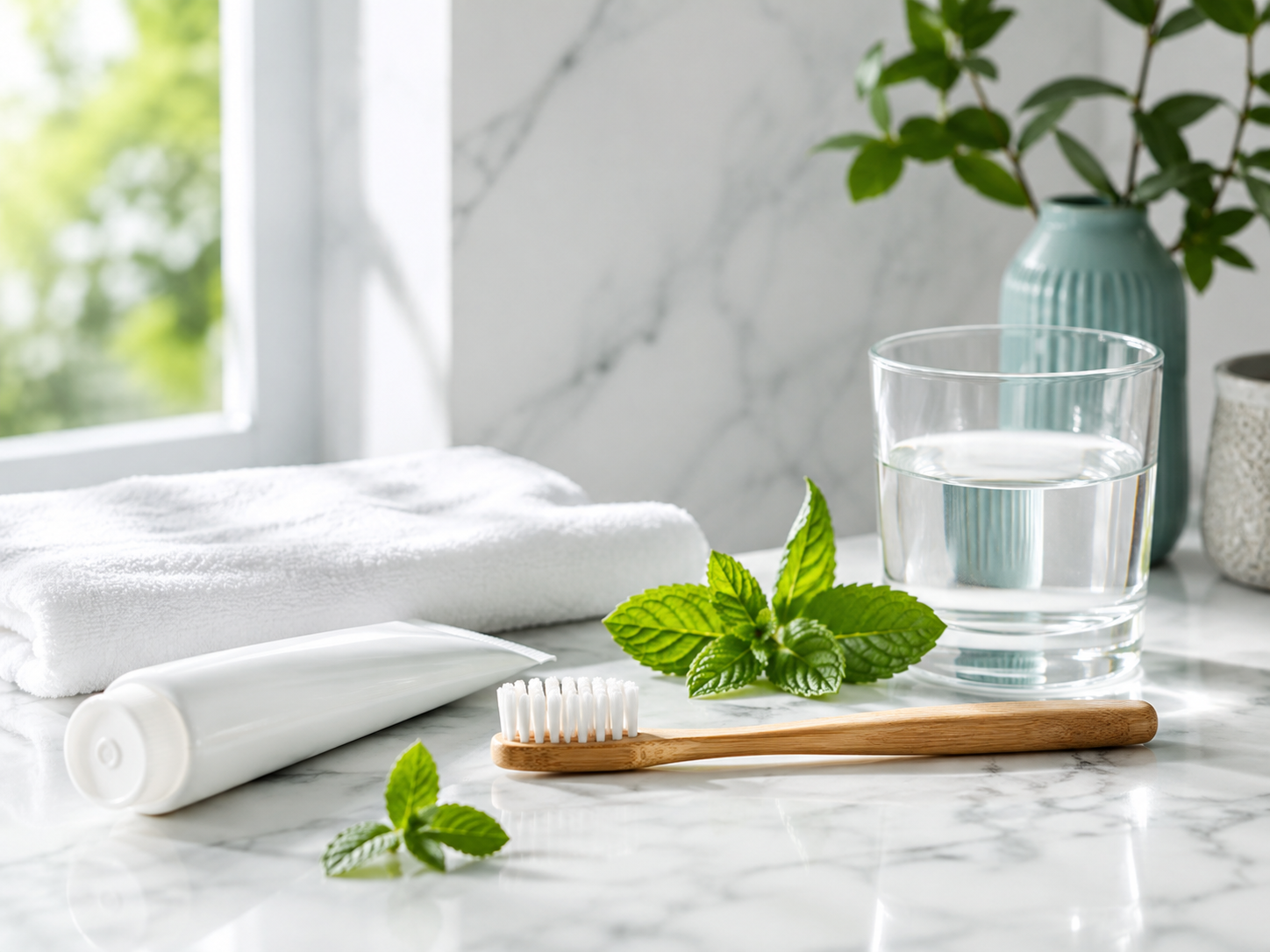
A good daily oral care routine does not need to be complicated.
In fact, the habits that matter most are usually the simplest ones: brushing consistently, cleaning between your teeth, paying attention to your tongue, staying hydrated, and getting appropriate professional dental care.
The challenge is often not knowing what to do. It is building a routine that is practical enough to follow every day.
This guide walks through a simple morning-to-night approach to oral wellness, explains why each step matters, and highlights common mistakes that can make a routine less effective.
Why a Consistent Oral Care Routine Matters
Your mouth is exposed to food, drinks, bacteria, acids, and other environmental changes throughout the day.
Plaque can accumulate on tooth surfaces, food particles can remain between teeth, and bacteria on the tongue may contribute to unpleasant breath.
Consistent oral hygiene helps manage these everyday challenges.
A practical routine can support:
- Cleaner teeth
- Healthier gums
- Fresher breath
- Better plaque control
- A more balanced oral environment
- Early awareness of changes in your mouth
Oral care is not about making your mouth completely bacteria-free.
Your mouth naturally contains a diverse community of microorganisms known as the oral microbiome.
The goal is to manage plaque and maintain healthy conditions in the mouth rather than trying to eliminate every microorganism.
For a deeper explanation, see our guide to the oral microbiome and everyday dental wellness.
Morning: Start With the Basics
Your morning routine sets the foundation for the rest of the day.
It does not need to involve many products.
1. Brush Your Teeth Thoroughly
A common recommendation is to brush twice daily for about two minutes using fluoride toothpaste.
Try to clean all accessible tooth surfaces, including:
- Outer surfaces
- Inner surfaces
- Chewing surfaces
- Areas close to the gumline
Use gentle pressure.
Brushing aggressively does not necessarily clean teeth better and may irritate the gums or contribute to tooth wear over time.
A soft-bristled toothbrush is appropriate for many people.
Electric and manual toothbrushes can both work well when used properly.
The most important factor is consistent and effective technique.
Should You Brush Before or After Breakfast?
People often wonder whether they should brush before or after eating breakfast.
There is not one routine that works perfectly for everyone.
Brushing before breakfast can remove plaque that accumulated overnight and provide fluoride exposure before eating.
If you prefer brushing after breakfast, it may be sensible to avoid brushing immediately after consuming highly acidic foods or drinks.
Acidic foods and beverages can temporarily affect the tooth surface.
Rinsing with water and allowing some time before brushing may be a gentler approach.
The most important point is consistency.
Choose a routine you can realistically maintain.
2. Clean Your Tongue
The tongue contains many small grooves and surfaces where microorganisms and debris can accumulate.
For some people, gentle tongue cleaning may help support fresher breath and a cleaner-feeling mouth.
You can use:
- Your toothbrush
- A dedicated tongue scraper
- A tongue-cleaning tool
There is no need to scrub aggressively.
A few gentle passes are usually sufficient.
If your tongue is painful, persistently coated, discolored, or develops unusual changes that do not resolve, consider discussing it with a dental or healthcare professional.
3. Drink Water
Hydration is easy to overlook when thinking about dental wellness.
Saliva helps lubricate oral tissues, wash away food particles, and buffer acids in the mouth.
Drinking water regularly can support normal hydration and may help reduce the dry feeling that occurs when saliva production is low.
Water is also generally preferable to sugary beverages for routine hydration because it does not repeatedly expose teeth to added sugar.
During the Day: Protect Your Oral Environment
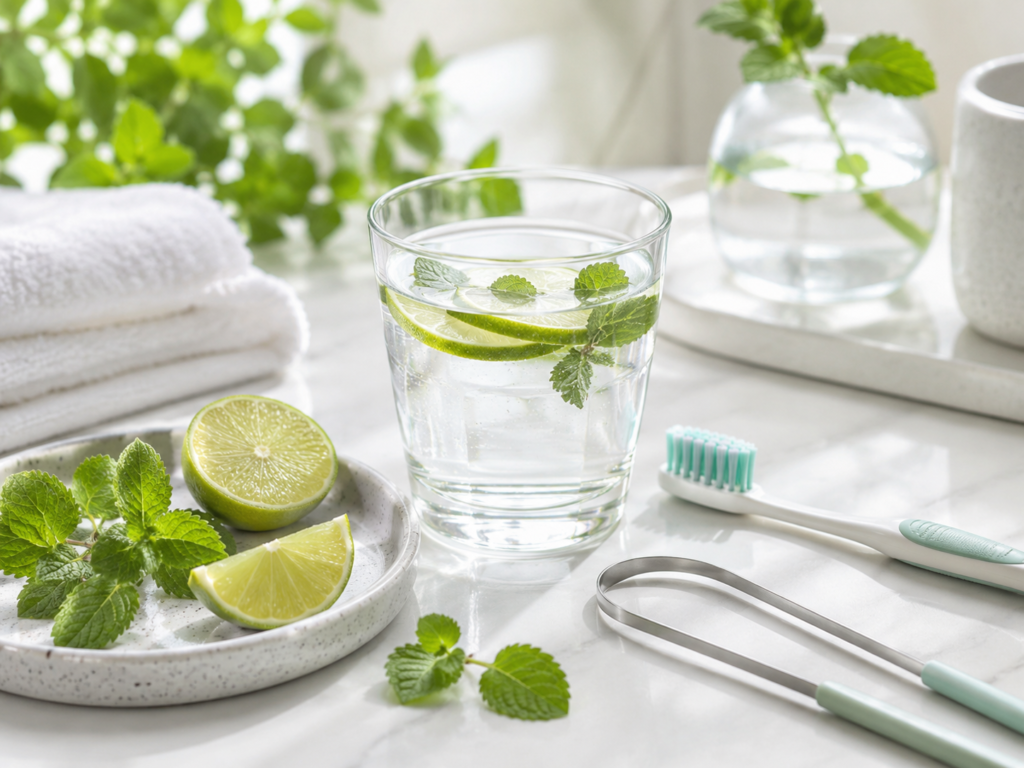
Oral wellness does not depend only on what happens during brushing.
Your habits between brushing sessions can also influence the environment inside your mouth.
Be Mindful of Frequent Sugar Exposure
How often your teeth are exposed to sugary foods and drinks can matter.
For example, sipping a sweetened drink slowly over several hours repeatedly exposes the mouth to sugar.
Rather than focusing only on eliminating individual foods, consider the overall pattern of eating and drinking.
Practical habits may include:
- Drinking water between meals
- Avoiding constant sugary snacking
- Limiting prolonged sipping of sweetened beverages
- Keeping highly sugary foods as occasional rather than continuous exposures
A balanced approach is usually more realistic than trying to follow an unnecessarily restrictive diet.
What About Coffee and Tea?
Coffee and tea are part of many people’s daily routines.
They may contribute to staining, and sweetened versions can expose teeth to additional sugar.
You do not necessarily need to avoid them completely.
Practical steps may include drinking water afterward and avoiding repeatedly sipping sweetened versions over long periods.
If staining is a concern, discuss appropriate cleaning or whitening options with a dental professional rather than relying on abrasive home remedies.
Chewing and Saliva
Chewing food naturally stimulates saliva production.
Saliva plays several useful roles in the mouth, including helping to clear food debris.
Sugar-free chewing gum may also stimulate saliva for some people.
However, gum is not a substitute for brushing or interdental cleaning.
Think of it as an optional addition rather than a replacement for your routine.
Evening: The Most Important Cleanup of the Day
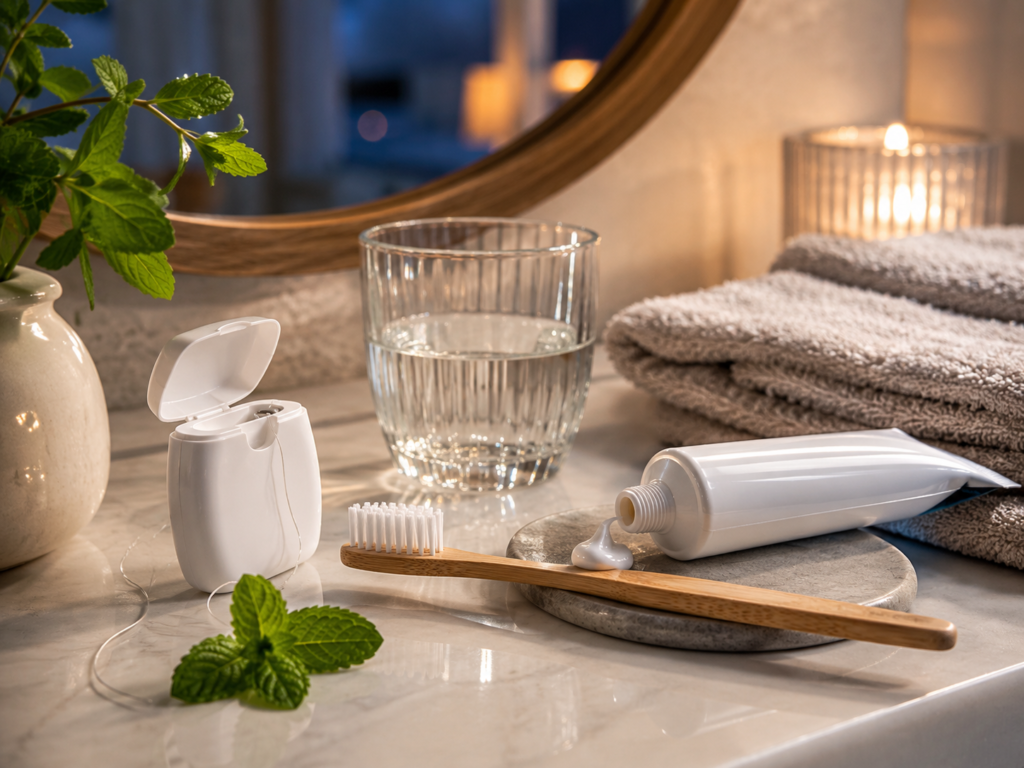
Your evening routine gives you an opportunity to remove plaque and food debris before going to sleep.
This is especially useful because saliva production generally decreases during sleep.
1. Clean Between Your Teeth
A toothbrush cannot easily reach every surface between teeth.
That is why interdental cleaning is important.
Options may include:
- Dental floss
- Interdental brushes
- Water flossers
- Other dentist-recommended interdental tools
The best method is often the one you can use correctly and consistently.
Some people prefer floss, while others find interdental brushes or water flossers easier.
If you are unsure which method fits your teeth and gums, ask your dentist or dental hygienist.
Should You Floss Before or After Brushing?
Both routines can be effective when performed consistently.
Some people prefer cleaning between their teeth first so that brushing afterward can remove loosened debris.
Others prefer brushing first.
Rather than becoming overly focused on the sequence, prioritize doing both thoroughly.
Consistency matters more than creating a complicated routine you will eventually stop following.
2. Brush Again Before Bed
Brush your teeth again with fluoride toothpaste before sleeping.
Try to avoid rushing.
Use gentle movements and make sure you reach areas that are commonly missed, such as:
- Back teeth
- Inner surfaces
- Gumline
- Areas around dental work
After brushing, follow the instructions provided with your toothpaste.
Avoid treating brushing as something that has to be finished as quickly as possible.
Two focused minutes can make a meaningful difference to how thoroughly you clean.
3. Consider Tongue Cleaning
If tongue cleaning is part of your routine, the evening is another convenient time to do it.
This may be particularly useful for people who notice tongue coating or morning breath.
Again, gentle cleaning is sufficient.
More aggressive cleaning is not necessarily better.
Where Do Oral Probiotics Fit Into a Daily Routine?
Some people are exploring oral probiotics as an optional addition to their oral wellness routine.
Unlike standard digestive probiotics, oral probiotic products are often designed as lozenges or dissolvable tablets that spend time in contact with the mouth.
They may be used at different times depending on the manufacturer’s instructions.
For example, some products may recommend use after brushing or before bedtime.
Because formulations vary, there is no universal schedule for every oral probiotic product.
If you choose to use one, follow the specific directions provided with the product.
Most importantly, oral probiotics should complement rather than replace brushing, interdental cleaning, and professional dental care.
For more information, read our guide to oral probiotics and how they may support oral wellness.
Do You Need Mouthwash Every Day?
Not everyone needs the same mouthwash.
Different products are formulated for different purposes.
Some are designed primarily for breath freshness, while others may contain fluoride or antimicrobial ingredients.
A mouthwash should not be viewed as a shortcut that replaces brushing and interdental cleaning.
If your dentist recommends a particular rinse for a specific reason, follow that guidance.
People using oral probiotics may also want to check the instructions for both products, because strongly antimicrobial rinses and probiotic products may not always be intended for immediate back-to-back use.
Common Oral Care Mistakes
Even people with good intentions can develop habits that make their routine less effective.
Brushing Too Hard
More pressure does not automatically mean better cleaning.
Aggressive brushing may irritate gums and contribute to wear over time.
Use controlled, gentle movements instead.
Skipping Interdental Cleaning
Brushing alone does not reach all surfaces between teeth.
Cleaning between the teeth should be part of a complete routine.
Rushing
A quick brush may repeatedly miss the same areas.
Give yourself enough time to clean systematically.
Ignoring Bleeding Gums
Occasional irritation can happen, but persistent or frequent gum bleeding deserves attention.
Do not assume bleeding is simply normal.
A dental professional can evaluate the cause.
Using Supplements Instead of Basic Care
Supplements, probiotics, mouthwashes, and specialty products may have a place in some routines.
But they do not replace plaque removal.
The fundamentals remain more important.
Waiting for Pain Before Seeing a Dentist
Not every dental problem causes pain in its early stages.
Regular professional evaluation can help identify concerns before they become more noticeable.
How Often Should You Replace Your Toothbrush?
Toothbrush bristles wear over time.
Replace your toothbrush or electric toothbrush head when the bristles become visibly frayed or according to the manufacturer’s guidance.
A worn toothbrush may be less effective and can make proper technique more difficult.
You may also need to replace it sooner if it becomes damaged or contaminated.
What If You Have Sensitive Teeth?
Tooth sensitivity can have several causes.
These may include exposed root surfaces, enamel wear, cavities, gum recession, recent dental treatment, or other factors.
If sensitivity is persistent or worsening, do not rely only on special toothpaste without understanding the cause.
A dentist can help determine why the sensitivity is occurring.
What If Your Gums Bleed?
Gum bleeding may occur for several reasons.
Plaque accumulation and gum inflammation are common possibilities, but there may be other causes as well.
If you have frequent or persistent bleeding, swelling, tenderness, or changes in your gums, arrange a professional dental evaluation.
Avoid stopping all cleaning around the area simply because it bleeds unless your dentist has advised you otherwise.
A Simple Daily Oral Care Checklist
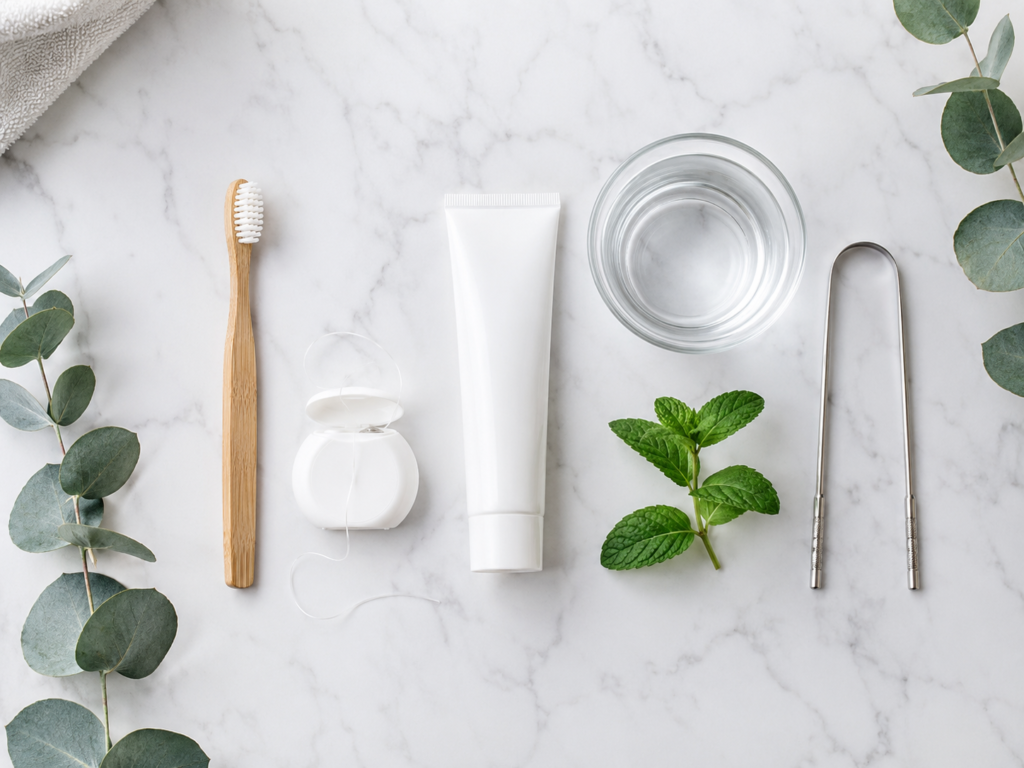
You do not need dozens of products.
A practical routine can be surprisingly straightforward.
Morning
Brush with fluoride toothpaste, clean your tongue if desired, and drink water.
During the Day
Stay hydrated, be mindful of frequent sugar exposure, and avoid tobacco.
Evening
Clean between your teeth, brush thoroughly, and clean your tongue if needed.
Regularly
Replace worn toothbrushes and attend appropriate professional dental examinations and cleanings.
Additional products can be considered based on your individual needs.
How to Make Your Routine Easier to Maintain
The best routine is one you can follow consistently.
Try connecting oral care to habits that already happen every day.
For example:
- Brush after waking up
- Keep floss somewhere visible
- Clean between teeth before your evening brush
- Keep your toothbrush and oral-care products organized
- Set a reminder if you frequently forget evening care
Small improvements that become permanent are often more useful than elaborate routines that last only a few days.
Frequently Asked Questions
What is the best daily oral care routine?
A solid routine generally includes brushing twice daily with fluoride toothpaste, cleaning between the teeth every day, staying hydrated, and receiving appropriate professional dental care.
Individual needs may differ based on dental health and professional recommendations.
Is brushing twice a day enough?
Brushing is essential, but it does not easily clean all areas between teeth. Interdental cleaning should also be part of a complete routine.
Should I clean my tongue every day?
Many people choose to clean their tongue daily, particularly if they experience tongue coating or concerns about breath freshness. Use gentle pressure.
Do I need oral probiotics?
Not necessarily. Oral probiotics are optional products being explored for their potential role in supporting the oral microbiome. Basic oral hygiene remains more important.
Should I use mouthwash before or after brushing?
This depends on the product and why you are using it. Follow the product instructions or advice from your dental professional.
How long should I brush my teeth?
About two minutes is a commonly recommended target for thorough brushing.
The Bottom Line
A good daily oral care routine does not depend on having the most products.
It depends on consistently doing the basics well.
Brush thoroughly, clean between your teeth, pay attention to your tongue, stay hydrated, manage frequent sugar exposure, and get appropriate professional dental care.
Once those habits are established, additional products such as mouthwash or oral probiotics can be considered based on your individual needs.
The most effective routine is rarely the most complicated one.
It is the one you can realistically follow every morning and every night.
Medical Disclaimer: This article is provided for general educational purposes only and is not intended to provide medical or dental advice, diagnosis, or treatment. Individual oral-health needs vary. Consult a qualified dental or healthcare professional regarding specific symptoms, conditions, or treatment decisions.