
When people think about damage to their teeth, they usually think about cavities. But there is another, quieter type of tooth wear that has nothing to do with bacteria at all: dental erosion. It happens when acid gradually dissolves the outer layer of your teeth, and once that layer is gone, your body cannot grow it back.
Dental erosion is common, it often develops slowly, and many of its causes are everyday habits such as sipping fizzy drinks, snacking on citrus fruit, or brushing straight after a glass of juice. The encouraging part is that small changes in when and how you eat, drink, and brush can make a real difference.
This guide explains what dental erosion is, how it differs from tooth decay, common causes, early signs to watch for, and practical ways to protect your enamel.
This article is for general educational purposes only and is not a substitute for advice from a dentist or doctor. Please see our medical disclaimer.
What Is Dental Erosion?
According to the Oral Health Foundation, dental erosion is the loss of tooth enamel caused by acid. Enamel is the hard outer layer that protects the softer dentine underneath. When enamel wears away, the dentine can become exposed.
Cleveland Clinic describes tooth erosion as the gradual thinning of enamel, and notes that if it is left untreated, it can eventually reach the deeper layers of the tooth.
The key point is that enamel does not regrow. Cleveland Clinic states that once enamel is lost, it cannot be reversed, so treatment focuses on stopping erosion from getting worse.
Erosion vs. Tooth Decay: What Is the Difference?
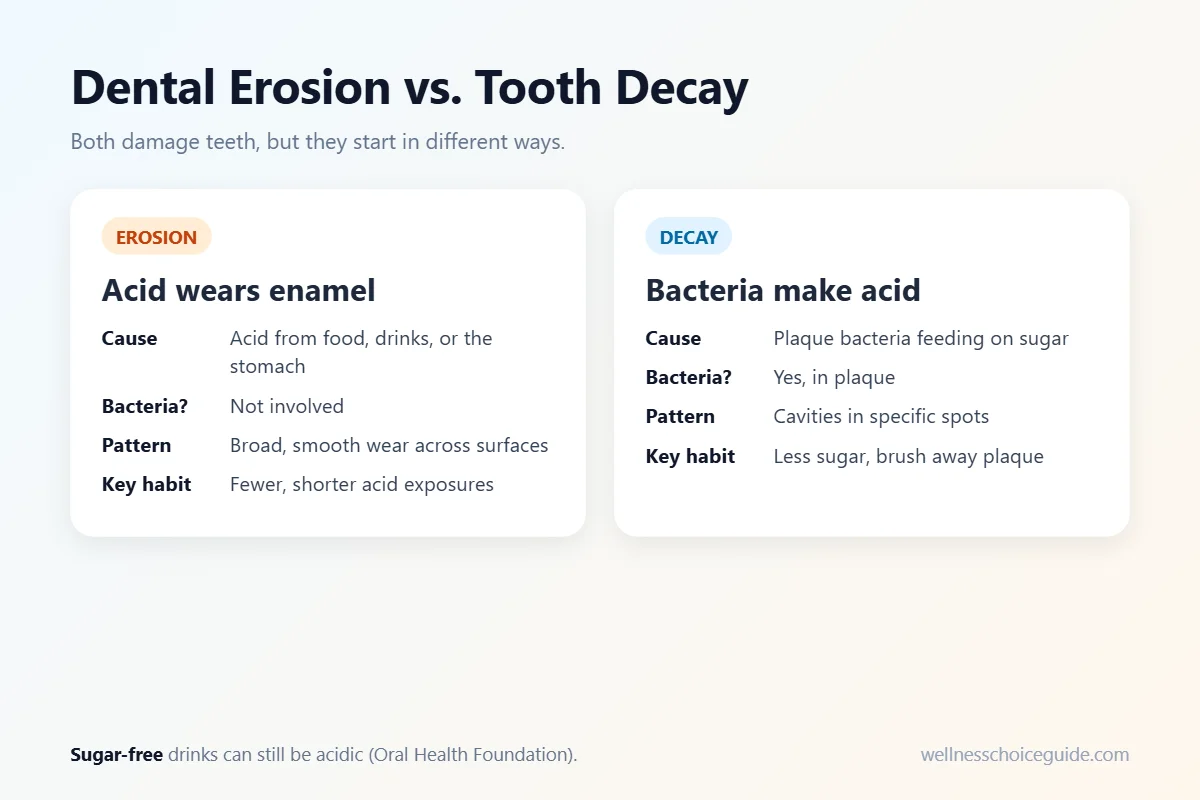
Erosion and decay can both damage teeth, but they work differently:
- Tooth decay happens when bacteria in plaque feed on sugars and produce acid in one spot, leading to cavities over time.
- Dental erosion, as the Oral Health Foundation explains, does not involve bacteria. It is caused by acid from food, drinks, or the stomach acting directly on the tooth surface.
Because the causes are different, the prevention habits overlap but are not identical. Cutting down on sugar helps prevent decay, but a sugar-free drink can still be acidic enough to contribute to erosion. For more on cavities, see our guide to tooth decay and cavity prevention.
Common Causes of Dental Erosion
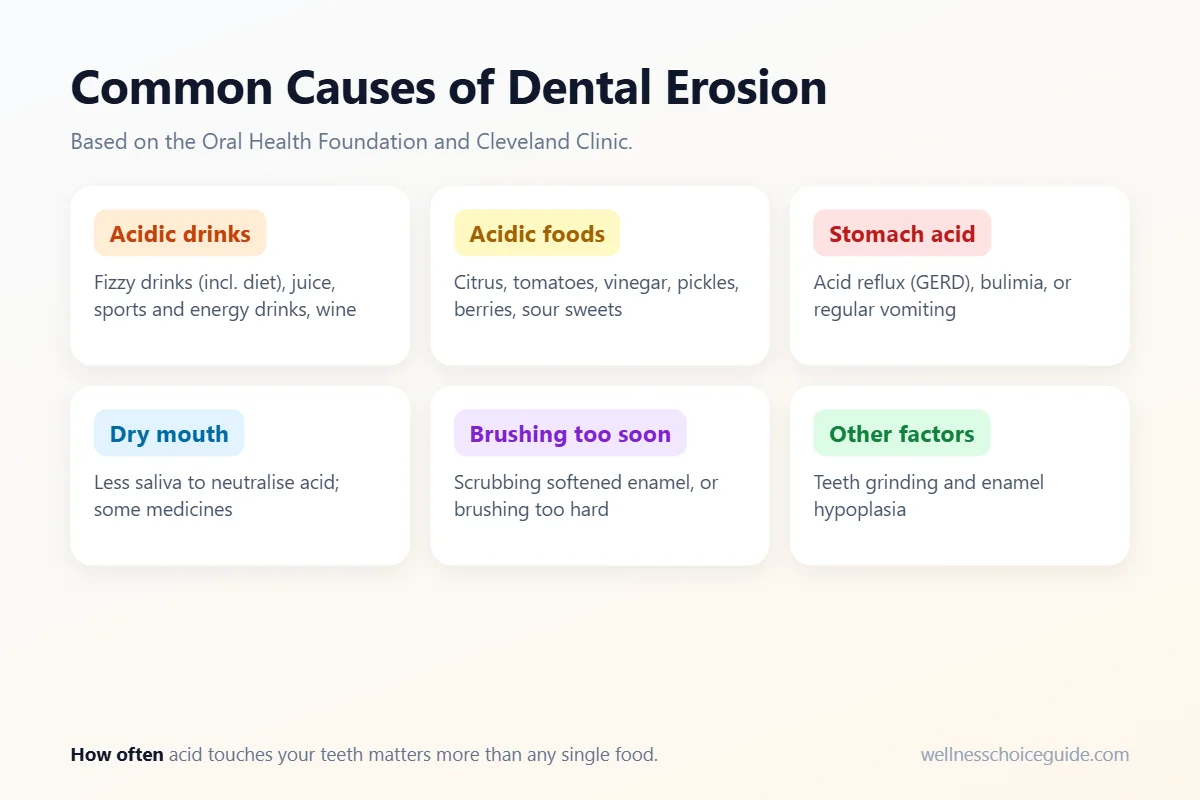
Acidic foods and drinks
The Oral Health Foundation explains that each time you eat or drink something acidic, the enamel softens for a while and loses some of its minerals. Saliva normally helps neutralise the acid and restore the balance, but frequent acid exposure keeps enamel soft for longer.
Common acidic drinks include:
- fizzy drinks, including diet and sugar-free versions;
- energy drinks and sports drinks;
- fruit juices and smoothies;
- lemon water;
- wine and cider.
Common acidic foods include citrus fruits, tomatoes and tomato sauces, vinegar and pickled foods, berries, pineapple, and sour sweets. These foods are not “bad,” and many are part of a healthy diet. It is mostly how often and how long your teeth are exposed that matters.
Stomach acid
Acid from the stomach is much stronger than most food acids. Cleveland Clinic lists chronic acid reflux (GERD) and the eating disorder bulimia nervosa as causes of erosion, because they repeatedly bring stomach acid into the mouth. Regular vomiting for any reason can also wear enamel. If you have frequent heartburn or reflux, it is worth speaking to a doctor; the NHS has guidance on heartburn and acid reflux.
Dry mouth
Saliva is your mouth’s natural defence against acid. Cleveland Clinic notes that dry mouth reduces the amount of saliva available to wash acids away, and that some medicines, such as long-term antihistamine use, can reduce saliva. Read more in our guide to dry mouth causes and relief.
Brushing at the wrong time or too hard
Brushing is essential, but timing and technique matter. The Oral Health Foundation warns that brushing while enamel is softened by acid can remove tiny amounts of enamel and speed up wear. Cleveland Clinic also lists brushing too hard as a risk factor, especially near the gum line.
Other factors
Cleveland Clinic also mentions teeth grinding and a condition called enamel hypoplasia, where enamel does not develop fully. Grinding is a different type of wear, but it can add to the overall damage. See our guide to teeth grinding (bruxism).
Early Signs of Dental Erosion
Erosion often develops slowly, so early signs are easy to miss. Signs mentioned by the Oral Health Foundation and Cleveland Clinic include:
- Sensitivity to hot, cold, or sweet foods and drinks;
- Discolouration, with teeth looking more yellow as thinner enamel lets the dentine show through;
- Teeth that look thinner or slightly see-through at the edges;
- Small chips or rough edges;
- Pitting or small dents on the tooth surface.
Sensitivity in particular has many possible causes. Our guide to tooth sensitivity causes and relief explains some of them. If you notice any of these changes, mention them at your next dental appointment rather than trying to diagnose the cause yourself.
How to Protect Your Enamel
You do not need to cut out every acidic food. The aim is to give your teeth fewer and shorter acid attacks, and more time to recover in between. The Oral Health Foundation and Cleveland Clinic suggest:
- Keep acidic foods and drinks to mealtimes instead of sipping or snacking on them throughout the day.
- Do not hold or swish acidic drinks in your mouth. Swallow them rather than letting them linger.
- Use a straw for acidic drinks to reduce contact with your teeth.
- Finish a meal with milk or cheese, which can help neutralise acid.
- Chew sugar-free gum after meals to boost saliva flow.
- Rinse with water between meals and snacks.
- Brush gently with a soft or medium brush, and avoid scrubbing hard.
When Should You Brush After Acidic Food?
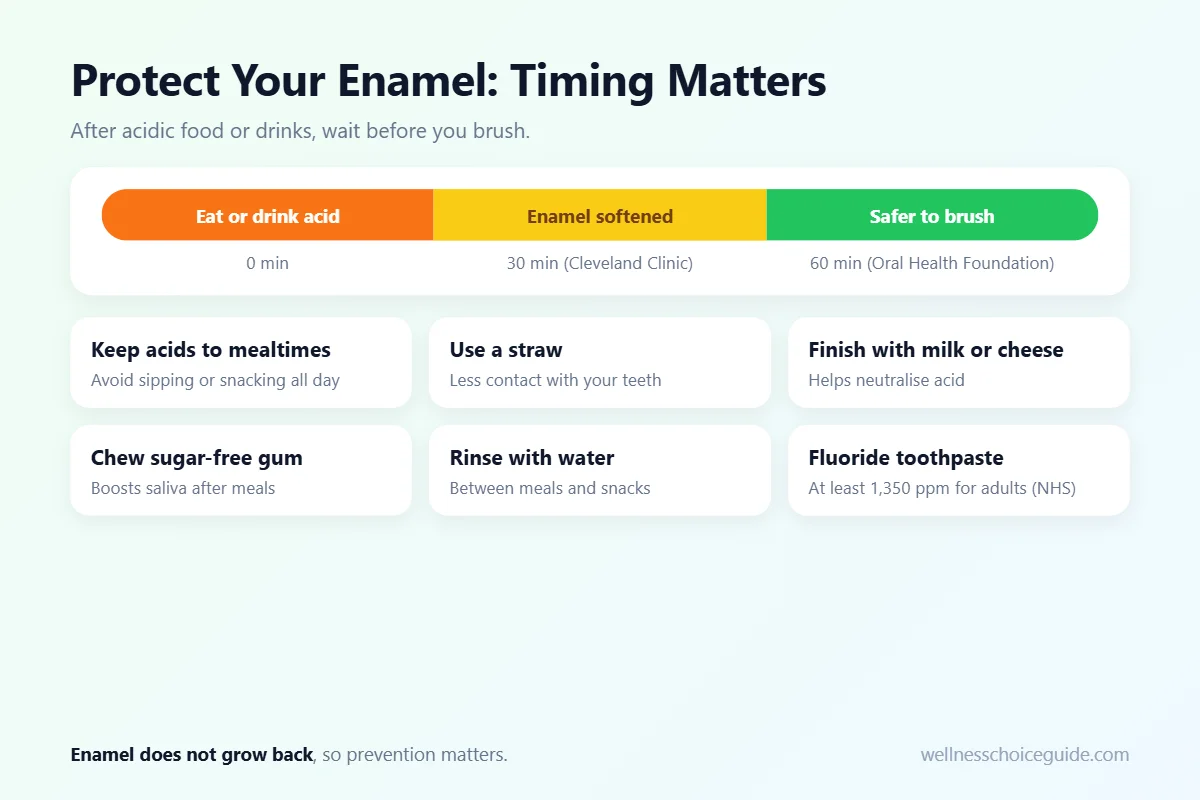
This is one of the most useful habits to know, and sources give slightly different waiting times:
- The Oral Health Foundation advises waiting at least one hour after eating or drinking before brushing, so enamel has time to harden again.
- Cleveland Clinic suggests waiting at least 30 minutes after eating before brushing, to give saliva time to neutralise acids.
A simple, practical approach is to wait as long as you reasonably can, ideally around an hour, after something acidic. If you like to brush in the morning, some people find it easier to brush before breakfast, especially if breakfast includes juice or citrus fruit.
The Role of Fluoride
Fluoride helps strengthen enamel. Cleveland Clinic notes that topical fluoride is the most common treatment for early erosion, because it can strengthen enamel and slow further loss, although it cannot restore enamel that has already gone.
For everyday care, the NHS recommends:
- brushing twice a day for about 2 minutes, including last thing at night;
- using a toothpaste with at least 1,350 ppm fluoride for adults;
- spitting out the excess toothpaste and not rinsing straight after brushing, so the fluoride stays on your teeth longer.
Our guide to fluoride toothpaste and how to use it covers this in more detail.
How Dentists Treat Dental Erosion
A dentist can usually spot erosion during a routine examination by looking for wear, changes in texture, and pitting. According to Cleveland Clinic, treatment depends on how advanced the erosion is:
- Early erosion is often managed with topical fluoride and changes to diet and brushing habits.
- Advanced erosion may be treated with dental bonding, veneers, or crowns to protect the tooth and improve its appearance.
Regular check-ups help catch erosion early, when simpler measures are more likely to be enough. Read more in our guide on how often you should have a dental check-up.
When to See a Dentist
Book a dental appointment if you notice:
- new or worsening sensitivity;
- teeth that look more yellow, thinner, or see-through at the edges;
- chips, rough edges, or dents on your teeth;
- pain when eating or drinking.
If you have frequent heartburn, regular vomiting, or a persistently dry mouth, it is also worth speaking to your doctor, because treating the underlying cause can help protect your teeth.
Frequently Asked Questions
Can enamel grow back?
No. Once enamel is lost, the body cannot regrow it. Fluoride can help strengthen remaining enamel and slow further loss, and a dentist can protect badly worn teeth with treatments such as bonding or crowns.
Are sugar-free fizzy drinks safe for teeth?
They are less likely to cause decay than sugary drinks, but the Oral Health Foundation notes that sugar-free drinks can still be acidic and contribute to erosion. Having them with meals and not sipping them all day can help.
Is lemon water bad for your teeth?
Lemon water is acidic, and the Oral Health Foundation lists it among drinks that can contribute to erosion, especially if sipped often. Drinking it with a meal and rinsing with plain water afterwards can reduce contact time.
How long should I wait to brush after eating?
After acidic food or drinks, the Oral Health Foundation recommends waiting at least an hour, while Cleveland Clinic suggests at least 30 minutes. Waiting gives softened enamel time to recover.
Does using a straw really help?
Using a straw for acidic drinks can reduce how much the drink touches your teeth, which is why the Oral Health Foundation includes it in its prevention advice.
The Bottom Line
Dental erosion is the gradual loss of enamel caused by acid, not bacteria. Acidic foods and drinks, stomach acid, dry mouth, and brushing too soon or too hard can all play a part. Because enamel cannot grow back, prevention matters.
The most helpful habits are simple: keep acidic foods and drinks to mealtimes, do not sip them all day, rinse with water, wait before brushing after acidic foods, use fluoride toothpaste, and see your dentist regularly. If you notice sensitivity or changes in how your teeth look, ask your dentist to check for erosion early.
Sources and Further Reading
- Oral Health Foundation: Dental erosion
- Cleveland Clinic: Tooth Erosion
- NHS: How to keep your teeth clean
- NHS: Heartburn and acid reflux