
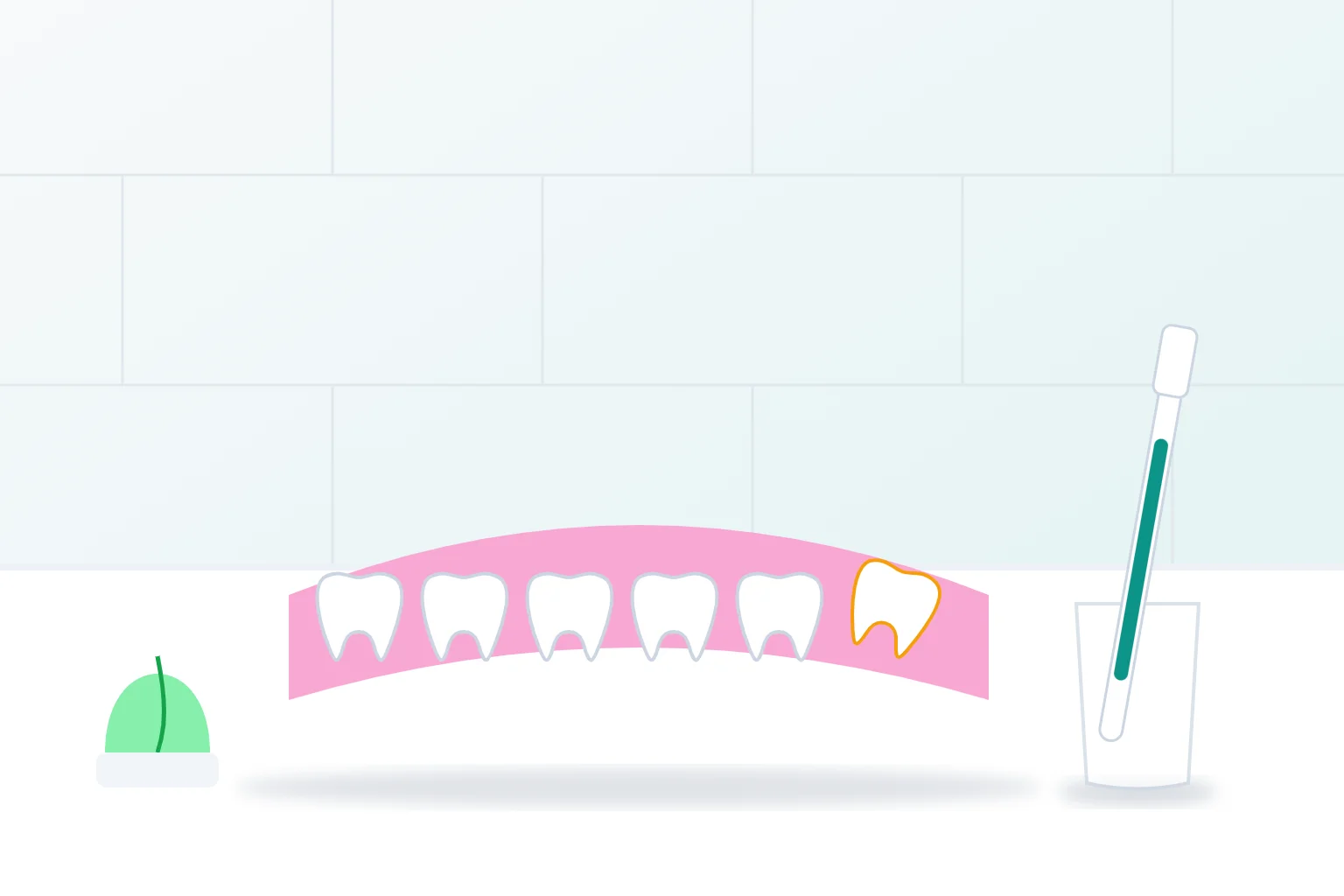
Wisdom teeth are the last teeth to come through, usually in the late teens or early twenties. For some people they arrive without any trouble. For others, there simply is not enough room, and they can cause pain, swelling, or infection.
This guide explains why wisdom teeth can cause problems, when they may need to be removed, what happens during removal, how to look after your mouth afterward, and the warning signs that mean you should contact a dentist urgently.
This article is for general educational purposes and is not a substitute for professional advice. Please see our medical disclaimer.
What Are Wisdom Teeth?
Wisdom teeth are the third molars at the very back of the mouth. According to the NHS, they develop later than other teeth and usually start coming through in your teens or early twenties, but they can cause problems at any age.
Because they are the last to arrive, there is sometimes not enough space in the jaw for them to come through fully. A wisdom tooth may be blocked by another tooth, which is described as impacted, or it may be partly covered by the gum.
When Wisdom Teeth Cause Problems
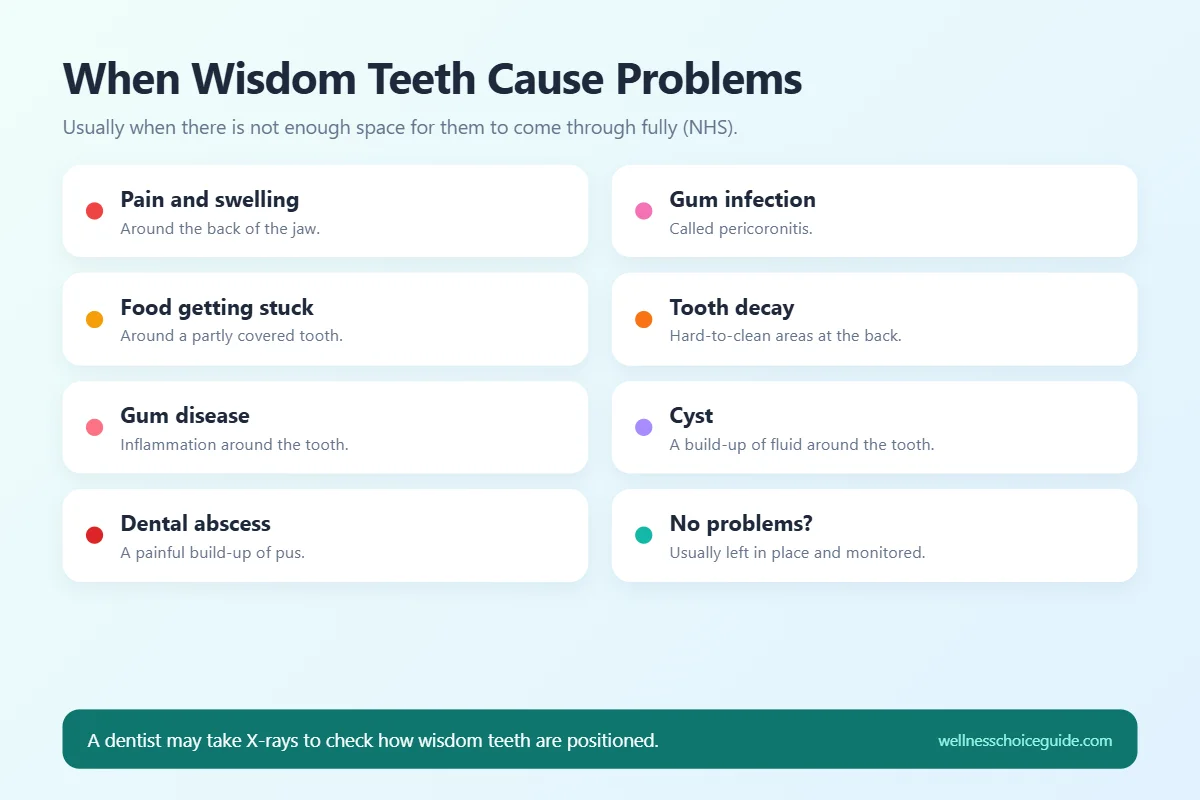
The NHS explains that when wisdom teeth do not have enough space, they can cause:
- pain and swelling;
- infections in the gum, known as pericoronitis;
- food getting stuck;
- tooth decay;
- gum disease;
- a build-up of fluid around the tooth (a cyst);
- a dental abscess.
Partly erupted wisdom teeth can be hard to reach with a toothbrush, which helps explain why plaque, decay, and gum problems are more common around them. Our guides to tooth decay and gum disease explain how these problems develop.
Do Wisdom Teeth Always Need to Be Removed?
No. A dentist may take X-rays to check how your wisdom teeth are positioned. The NHS says that if a wisdom tooth is not causing problems, it will usually be left where it is and monitored at your routine dental check-ups.
Removal is usually considered when a wisdom tooth does not have enough space and is causing problems such as those listed above. Your dentist will discuss the options with you. Regular dental check-ups help spot issues early.
What Happens During Wisdom Tooth Removal
A dentist might remove wisdom teeth, or they may refer you to a specialist at a hospital, clinic, or another dental practice. According to the NHS:
- you will usually have a local anesthetic injection to numb the gum, so you will not feel pain;
- you may also have sedation to help you relax, or a general anesthetic, where you are asleep, if the teeth are more difficult to remove or you are anxious;
- the dentist or surgeon may cut the gum if it covers the tooth, widen the socket, and remove the tooth in one piece or in two or three pieces;
- the gum may then be stitched with dissolvable stitches.
The NHS notes that the procedure often takes just a few minutes and should take no more than 40 minutes. You will usually go home the same day, although you might need to stay overnight after a general anesthetic.
Recovering From Wisdom Tooth Removal
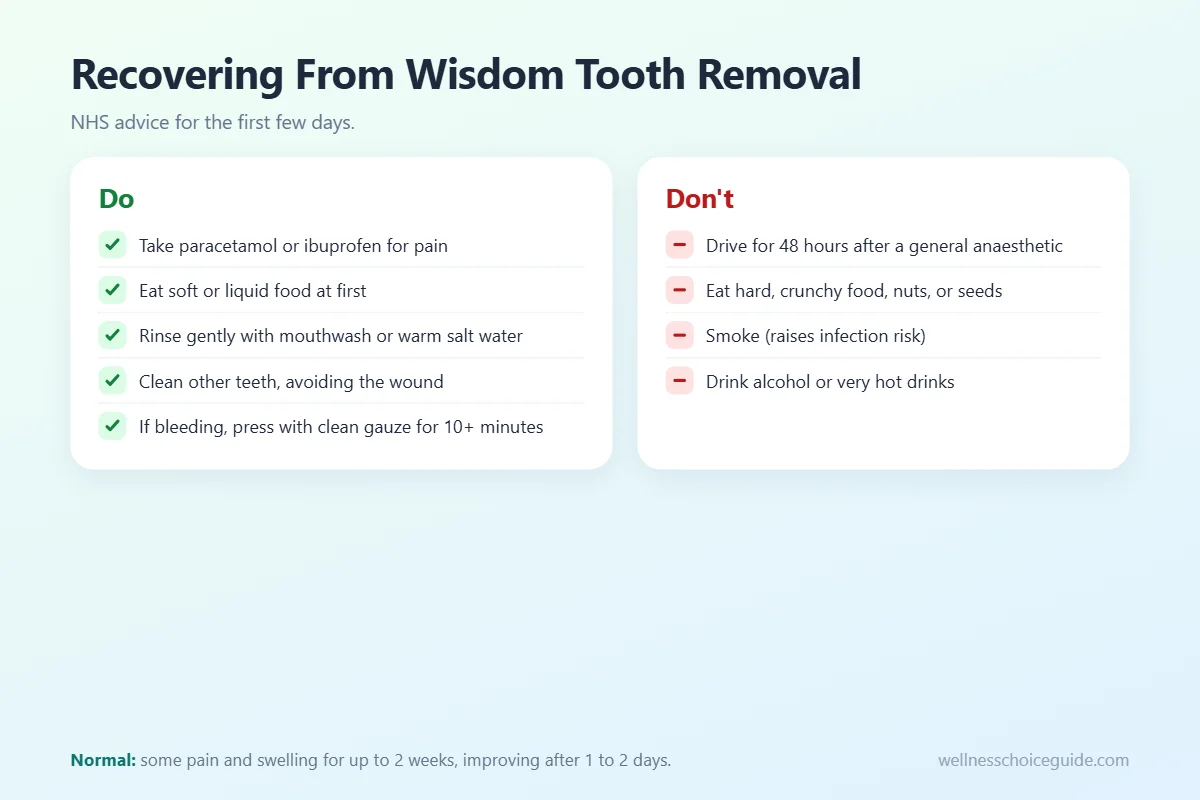
Most people can return to normal activities the day after removal. If the teeth were more difficult to remove, or you had a general anesthetic, you might need 1 to 3 days off work.
The NHS explains that for up to 2 weeks after removal:
- you will usually have some pain and swelling, which should start to improve after 1 or 2 days;
- you might have bruising on your cheek;
- your jaw may feel sore and stiff;
- chewing and swallowing may feel uncomfortable.
A blood clot forms over the wound, which helps it heal. If you had stitches, they will dissolve on their own.
Things That Help
- take paracetamol or ibuprofen to help with pain, if they are suitable for you;
- eat soft or liquid food until you can chew more comfortably;
- keep the wound clean by rinsing gently with mouthwash or warm salt water;
- clean your other teeth carefully, avoiding the affected area so you do not disturb the stitches or the blood clot;
- if there is bleeding, press on the area for at least 10 minutes with a clean cloth or cotton wool.
Things to Avoid
- do not drive for 48 hours after a general anesthetic, or for 24 hours after a sedative injection;
- avoid hard or crunchy food, and food that could get stuck in the wound, such as nuts or seeds;
- do not smoke, as it can increase the risk of infection;
- avoid alcohol and very hot drinks, to reduce the risk of bleeding or scalding.
For tips on gentle rinsing, see our guide on how to use mouthwash.
Possible Complications
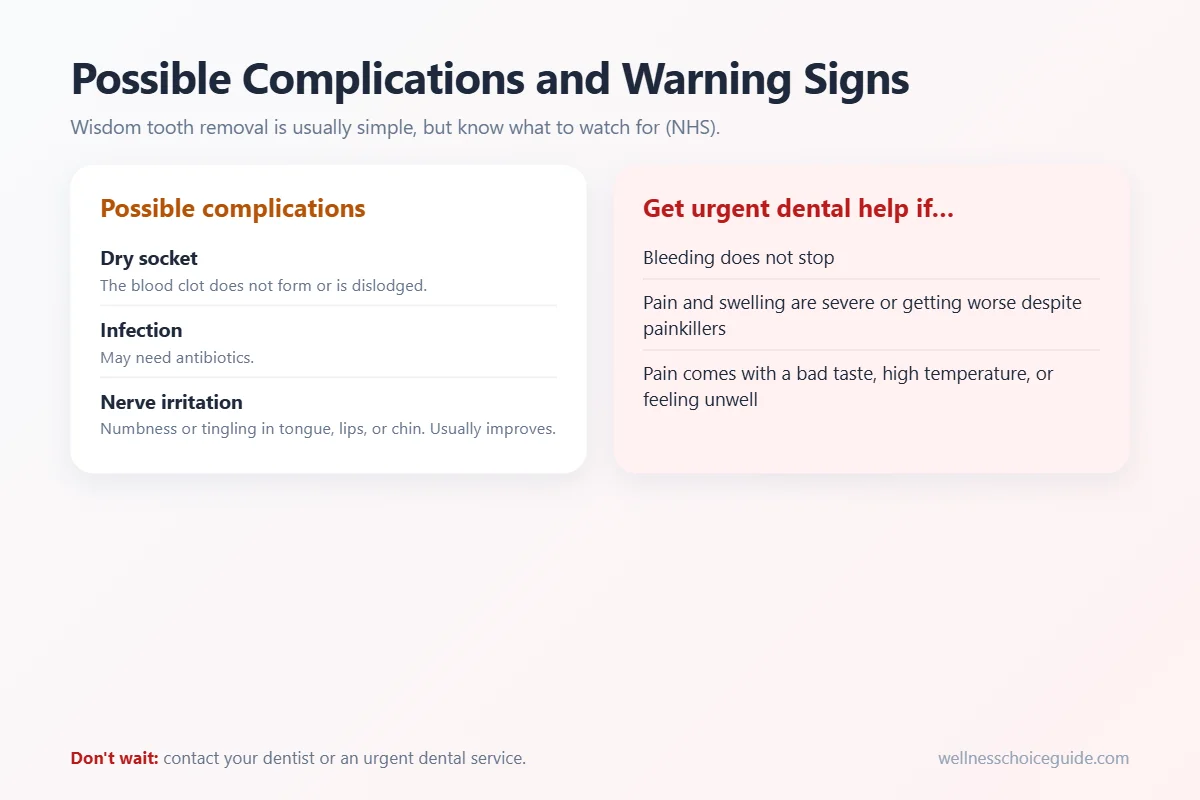
The NHS describes wisdom tooth removal as usually a simple procedure, but complications can happen. Your dentist or surgeon will explain the risks beforehand. Possible complications include:
- Dry socket: a painful condition where the blood clot over the tooth socket does not form properly or is dislodged before the gum has healed.
- Infection: which may need to be treated with antibiotics.
- Nerve damage: damage to nerves close to the tooth can cause numbness or tingling in the tongue, lips, and chin. This usually gets better but can last a few weeks or months.
When to Get Urgent Help
The NHS advises asking for an urgent dental appointment or getting urgent advice if:
- you have bleeding that does not stop;
- you have pain and swelling that is severe or getting worse, and painkillers are not helping;
- you have pain with a bad taste in your mouth, a high temperature, or you feel unwell.
If you have toothache from a wisdom tooth that has not been removed, our guide to toothache explains how to ease the pain and when to see a dentist.
Caring for Wisdom Teeth You Keep
If your wisdom teeth are staying put, a little extra attention helps keep them healthy:
- angle your toothbrush carefully to reach the very back teeth;
- clean between your teeth daily, using floss, interdental brushes, or a water flosser;
- brush twice a day with fluoride toothpaste;
- keep up with regular check-ups so your dentist can monitor them.
Frequently Asked Questions
Do all wisdom teeth need to be removed?
No. If a wisdom tooth is not causing problems, the NHS says it will usually be left in place and monitored at routine check-ups.
How long does wisdom tooth removal take?
It often takes just a few minutes and should take no more than 40 minutes, according to the NHS.
How long does recovery take?
Pain and swelling usually start to improve after 1 or 2 days, but some discomfort can last up to 2 weeks.
What is a dry socket?
A dry socket is a painful condition where the blood clot over the socket does not form properly or is dislodged before the gum heals. Contact your dentist if pain gets worse after removal.
The Bottom Line
Wisdom teeth do not always cause problems. When there is not enough space, they can lead to pain, infection, decay, or gum disease, and your dentist may recommend removal.
Removal is usually quick and straightforward. Follow your aftercare advice, eat soft foods, avoid smoking and hot drinks, and contact a dentist urgently if bleeding will not stop or pain and swelling get worse.
Sources and Further Reading
- NHS: Wisdom tooth removal
- NHS: Toothache