Walk down any oral care aisle and you will find a wall of mouthwash bottles promising fresher breath, stronger teeth, and healthier gums. Some people use mouthwash every day, others never touch it, and many are not sure whether it is doing anything useful at all.
The honest answer is that mouthwash can be a helpful extra for some people, but it is not essential for everyone, and it never replaces brushing and cleaning between your teeth. What matters most is choosing the right type for your needs and using it the right way.
This guide explains the main types of mouthwash, what they can and cannot do, how to use mouthwash so it works better, and when it is worth asking your dentist for advice.
This article is for general educational purposes and is not a substitute for professional advice. Please see our medical disclaimer.
What Mouthwash Actually Does
Mouthwash, also called mouth rinse, is a liquid you swish around your mouth and then spit out. Because it is a liquid, it can reach areas around the teeth and gums briefly, but it does not physically remove the sticky film of bacteria called plaque the way a toothbrush and floss do.
That is the key point to remember. Plaque has to be disrupted mechanically, by brushing and cleaning between teeth. A rinse can add benefits on top of that routine, such as extra fluoride or ingredients that help reduce bacteria, but it works best as a supporting step rather than the main event.
Cosmetic vs. Therapeutic Mouthwash
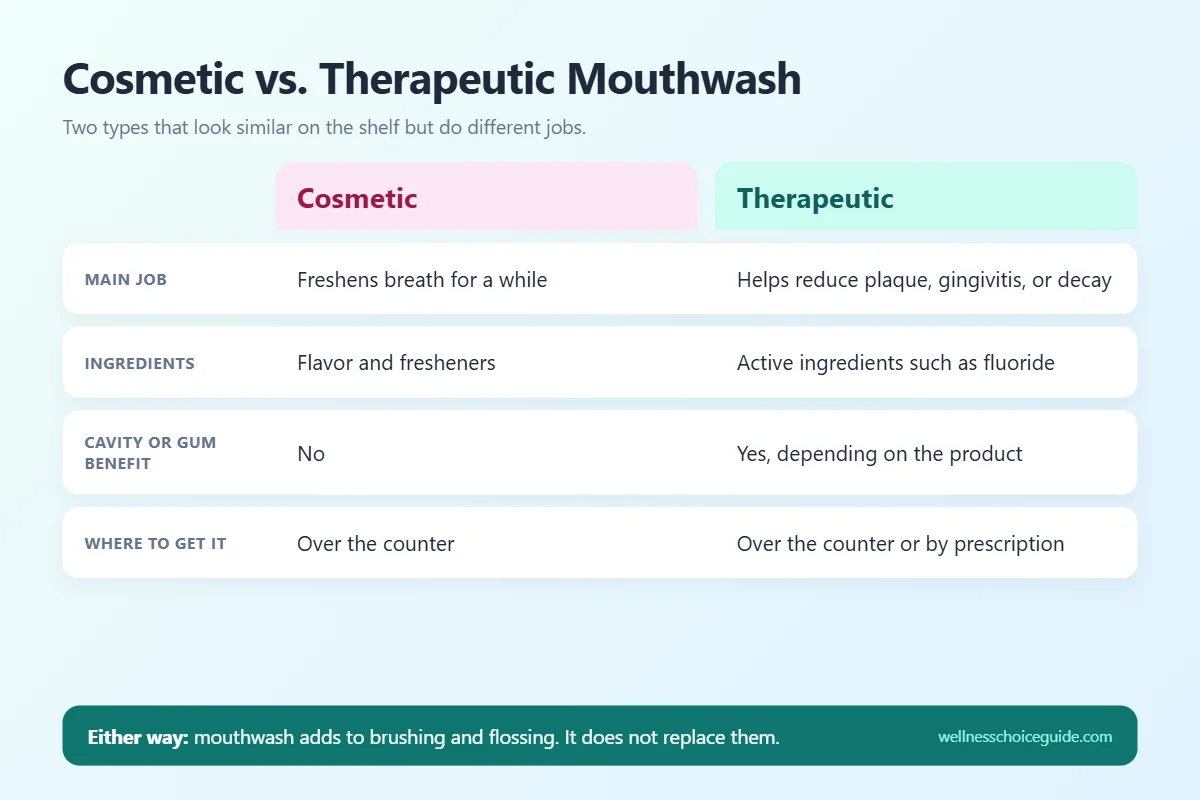
According to the American Dental Association, mouthwashes generally fall into two groups: cosmetic and therapeutic. They can look almost identical on the shelf, so it helps to know the difference.
Cosmetic Mouthwash
Cosmetic rinses mainly freshen breath and leave a pleasant taste. They may temporarily mask bad breath, but they do not address its causes and do not help prevent cavities or gum problems. Think of them as a short-lived refresher.
Therapeutic Mouthwash
Therapeutic rinses contain active ingredients intended to help with specific problems. Depending on the product, they may help reduce plaque, gingivitis (early gum inflammation), tooth decay, or bad breath. Some are sold over the counter, while stronger versions are available only with a prescription.
Common active ingredients include:
- Fluoride, which helps strengthen enamel and prevent tooth decay;
- Cetylpyridinium chloride (CPC), an antibacterial ingredient found in many over-the-counter rinses;
- Essential oils, such as eucalyptol, menthol, and thymol, used in some antiseptic rinses;
- Chlorhexidine, usually prescription-only and typically used for a limited time, since it can stain teeth with longer use.
If you want a rinse to do more than freshen your breath, look for one that lists an active ingredient on the label and, where available, a recognized seal of acceptance in your country.
Potential Benefits of Mouthwash
Used alongside good daily habits, the right mouthwash may help with:
- Cavity prevention, especially fluoride rinses for people who get cavities often;
- Plaque and gum inflammation, with certain antibacterial rinses;
- Fresher breath, at least temporarily;
- Hard-to-clean areas, such as around braces, bridges, or other dental work.
If bad breath is your main concern, a rinse may only cover the smell for a while. Our guide to bad breath causes and fresh-breath habits explains the common sources, such as the tongue and the spaces between teeth, and what usually helps more than masking.
How to Use Mouthwash the Right Way
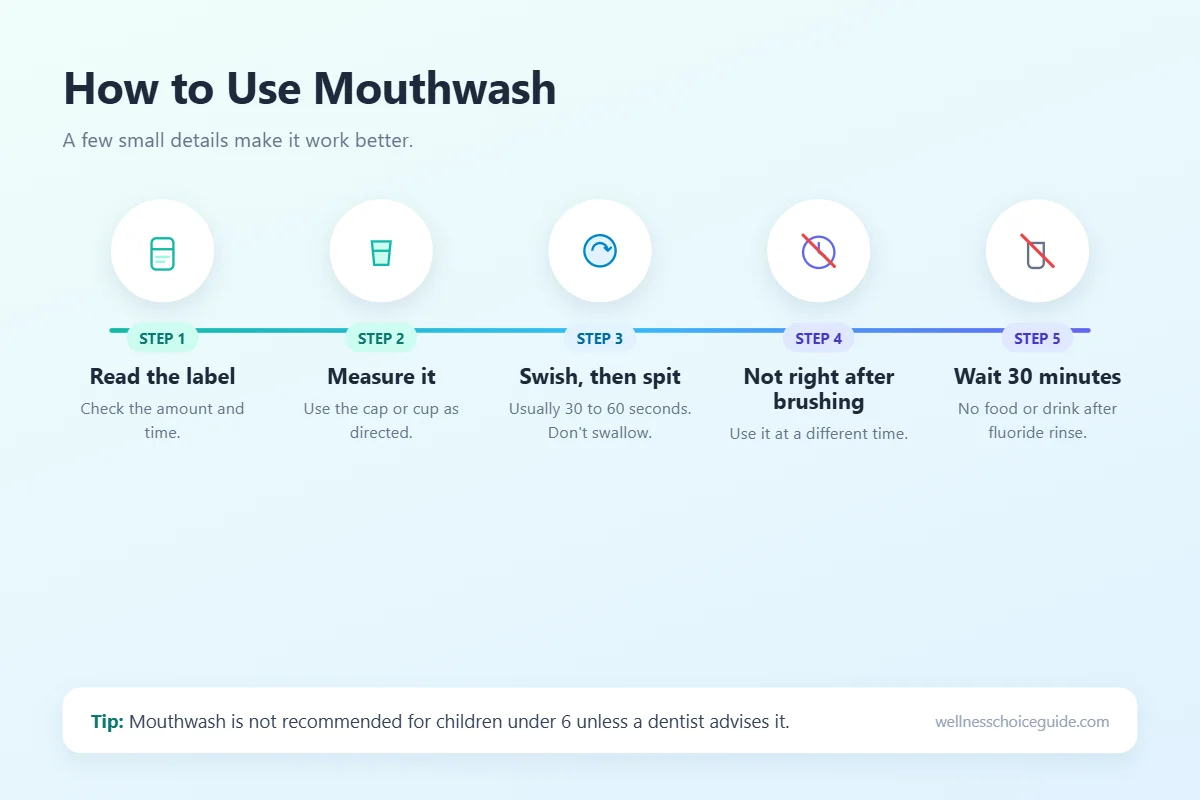
Small details can make a real difference to how well a rinse works:
- Read the label. Products differ in how much to use, how long to swish, and how often.
- Measure the amount. Use the cap or a cup rather than guessing.
- Swish, then spit. Many products suggest around 30 to 60 seconds. Do not swallow mouthwash.
- Do not rinse straight after brushing. The NHS advises against rinsing with mouthwash right after brushing, because it can wash away the concentrated fluoride left by your toothpaste. Instead, use mouthwash at a different time, such as after lunch.
- Wait after a fluoride rinse. The NHS also recommends not eating or drinking for 30 minutes after using a fluoride mouthwash.
For a simple way to fit these steps into your day, see our daily oral care routine guide.
Who May Benefit From Mouthwash
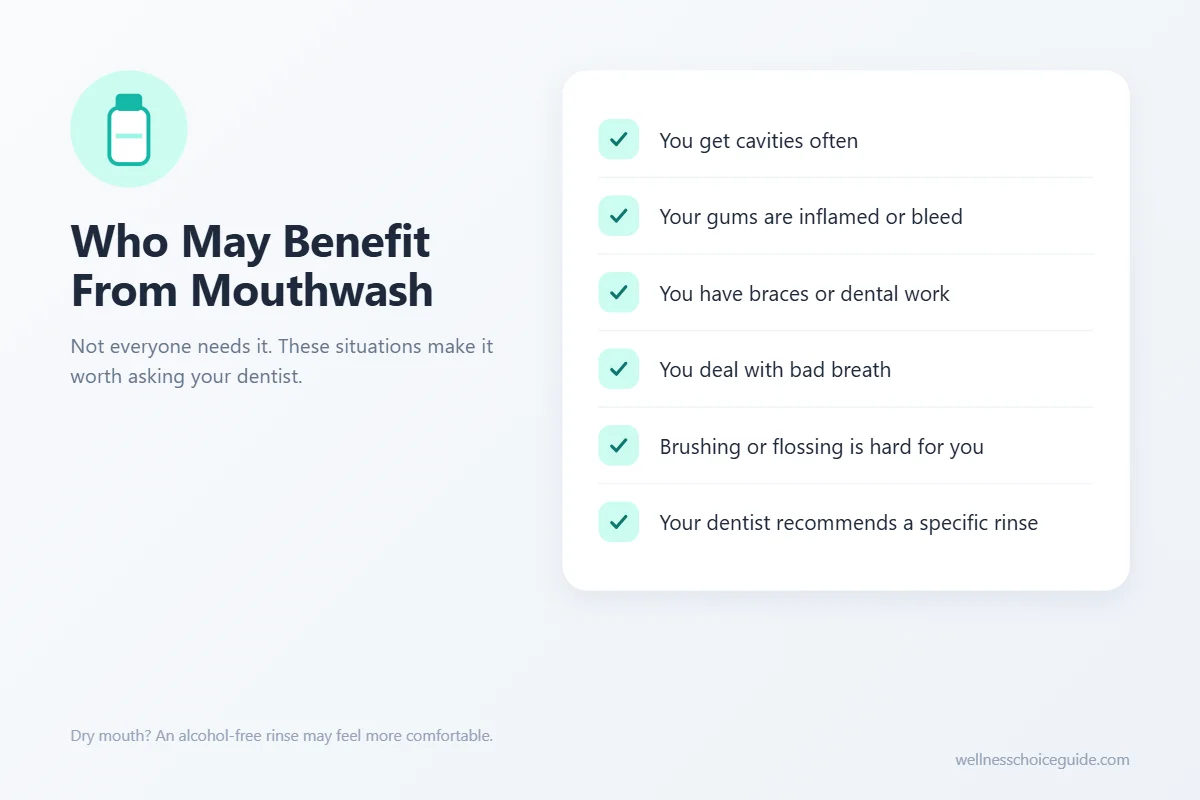
Many people with healthy teeth and gums do well with brushing twice a day with fluoride toothpaste and cleaning between their teeth daily. A rinse may be worth discussing with a dentist if you:
- get cavities often or have a higher risk of tooth decay;
- have gum inflammation or gums that bleed when you brush;
- wear braces or have bridges, implants, or other dental work;
- deal with ongoing bad breath;
- find brushing or flossing difficult because of limited hand movement;
- have been advised by a dentist to use a specific rinse, for example after a procedure.
Who Should Be Careful
Children Under 6
The ADA does not recommend mouthwash for children younger than 6 unless a dentist advises it, because young children may swallow it rather than spit it out.
People With Dry Mouth
Some people find alcohol-containing rinses feel harsh or drying. If you already have a dry mouth, an alcohol-free option may feel more comfortable. Dry mouth itself has many possible causes, including medicines, so it is worth looking into. Our article on dry mouth causes and relief covers practical steps.
People With Sensitive Teeth or Mouth Sores
Strong-flavored or alcohol-based rinses can sting sensitive areas. If you notice discomfort, stop using the product and ask your dentist about gentler options. Our guide to tooth sensitivity explains common causes.
Anyone Using a Prescription Rinse
Follow your dentist’s instructions on how long to use it. Some prescription rinses are designed for short-term use and may cause staining or taste changes if used longer than advised.
Mouthwash Is Not a Replacement for Brushing and Flossing
It is easy to feel that a minty rinse means your mouth is clean, but freshness is not the same as plaque removal. The foundation of good oral health is still:
- brushing twice a day with a fluoride toothpaste;
- cleaning between your teeth once a day, whether with string floss or a water flosser;
- limiting frequent sugary snacks and drinks;
- regular dental checkups and professional cleanings, since only a dentist or hygienist can remove hardened tartar.
Frequently Asked Questions
Do I need to use mouthwash every day?
Not necessarily. Many people keep their mouths healthy without it. Mouthwash is optional for most people and may be helpful for those with specific needs, such as a higher risk of cavities or gum inflammation.
Should I use mouthwash before or after brushing?
The NHS suggests not rinsing with mouthwash straight after brushing, so the fluoride from your toothpaste can stay on your teeth longer. Using mouthwash at a separate time of day, such as after lunch, is a common approach.
Is alcohol-free mouthwash better?
Alcohol-free rinses can feel gentler, especially if you have a dry or sensitive mouth. Whether a rinse helps depends mainly on its active ingredients, not just on whether it contains alcohol.
Can mouthwash cure bad breath?
Cosmetic mouthwash only masks odor for a short time. Therapeutic rinses may help reduce odor-causing bacteria, but lasting fresh breath usually depends on brushing, cleaning between teeth, cleaning the tongue, and treating any underlying dental problems.
Can I use mouthwash with oral probiotics?
Some people use both. Antibacterial rinses act on mouth bacteria broadly, so if you also take oral probiotics, it may make sense to use them at different times of day. There is limited research on combining them, so ask your dentist if you are unsure.
The Bottom Line
Mouthwash can be a useful addition to your routine, but it is not a must for everyone and it does not replace brushing and flossing. Cosmetic rinses freshen breath briefly, while therapeutic rinses contain active ingredients that may help with plaque, gum inflammation, or cavities.
If you choose to use one, read the label, avoid rinsing right after brushing, and wait 30 minutes after a fluoride rinse before eating or drinking. If you are not sure which type suits you, your dentist can recommend one based on your needs.
Sources and Further Reading
- American Dental Association, MouthHealthy: Mouthwash
- NHS: How to keep your teeth clean
- National Institute of Dental and Craniofacial Research: Dry Mouth