
Dentures can make a big difference to everyday life. They help with eating and speaking, support the shape of your face, and give you back a full smile after losing teeth. But like natural teeth, dentures need daily care to stay clean, comfortable, and long-lasting.
Caring for dentures is not quite the same as caring for natural teeth. Some everyday products, such as regular toothpaste, can damage them, and wearing them overnight can raise the risk of gum problems. Your gums, tongue, and any remaining natural teeth also still need attention.
This guide explains the main types of dentures, how to get used to new ones, a simple daily cleaning routine, how to look after your mouth, and when to see your dentist.
This article is for general educational purposes only and is not a substitute for advice from a dentist. Please see our medical disclaimer. Always follow the care instructions your dental team gives you.
Types of Dentures
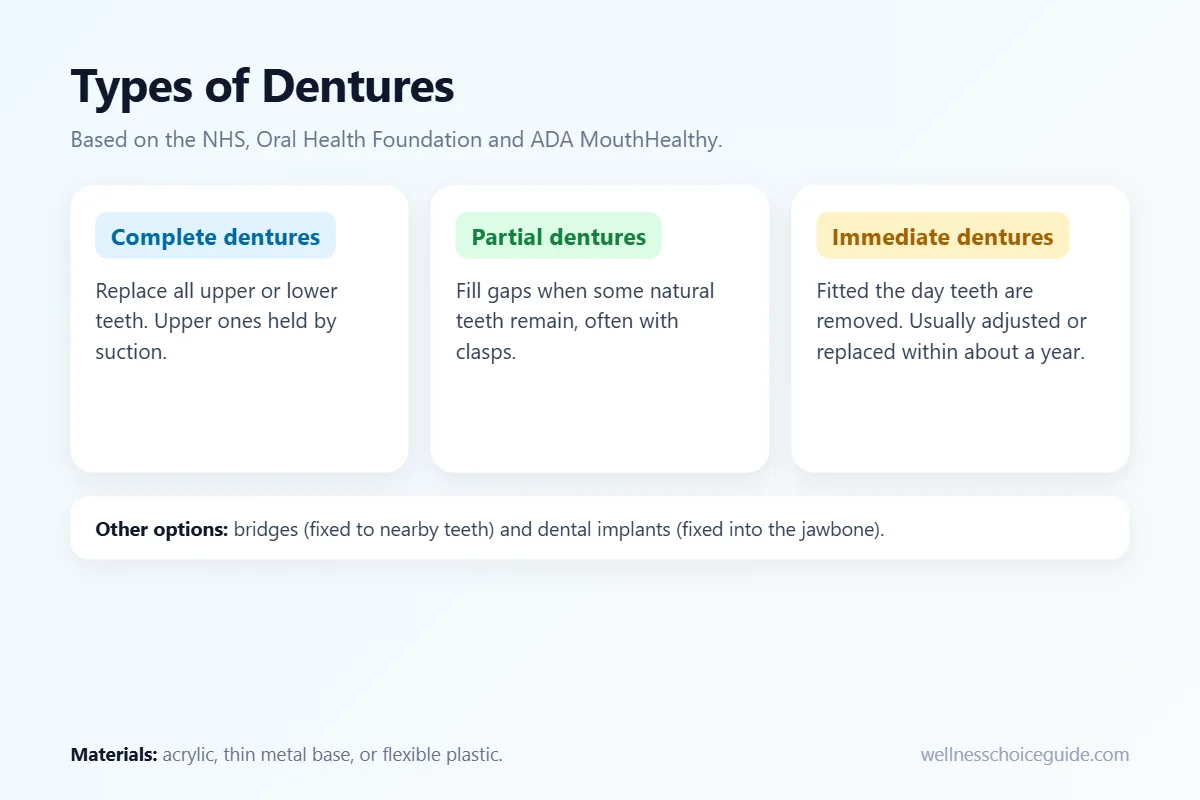
Dentures are removable replacements for missing teeth. The NHS and the Oral Health Foundation describe two main types:
- Complete (full) dentures replace all the teeth in the upper jaw, the lower jaw, or both. The Oral Health Foundation notes that upper full dentures are held in place by suction.
- Partial dentures fill gaps when some natural teeth remain. They are often held in place by small clasps that fit around the remaining teeth.
ADA MouthHealthy also describes immediate dentures, which are fitted on the same day remaining teeth are removed. The NHS explains that because the mouth changes as it heals, immediate dentures usually need adjusting or replacing within about a year.
The Oral Health Foundation adds that dentures can be made from different materials, including acrylic (plastic), which is the most common, a thin metal base, or a flexible material. Your dentist can explain which option suits your mouth.
Dentures are not the only option. The NHS mentions bridges, which are fixed to neighbouring teeth, and dental implants, which are fixed into the jawbone, as alternatives.
Getting Used to New Dentures
New dentures can feel strange at first. ADA MouthHealthy explains that they may feel awkward or loose for a few weeks while the muscles of your cheeks and tongue learn to hold them in place. Minor irritation, soreness, and extra saliva are common at first and should settle.
The NHS suggests that practising putting your dentures in and taking them out, and eating softer foods at first, can help you adjust.
Follow-up appointments are a normal part of the process. ADA MouthHealthy notes that your dentist will usually want to check and adjust the fit. If soreness or irritation does not improve, contact your dental team rather than waiting.
How to Clean Your Dentures Every Day
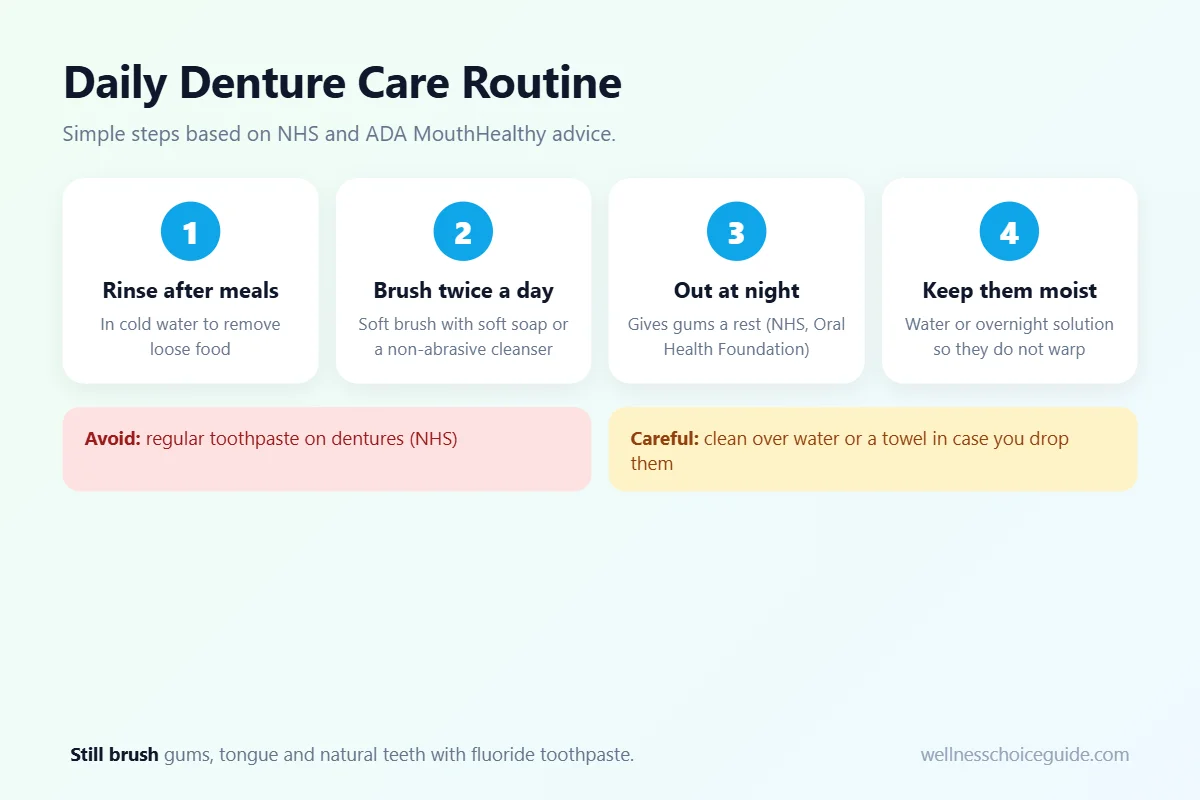
Dentures collect food and plaque just like natural teeth. Based on advice from the NHS and ADA MouthHealthy, a simple daily routine looks like this:
- Rinse after meals. The NHS suggests rinsing dentures in cold water after eating to remove loose food.
- Brush them twice a day. The NHS recommends brushing dentures morning and evening with soft soap or washing-up liquid. ADA MouthHealthy suggests a soft-bristled brush and a non-abrasive cleanser to avoid scratches.
- Clean over a soft surface. Dentures can break if dropped, so the NHS advises cleaning them over a sink of water or a folded towel.
- Do not use regular toothpaste on dentures. The NHS warns that toothpaste could damage them.
- Look for tested products. ADA MouthHealthy suggests choosing denture cleansers and adhesives with the ADA Seal of Acceptance.
Gentle cleaning matters: ADA MouthHealthy specifically recommends non-abrasive products so the denture surface does not get scratched.
Should You Take Dentures Out at Night?
For most people, yes. The NHS advises against wearing dentures overnight unless your dentist recommends it, because food trapped underneath can raise the risk of gum infections and tooth decay, and there is also a choking risk.
The Oral Health Foundation explains that taking dentures out at night gives your gums a chance to rest and helps prevent soreness and infections.
When they are out, dentures should not be left to dry out, as they can warp. The NHS suggests storing them in water, an overnight denture-cleaning solution, a denture bath, or a polythene bag with some damp cotton wool. Brush them again in the morning before putting them back in.
Looking After Your Gums, Tongue, and Natural Teeth
Wearing dentures does not mean your mouth no longer needs cleaning. The NHS recommends brushing your gums, tongue, and any remaining natural teeth with fluoride toothpaste every morning and evening.
ADA MouthHealthy adds that cleaning your gums, cheeks, the roof of your mouth, and your tongue helps reduce plaque, irritation, and bad breath. It also suggests brushing your gums, tongue, and palate each morning before putting your dentures in.
If you have a partial denture, the natural teeth that support it are especially important. Decay or gum disease around these teeth can affect how well the denture fits. See our guides on how to clean your tongue and using fluoride toothpaste.
Denture Adhesives: Do You Need Them?
Denture adhesives come as creams, powders, pads, strips, and liquids. ADA MouthHealthy explains that they are optional, and if you use one, you should follow the product instructions exactly.
Well-fitting dentures should feel reasonably secure. If you find yourself needing more and more adhesive to keep them in place, it may be a sign that they no longer fit properly, and it is worth asking your dentist to check them.
How Long Do Dentures Last?
With good care, dentures can last for years. The Oral Health Foundation says they often need replacing every five to eight years, because the mouth changes over time.
The NHS explains that dentures can become loose as your gums and jawbone shrink or change with age, and they can also become worn or damaged. Regular check-ups help your dentist spot when an adjustment, repair, or replacement is needed.
When to See Your Dentist
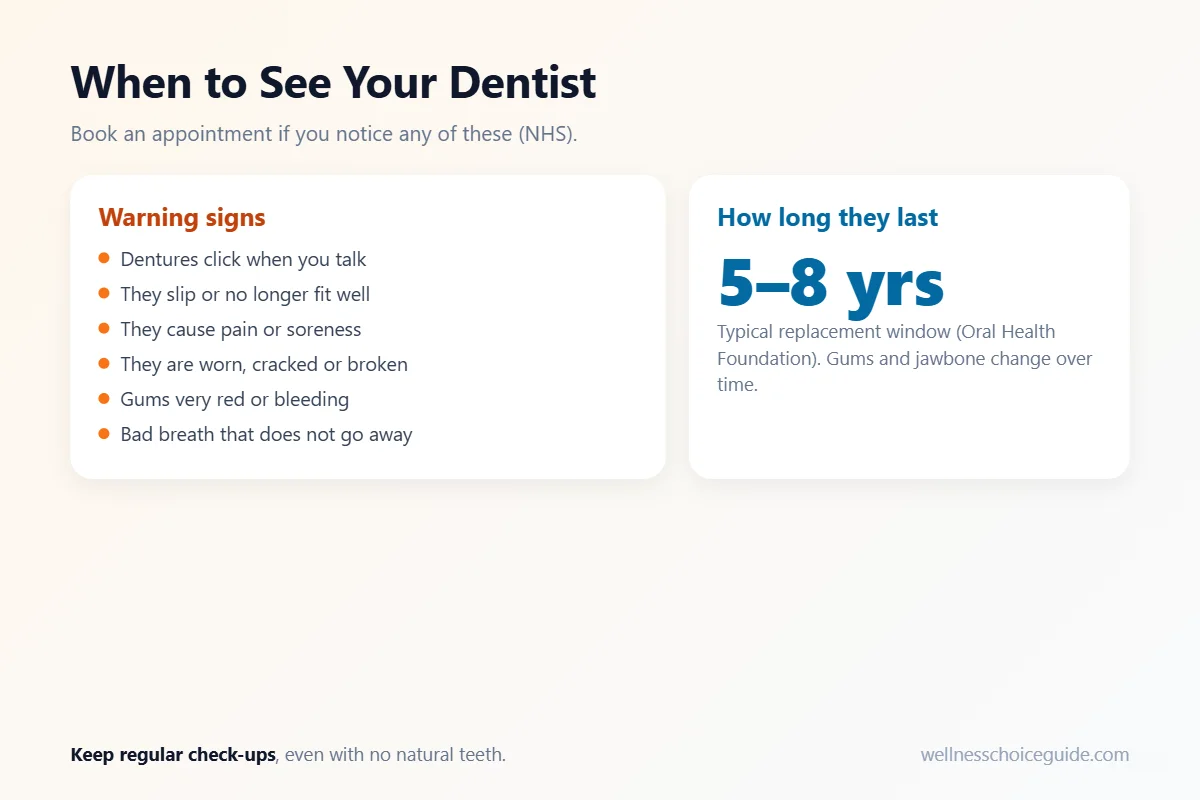
Keep seeing your dentist regularly, even if you have no natural teeth left. According to the NHS, you should also book an appointment if:
- your dentures click when you talk;
- they slip or no longer fit well;
- they cause pain or soreness;
- they are worn, cracked, or damaged (bring any broken pieces with you);
- your gums are very red or bleeding, or you have bad breath, which can be signs of gum disease, a fungal infection, or tooth decay.
If a denture breaks, the NHS suggests taking any broken parts to your dentist, as it may be possible to repair it. Our guide on how often to have a dental check-up explains how check-up intervals work, and our guide to bad breath causes covers other possible reasons for persistent bad breath.
Frequently Asked Questions
Can I clean my dentures with toothpaste?
The NHS advises against it, because toothpaste could damage dentures. Use soft soap, washing-up liquid, or a non-abrasive denture cleanser with a soft brush instead.
Should I sleep with my dentures in?
Usually not. The NHS advises taking dentures out at night unless your dentist recommends otherwise, to lower the risk of gum infections, tooth decay, and choking. Keep them moist overnight so they do not warp.
How long does it take to get used to new dentures?
Most people need a few weeks. Soreness, extra saliva, and a loose feeling are common at first. If discomfort continues, see your dentist for an adjustment.
Why do my dentures feel loose?
Dentures can loosen over time as your gums and jawbone change shape. If they slip, click, or need more adhesive than before, ask your dentist to check the fit.
Do I still need dental check-ups if I have no natural teeth?
Yes. Your dentist can check the fit of your dentures and the health of your gums and mouth. The NHS recommends continuing to see your dentist regularly.
The Bottom Line
Dentures work best when they are cleaned gently every day, rinsed after meals, taken out at night, and kept moist when they are not in your mouth. Avoid regular toothpaste on dentures, handle them carefully, and keep brushing your gums, tongue, and any remaining teeth with fluoride toothpaste.
New dentures take time to get used to, and they will need checking and eventually replacing as your mouth changes. If they become loose, painful, or damaged, or if you notice gum problems, see your dentist rather than trying to fix things yourself.
Sources and Further Reading
- NHS: Dentures (false teeth)
- Oral Health Foundation: Dentures
- American Dental Association, MouthHealthy: Dentures