
Most of us brush our teeth twice a day without a second thought, but the tongue often gets left out. Yet the surface of your tongue is rough and uneven, with plenty of tiny grooves where bacteria, dead cells, and bits of food can collect.
Cleaning your tongue is a simple habit that takes less than a minute. It is often recommended as part of a fresh-breath routine, and many people like the clean feeling it leaves. At the same time, it is not a cure-all, and it works best alongside brushing and cleaning between your teeth.
This guide explains why tongue cleaning matters, what the evidence says, how to clean your tongue with a scraper or a toothbrush, and when tongue or breath changes are worth checking with a dentist.
This article is for general educational purposes and is not a substitute for professional advice. Please see our medical disclaimer.
Why Your Tongue Collects Buildup
The top of your tongue is covered with small bumps called papillae. Between them are tiny spaces where bacteria, food debris, and dead cells can settle. Over time, this can form a thin, whitish or yellowish coating, especially toward the back of the tongue, where it moves less and is harder to reach.
Some of the bacteria that live there break down proteins and release sulfur compounds that smell unpleasant. That is one reason the tongue is often mentioned as a common source of bad breath. Our guide to bad breath causes and fresh-breath habits covers the other common sources too.
What the Evidence Says
Health organizations commonly include tongue cleaning in their oral hygiene advice. The NHS, for example, recommends gently cleaning your tongue once a day using a tongue scraper or cleaner as one way to help prevent bad breath. Cleveland Clinic also notes that it is especially important to clean your tongue, because bacteria and food debris can hide there.
That said, the research on tongue cleaning as a treatment for bad breath is limited. A 2019 Cochrane review of ways to manage halitosis found only low- to very low-certainty evidence for the interventions it looked at, including mechanical tongue cleaning. In other words, tongue cleaning is a reasonable, low-cost habit, but it should not be expected to fix ongoing bad breath on its own.
Tongue Scraper vs. Toothbrush
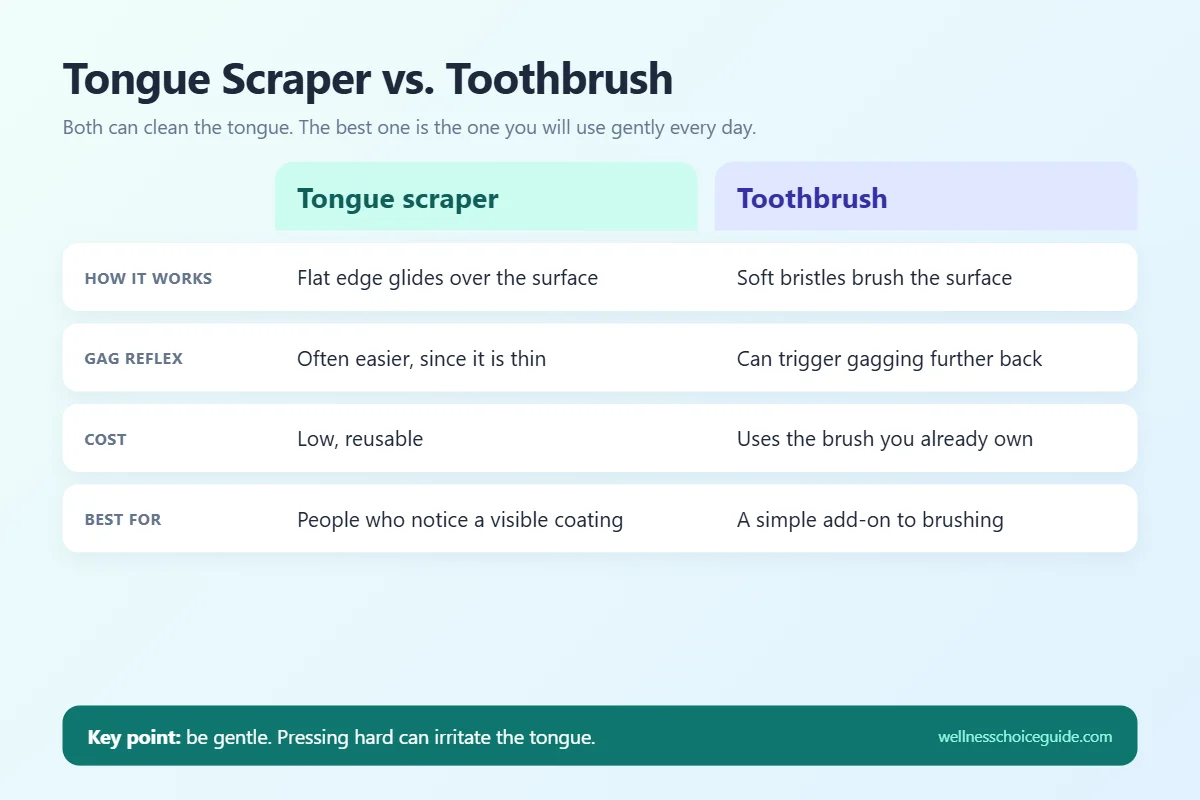
You can clean your tongue with a dedicated tongue scraper or with your regular toothbrush. Both can work, and the best choice is the one you will use gently and consistently.
Tongue Scraper
A tongue scraper is a thin, flat, U-shaped or curved tool, usually made of plastic or stainless steel. You place it toward the back of your tongue and pull it forward. Because it is thin, many people find it less likely to trigger their gag reflex than a toothbrush.
Toothbrush
A soft-bristled toothbrush is a convenient option, since you already have one. Some toothbrushes have a textured tongue cleaner on the back of the head. Gently brush from back to front, without scrubbing hard.
How to Clean Your Tongue
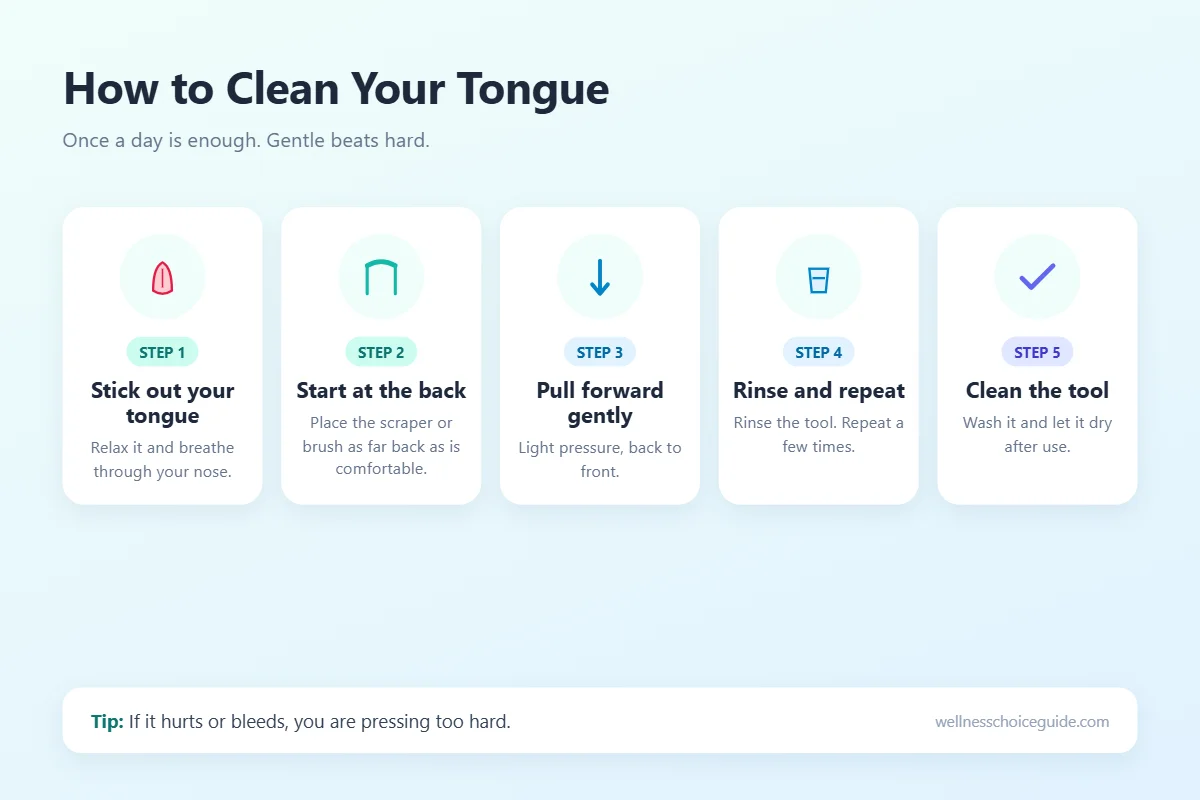
Tongue cleaning is quick and easy once you get used to it:
- Stick out your tongue. Relax it and breathe through your nose, which can help reduce gagging.
- Start at the back. Place the scraper or toothbrush as far back as is comfortable.
- Pull forward gently. Use light pressure and move from back to front.
- Rinse and repeat. Rinse the tool and repeat a few times, covering the sides of the tongue as well.
- Clean the tool. Wash it with water after use and let it dry.
Once a day is enough for most people. Many find it easiest to do right after brushing in the morning or evening. If it hurts or causes bleeding, you are pressing too hard. The NHS also advises against brushing so hard that your gums or tongue bleed.
Tips to Make It Easier
- Go slowly at first. Start a little further forward and move back over a few days as you get used to it.
- Exhale or hum. Some people find this helps reduce the gag reflex.
- Keep the scraper with your toothbrush. Seeing it makes the habit easier to remember.
- Replace it when worn. Swap plastic scrapers when they get rough or damaged, just as you would replace a worn toothbrush.
Tongue Cleaning Is One Part of a Fresh-Breath Routine
Cleaning your tongue works best as part of a complete routine. The NHS recommends brushing your teeth and gums gently at least twice a day for two minutes with a fluoride toothpaste, cleaning between your teeth at least once a day, and getting regular dental check-ups.
Other everyday steps that support fresher breath include:
- cleaning between your teeth with floss or interdental brushes, or a water flosser if you prefer;
- drinking water through the day, since saliva helps rinse the mouth. If your mouth often feels dry, our guide to dry mouth causes and relief may help;
- keeping plaque under control, since buildup along the gumline can harden into tartar;
- not smoking;
- using a mouthwash if it suits you, keeping in mind that it adds to brushing rather than replacing it. See our guide on mouthwash types and how to use them.
For a simple way to put it all together, see our daily oral care routine guide.
When to See a Dentist
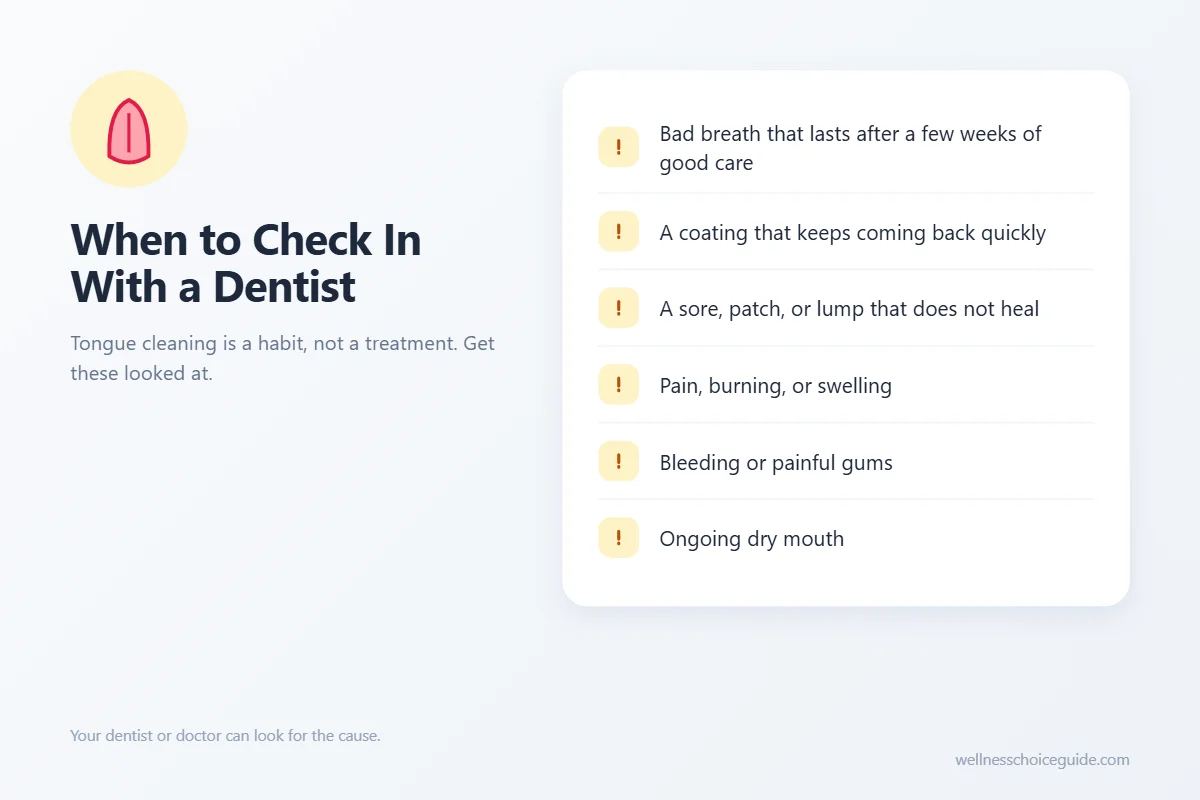
A light coating that comes off easily is common. However, tongue cleaning is a hygiene habit, not a treatment. It is worth checking in with a dentist or doctor if you notice:
- bad breath that does not go away after a few weeks of good oral care;
- a coating that keeps coming back quickly or does not come off with gentle cleaning;
- a sore, patch, or lump on the tongue that does not heal;
- pain, burning, or swelling of the tongue;
- painful, bleeding, or swollen gums. Our guide to bleeding gums explains common causes;
- a mouth that feels dry most of the time.
These signs can have many causes, including gum disease, infections, dry mouth, or other medical conditions, and a professional can help find out what is going on.
Frequently Asked Questions
How often should I clean my tongue?
Once a day is enough for most people. The NHS recommends gently cleaning your tongue once a day with a tongue scraper or cleaner.
Is a tongue scraper better than a toothbrush?
Both can clean the tongue. A scraper is thin and may be easier for people with a strong gag reflex, while a soft toothbrush is convenient. Research has not clearly shown that one is better than the other, so choose the one you will use gently every day.
Will tongue scraping cure bad breath?
It may help as part of a good routine, but evidence that tongue cleaning alone treats bad breath is limited. Persistent bad breath can have other causes, such as gum disease or dry mouth, so see a dentist if it does not improve.
Can tongue cleaning hurt my tongue?
Gentle cleaning should not hurt. Pressing too hard or scraping too often can irritate the surface of the tongue. If you notice pain or bleeding, ease up and use lighter strokes.
Should I clean my tongue if I use oral probiotics?
Tongue cleaning is a normal part of oral hygiene and is generally compatible with other routines. If you use oral probiotics, follow the product directions, and ask your dentist if you are unsure about timing.
The Bottom Line
Your tongue can collect bacteria, food debris, and dead cells that contribute to bad breath. Cleaning it gently once a day with a tongue scraper or a soft toothbrush is a quick, low-cost habit that many health organizations recommend.
Keep your expectations realistic: tongue cleaning supports brushing and cleaning between your teeth, but it does not replace them. If bad breath or tongue changes persist, a dentist can help find the cause.
Sources and Further Reading
- NHS: Bad breath
- Cleveland Clinic: Bad Breath (Halitosis)
- Kumbargere Nagraj S, et al. Interventions for managing halitosis. Cochrane Database of Systematic Reviews, 2019.