
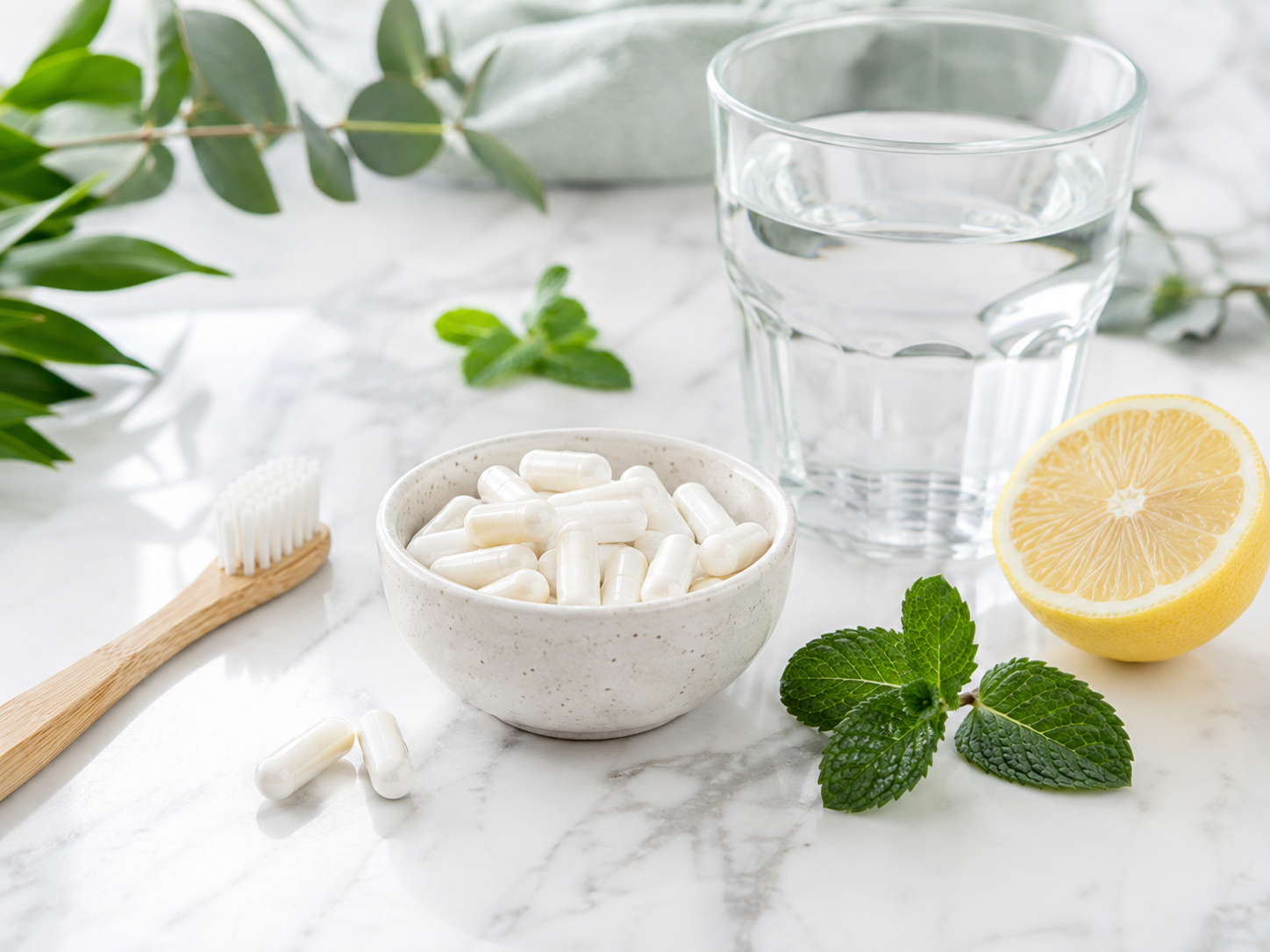
When most people hear the word probiotics, they think about digestive health. But probiotics are also becoming increasingly popular in another area of wellness: oral health.
Your mouth is home to a complex community of bacteria known as the oral microbiome. Some of these microorganisms are helpful, while others may contribute to problems such as bad breath, plaque buildup, or changes in gum health when the balance is disrupted.
This is where oral probiotics come in.
Rather than replacing brushing, flossing, or professional dental care, oral probiotics are designed to complement a healthy oral hygiene routine by supporting a more balanced environment in the mouth.
In this guide, we’ll look at what oral probiotics are, how they differ from traditional probiotics, their potential benefits, and what to consider before adding them to your daily routine.
What Are Oral Probiotics?

Oral probiotics are supplements containing beneficial microorganisms selected specifically for their potential role in the mouth and oral cavity.
They may come in several forms, including:
- Lozenges
- Chewable tablets
- Dissolvable tablets
- Powders
- Certain oral-care products
The goal is usually to allow beneficial bacteria to spend time in the mouth rather than immediately passing into the digestive system.
This makes oral probiotics somewhat different from many traditional probiotic supplements, which are primarily formulated to reach the digestive tract.
Understanding the Oral Microbiome
Your mouth contains hundreds of different microbial species.
These microorganisms live on areas such as:
- Teeth
- Tongue
- Gums
- Cheeks
- Saliva
Not all oral bacteria are harmful.
Many microorganisms are normal parts of a healthy mouth. Problems can arise when certain bacteria become overly dominant or when the overall microbial environment changes.
Factors that may influence the oral microbiome include:
- Diet
- Oral hygiene habits
- Smoking
- Dry mouth
- Certain medications
- Saliva production
- Overall health
- Frequency of brushing and flossing
The idea behind oral probiotics is not to eliminate bacteria from the mouth. Instead, they are generally intended to support a healthier microbial balance.
How Are Oral Probiotics Different From Gut Probiotics?
Although both products use beneficial microorganisms, they are not necessarily interchangeable.
Gut-focused probiotics are commonly designed to survive stomach acid and reach the intestinal tract.
Oral probiotics, on the other hand, may contain strains selected because they are better suited to the environment of the mouth.
They are also often formulated as slowly dissolving tablets or lozenges.
This gives the microorganisms more opportunity to interact with surfaces inside the mouth.
For that reason, simply swallowing a standard probiotic capsule may not provide the same experience as using a supplement specifically designed for oral use.
Potential Benefits of Oral Probiotics

Research into oral probiotics is still developing. They should not be considered a treatment for dental disease, but several areas are being studied.
1. Supporting Fresh Breath
Persistent bad breath can have many causes, including food, dry mouth, gum problems, tongue bacteria, and other health conditions.
Some research has explored whether certain beneficial bacteria may help support a healthier microbial environment associated with fresher breath.
However, probiotics should not be used to mask unexplained or persistent bad breath.
If bad breath continues despite good oral hygiene, a dental evaluation may be appropriate.
2. Supporting Gum Wellness
Healthy gums are an important part of overall oral wellness.
Researchers have investigated whether particular probiotic strains may help support the microbial balance around the gums.
This does not mean that oral probiotics can replace professional treatment for gum disease.
Daily brushing, cleaning between the teeth, and regular dental examinations remain much more important.
3. Supporting a Balanced Oral Microbiome
Perhaps the most straightforward reason people use oral probiotics is to support microbial balance.
A healthy mouth is not bacteria-free.
Instead, it contains many different microorganisms living together.
Oral probiotics are designed around the idea of encouraging beneficial organisms to coexist within that environment.
4. Complementing a Daily Dental Routine
For many people, oral probiotics are best viewed as an optional addition rather than a central part of oral care.
A strong daily routine still begins with the basics:
- Brush thoroughly twice a day
- Clean between teeth daily
- Clean the tongue
- Drink enough water
- Limit frequent sugary snacks and drinks
- Visit a dental professional regularly
Oral probiotics may complement these habits, but they should not replace them.
What Ingredients Should You Look For?
When comparing oral probiotic products, you may notice different bacterial strains listed on the label.
It is useful to look beyond simply seeing the word “probiotic.”
Consider checking:
Specific strain information
A quality product should clearly identify the microorganisms it contains.
Different strains may have different characteristics, so the exact strain can matter.
Form of the supplement
Lozenges and dissolvable tablets are common because they allow more direct contact with the mouth.
Storage instructions
Some probiotics may require specific storage conditions to maintain stability.
Always follow the manufacturer’s instructions.
Added ingredients
Check for:
- Sweeteners
- Flavoring agents
- Allergens
- Sugar
- Fillers
- Other active ingredients
People following a particular diet or managing food sensitivities should pay extra attention to the ingredient list.
When Should Oral Probiotics Be Taken?
There is no universal schedule that applies to every oral probiotic.
The best approach is to follow the directions provided with the specific product.
Some products may recommend use:
- After brushing
- Before bedtime
- After meals
- Once or multiple times per day
If the product is designed to dissolve in the mouth, eating or drinking immediately afterward may reduce the amount of time it remains in contact with oral surfaces.
Always follow the manufacturer’s instructions rather than assuming that every probiotic works the same way.
How Long Does It Take to Notice a Difference?
Responses to supplements vary.
Some people may notice changes in areas such as mouth freshness relatively quickly, while others may notice little or no obvious difference.
There is currently no reliable timetable that applies to everyone.
The oral microbiome is influenced by many factors, including oral hygiene, diet, saliva, dental health, medications, and lifestyle.
For this reason, oral probiotics should be approached realistically rather than viewed as a quick fix.
Are Oral Probiotics Safe?
For many healthy adults, commercially available probiotic products are generally well tolerated when used according to directions.
However, individual circumstances matter.
Consider speaking with a qualified healthcare or dental professional before using a probiotic supplement if you:
- Have a weakened immune system
- Have a serious medical condition
- Are pregnant or breastfeeding
- Are taking medications that affect immune function
- Are considering giving probiotics to a young child
- Have ongoing dental symptoms
Anyone experiencing tooth pain, bleeding gums, swelling, persistent bad breath, or other concerning symptoms should seek professional dental advice rather than relying on supplements.
Oral Probiotics vs. Mouthwash
Oral probiotics and mouthwash serve different purposes.
Many mouthwashes are designed to:
- Freshen breath
- Deliver fluoride
- Reduce certain oral bacteria
- Support plaque control
Oral probiotics take a different approach by introducing selected beneficial microorganisms.
One is not necessarily a replacement for the other.
If you use both products, follow their directions carefully. Some antimicrobial mouthwashes could potentially interfere with probiotic microorganisms if used immediately together.
A dental professional can help determine which oral-care products best fit your needs.
Do You Actually Need Oral Probiotics?
Not necessarily.
A healthy mouth can often be supported effectively through consistent oral hygiene, good nutrition, adequate hydration, and regular dental care.
Oral probiotics may be worth exploring for people who are interested in supporting their oral microbiome, but they are optional.
Before purchasing a supplement, ask yourself:
- Is my basic oral hygiene routine already consistent?
- Does the product clearly list its probiotic strains?
- Are the claims realistic?
- Is the manufacturer transparent about ingredients?
- Am I expecting the supplement to support — rather than replace — dental care?
Products promising dramatic results or suggesting they can replace professional dental treatment should be approached cautiously.
Building a Smarter Oral Wellness Routine

Supplements often receive more attention than the fundamentals, but basic habits usually make the biggest difference.
A practical oral wellness routine can include:
Morning
Brush thoroughly with fluoride toothpaste and clean your tongue.
During the Day
Stay hydrated and avoid repeatedly exposing your teeth to sugary foods and beverages.
Evening
Brush again and clean between your teeth using floss or another interdental cleaning method.
If you decide to use an oral probiotic, add it according to the manufacturer’s directions.
The most effective wellness routines tend to be simple enough to follow consistently.
Frequently Asked Questions
Are oral probiotics the same as regular probiotics?
Not necessarily. Oral probiotic products may contain strains and delivery formats specifically selected for use in the mouth, while many traditional probiotics primarily target digestive health.
Can oral probiotics replace brushing?
No. Oral probiotics should never replace brushing, flossing, or professional dental care.
Can oral probiotics help with bad breath?
Certain strains are being studied for their potential role in supporting a healthier oral environment associated with fresher breath. However, persistent bad breath can have many causes and may require dental evaluation.
Should I take oral probiotics every day?
It depends on the specific product. Follow the directions on the label and consult a qualified professional if you have questions about long-term use.
Are oral probiotics worth trying?
For some people, they may be a useful addition to an already strong oral hygiene routine. Their value depends on the product, its ingredients, your expectations, and your individual oral health needs.
The Bottom Line
Oral probiotics are an interesting development in everyday oral wellness.
Rather than trying to remove all bacteria from the mouth, they focus on the idea of supporting a more balanced oral microbiome.
Research is continuing, and oral probiotics should not be treated as a cure or replacement for established dental care.
If you are curious about trying them, focus on products with clearly identified strains, transparent ingredient labels, and realistic claims.
Most importantly, keep the fundamentals in place: regular brushing, interdental cleaning, hydration, a balanced diet, and routine dental checkups.
A supplement can support a healthy routine.
It should never have to carry the entire routine.
Medical Disclaimer: This article is for general educational purposes only and is not intended to provide medical or dental advice, diagnosis, or treatment. Always consult a qualified healthcare or dental professional regarding individual health concerns.