
How Often Should You Replace Your Toothbrush? A Simple Guide to Bristles, Timing, and Oral Hygiene
A toothbrush is one of the simplest tools in an everyday oral-care routine.
You use it regularly, probably without giving much thought to the brush itself.
But there is one question worth asking from time to time:
Is your toothbrush still in good enough condition to keep using?
Many people wait until the bristles are obviously damaged—or until they cannot remember when they last replaced the brush.
The good news is that toothbrush replacement does not need to be complicated.
A combination of time, bristle condition, and your individual circumstances can help you decide when it is time for a new one.
The General Rule: Replace It About Every Three to Four Months
For many people, a useful general guideline is to replace a toothbrush approximately every three to four months.
That is not a rigid expiration date.
A toothbrush may need replacing sooner if the bristles become noticeably worn, bent, frayed, or flattened.
On the other hand, someone who uses a brush gently and finds that it still looks relatively good may wonder why replacement timing matters.
The important point is that toothbrushes are designed to be used regularly, and the bristles gradually change with use.
Instead of relying only on the calendar, think of the three-to-four-month guideline as a reminder to inspect the brush.
Look at the Bristles, Not Just the Date
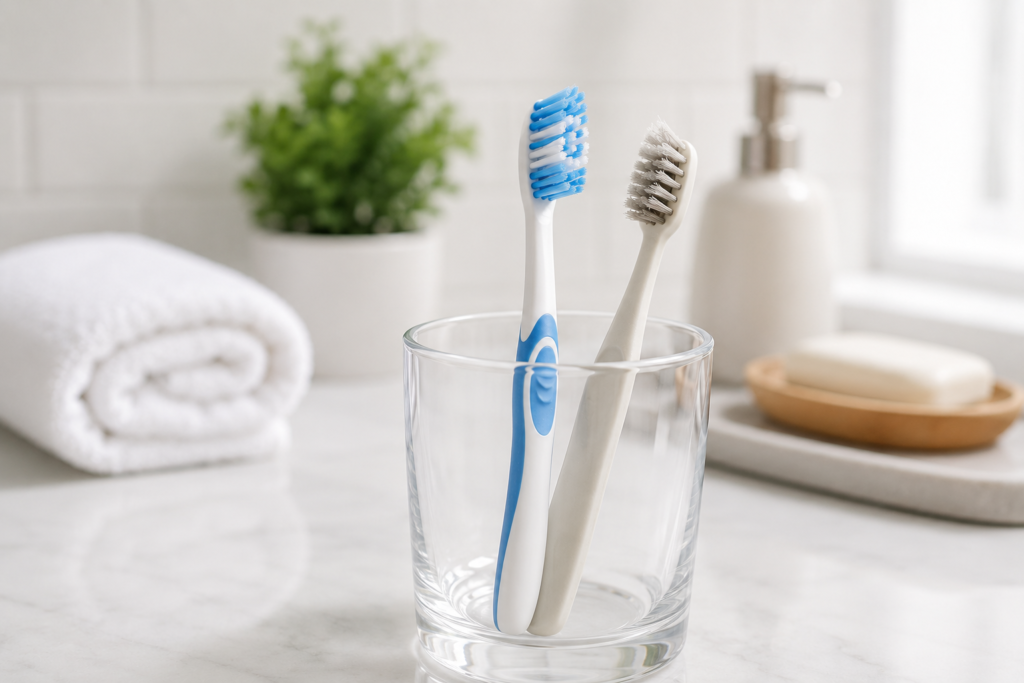
One of the easiest ways to tell whether a toothbrush needs replacing is to look closely at the bristles.
A relatively new toothbrush generally has bristles that maintain their original shape.
Over time, you may notice:
- bristles bending outward;
- flattened areas;
- uneven bristle height;
- fraying;
- or visible wear around the edges.
These are signs that the brush has been through a lot of use.
If the bristles already look worn before three months have passed, there is no particular reason to keep using the brush simply because the calendar says you can.
The condition of the brush matters.
Why Do Bristles Wear Out?
Toothbrush bristles experience repeated contact with teeth, gums, toothpaste, and water.
The amount of wear can vary considerably between people.
Some people naturally brush more gently.
Others may apply considerably more pressure.
If you brush aggressively, your bristles may become bent or flattened sooner.
That means two people who bought identical toothbrushes on the same day may not need to replace them at exactly the same time.
This is another reason why looking at the actual brush is useful.
Bristle Wear Can Be a Reminder to Check Your Brushing Technique
A toothbrush that becomes heavily worn very quickly may be telling you something about your brushing habits.
If the bristles repeatedly splay outward after a relatively short period, you may be applying more pressure than necessary.
Brushing harder does not automatically mean brushing better.
A more controlled approach is generally preferable to aggressively scrubbing the teeth and gumline.
If you notice persistent gum sensitivity, bleeding, pain, or other concerns, discuss them with a dental professional rather than trying to solve the problem simply by changing toothbrushes.
What About Electric Toothbrush Heads?
Electric toothbrushes introduce another version of the same question.
Instead of replacing the entire toothbrush, you typically replace the brush head.
The same basic principles apply.
Follow the manufacturer’s replacement guidance and inspect the bristles regularly.
A brush head that is visibly worn may need replacing even if you have not reached the manufacturer’s suggested interval.
It is also worth remembering that different electric toothbrush systems can have different replacement recommendations.
The product instructions should therefore take priority over a generic rule.
Should You Replace Your Toothbrush After Being Sick?
This is a common question.
People sometimes assume that a toothbrush should automatically be thrown away after every illness.
There is not a universal rule that says every illness requires an immediate toothbrush replacement.
However, if your toothbrush is already old, heavily worn, or difficult to keep clean, replacing it may be a practical choice.
The more important habit is maintaining good general hygiene and allowing the toothbrush to dry properly between uses.
If you have a specific medical or dental concern, follow the advice of your healthcare professional.
What About Traveling?
Travel can also change how you handle your toothbrush.
A toothbrush placed in a closed travel container while still wet may not dry as effectively as one stored in an open, clean environment.
For travel:
- rinse the brush thoroughly;
- allow it to dry when possible;
- avoid unnecessarily sharing toothbrushes;
- and use a clean travel case when needed.
If your toothbrush becomes damaged during travel, replacing it is simple enough that there is little reason to keep using a badly bent or contaminated-looking brush.
Does the Type of Toothbrush Matter?
There are many different toothbrush designs available:
- soft-bristle manual brushes;
- electric toothbrushes;
- compact-head brushes;
- specialty designs;
- and brushes with different handle shapes.
There is no need to assume that the most complicated toothbrush is automatically the best.
The more important consideration is whether you can use the brush correctly and consistently.
A toothbrush that feels comfortable and allows you to reach the surfaces of your teeth can be more useful than one with features you never actually use.
If you are unsure which toothbrush is appropriate for your particular dental situation, a dentist or dental hygienist can provide personalized guidance.
Don’t Forget the Rest of Your Oral-Care Routine
Replacing your toothbrush is only one small part of oral hygiene.
A healthy routine generally involves more than brushing alone.
Depending on your individual needs, that may include:
- brushing regularly with fluoride toothpaste;
- cleaning between your teeth;
- cleaning your tongue if appropriate;
- maintaining regular dental visits;
- staying hydrated;
- and addressing persistent symptoms rather than simply covering them up.
Our Daily Oral Care Routine: A Practical Morning-to-Night Guide goes into more detail about building a practical routine.
What About Toothpaste and Other Oral-Care Products?
It is easy to become focused on finding the perfect combination of products.
But more products do not necessarily mean a better routine.
You may already use:
- toothpaste;
- floss;
- interdental brushes;
- mouthwash;
- a tongue cleaner;
- an electric toothbrush;
- or an oral probiotic.
The key question is whether each product has a useful place in your routine.
Optional products should remain optional.
The foundation should still be consistent everyday oral care.
A Simple Toothbrush Replacement Checklist
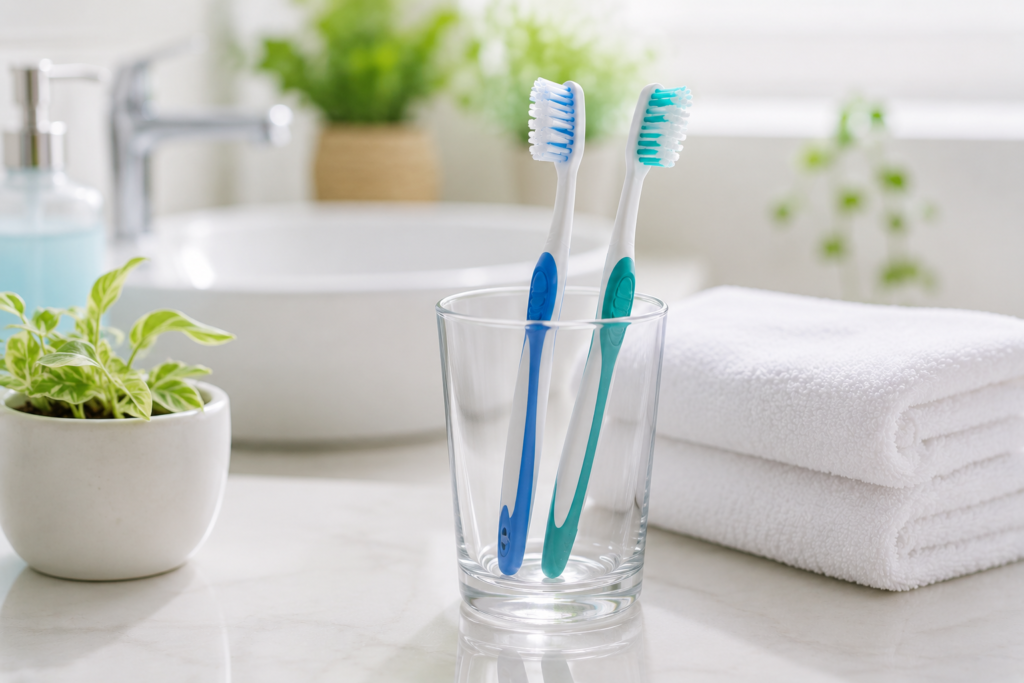
Not sure whether your toothbrush needs replacing?
Ask yourself these questions:
Has it been around three to four months?
If yes, it is a good time to inspect it and consider replacing it.
Are the bristles bent or frayed?
If yes, replacement makes sense regardless of the exact date.
Are the bristles noticeably flattened?
That is another sign of wear.
Did you replace the brush recently but it already looks heavily worn?
Consider whether you are applying excessive brushing pressure.
Is the brush damaged?
A damaged toothbrush is an easy reason to replace it.
Does the manufacturer provide different guidance?
For electric toothbrush heads and specialty products, follow the manufacturer’s instructions.
A New Toothbrush Does Not Fix an Inconsistent Routine
It is tempting to think that buying a new toothbrush is a fresh start.
And sometimes it can be a useful reminder.
But the newest toothbrush cannot compensate for an inconsistent routine.
The more useful goal is to make oral care easy enough that you can maintain it over time.
That means having:
- a toothbrush you are comfortable using;
- toothpaste that suits your needs;
- a practical way to clean between your teeth;
- and a routine you can realistically follow.
Consistency is more valuable than constantly searching for new products.
Where Do Oral Probiotics Fit?
Oral probiotics are sometimes discussed alongside everyday oral wellness because they are marketed as supplements related to the oral microbiome.
But they belong in a different category from basic mechanical cleaning.
A toothbrush physically cleans tooth surfaces.
Interdental cleaning addresses areas a toothbrush cannot easily reach.
An oral probiotic is an optional supplement.
These should not be treated as interchangeable.
If you are interested in the microbiome side of oral wellness, you can read our guide to the oral microbiome and everyday dental wellness.
And if you decide to explore oral probiotics, remember that they should complement rather than replace established oral-care habits.
When Should You Talk to a Dentist?
Toothbrush replacement is a routine matter.
But some symptoms should not be treated as simple toothbrush problems.
Consider speaking with a dental professional if you experience:
- persistent tooth pain;
- swollen or painful gums;
- frequent gum bleeding;
- noticeable gum recession;
- persistent bad breath;
- sensitivity that does not improve;
- or another oral symptom that concerns you.
Changing your toothbrush may be useful, but it is not a substitute for professional evaluation.
The Bottom Line
For many people, replacing a toothbrush every three to four months is a useful general guideline.
But the calendar is not the only factor.
Pay attention to the condition of the bristles.
If they become:
- bent;
- frayed;
- flattened;
- or noticeably worn,
it is probably time for a replacement.
The same principle applies to electric toothbrush heads, although manufacturer instructions should be followed for the specific model.
Most importantly, remember that a toothbrush is just one part of your oral-care routine.
A practical combination of brushing, cleaning between the teeth, regular dental care, and consistent everyday habits is more important than constantly searching for the newest oral-care product.
A fresh toothbrush can help you maintain your routine.
But the routine itself is what matters most.
Medical disclaimer: This article is for general educational purposes only and is not a substitute for professional dental or medical advice. If you have persistent pain, bleeding, swelling, sensitivity, or another concerning oral symptom, consult a qualified dental professional.