

Prebiotics vs Probiotics for Oral Wellness: What’s the Difference?
If you have been reading about the oral microbiome, you have probably come across two similar-sounding words: probiotics and prebiotics.
They are often mentioned together, but they are not the same thing.
Probiotics are live microorganisms used in certain foods and supplements. Prebiotics, on the other hand, are compounds that certain microorganisms can use as a food source. In simple terms, one introduces selected microbes while the other may help create conditions that allow particular microbes to thrive.
That distinction matters when you are trying to understand products marketed for oral wellness.
Here is a practical look at prebiotics vs probiotics for oral health, what each one is designed to do, and how they may fit into a sensible dental-care routine.

First, Remember That Your Mouth Has Its Own Microbiome
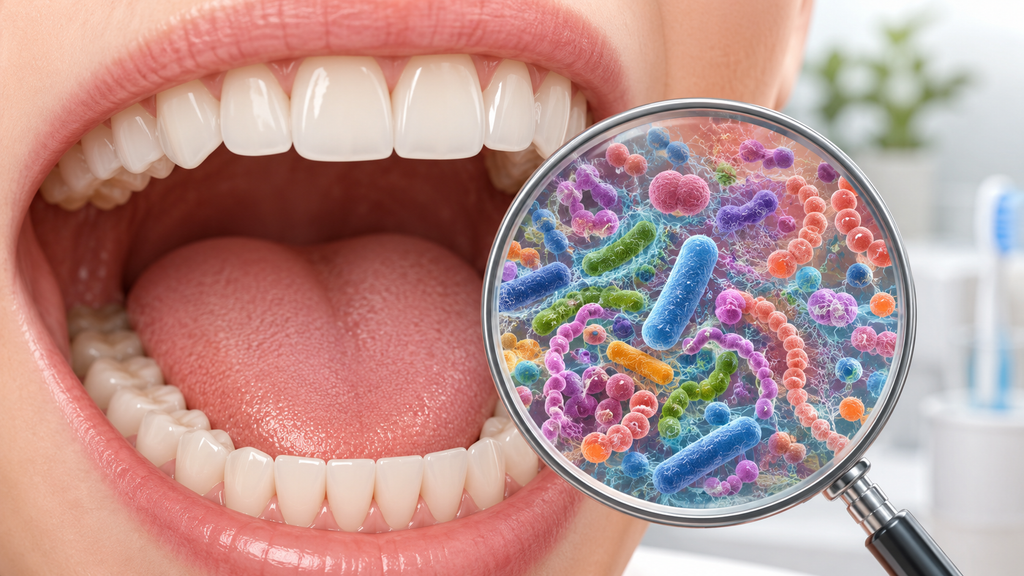
Your mouth is home to a large community of microorganisms living on the tongue, teeth, gums, and other oral surfaces.
This community is known as the oral microbiome.
Having bacteria in your mouth is completely normal. The goal of everyday oral care is not to eliminate every microorganism. Instead, brushing, interdental cleaning, saliva, diet, and professional dental care all help maintain an oral environment where potentially harmful organisms are less likely to dominate.
If you are new to this topic, our guide to the oral microbiome and everyday dental wellness explains the basics in more detail.
This is also where probiotics and prebiotics enter the conversation.
What Are Probiotics?
Probiotics are live microorganisms that are provided in adequate amounts with the intention of delivering a health benefit.
Most people first encounter probiotics through discussions about digestive health. However, probiotic products can contain very different microorganisms depending on what they are designed for.
That is an important detail.
An oral probiotic is not simply any probiotic supplement that happens to be taken by mouth. Products designed specifically for oral use may focus on strains selected because researchers are studying how they interact with the oral environment.
Oral probiotic products may come as:
- chewable tablets;
- lozenges;
- dissolving tablets;
- powders;
- or other formats intended to spend some time in the mouth.
The format can matter because a product swallowed immediately does not interact with the mouth in exactly the same way as something allowed to dissolve there.
For a broader explanation, see our guide to what oral probiotics are and how they may support oral wellness.
What Are Prebiotics?
Prebiotics are different.
They are not living bacteria.
Instead, a prebiotic is a substance that can be selectively used by certain microorganisms. Many well-known prebiotics are types of dietary fiber or related compounds.
Most public discussion and research around prebiotics has focused on the digestive system. Research into how specific prebiotic compounds may influence the oral microbiome is a newer and more specialized area.
That means it is worth being careful with broad claims.
Seeing the word “prebiotic” on an oral-care supplement does not automatically mean the product will produce a particular dental result.
It simply tells you that the formula may contain an ingredient intended to interact with microorganisms differently from the probiotic organisms themselves.
Prebiotics vs Probiotics: The Simplest Difference
A useful way to remember the difference is:
Probiotics provide selected microorganisms.
Prebiotics provide substances that selected microorganisms may use.
They therefore have different roles.
Imagine planting a garden. Probiotics would be closer to adding selected plants to the garden, while prebiotics would be closer to providing something that may help certain plants grow.
It is not a perfect analogy—the oral microbiome is far more complex—but it helps explain why the two terms should not be used interchangeably.
Why Would an Oral Probiotic Include a Prebiotic Ingredient?
Some supplement formulas combine probiotics with ingredients marketed as prebiotics.
The reasoning is relatively straightforward: instead of providing only selected microorganisms, the formula also includes compounds that those or other microorganisms may potentially use.
Products that contain both probiotics and prebiotics are sometimes described as synbiotic formulas.
However, the presence of both types of ingredients does not automatically make one product better than another.
The important questions are more practical:
- Which probiotic strains are actually included?
- What quantity is provided?
- What other ingredients are in the formula?
- Why was the prebiotic ingredient included?
- How is the product intended to be used?
- Does the manufacturer provide clear storage and usage instructions?
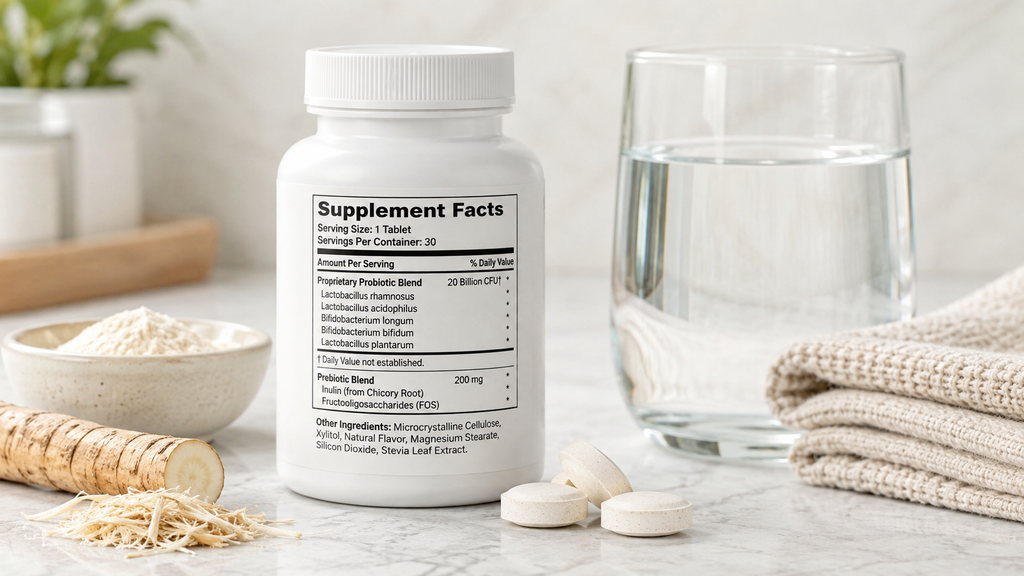
This is why reading the entire Supplement Facts panel and ingredient list is more useful than focusing on one marketing term.
Do Prebiotics and Probiotics Work the Same Way in the Mouth?
No.
Probiotics and prebiotics interact with the microbiome through different mechanisms.
A probiotic supplement introduces specific microorganisms.
A prebiotic does not introduce microorganisms at all. Instead, it provides a compound that particular microbes may be able to use.
And neither works in isolation.
The oral environment is influenced by many everyday factors, including:
- brushing and interdental cleaning;
- saliva flow;
- dietary habits;
- smoking or tobacco exposure;
- medications that affect dry mouth;
- existing dental conditions;
- and regular professional dental care.
This is one reason supplement claims should always be viewed in context.
An oral probiotic or prebiotic product should be considered an optional addition to a broader routine—not a replacement for basic dental care.
What About Prebiotics From Food?
Many naturally fiber-rich foods contain carbohydrates and fibers that interact with microorganisms in the digestive system.
Eating a varied diet that includes vegetables, fruits, legumes, whole grains, nuts, and other minimally processed foods can support overall nutrition.
But it is important not to treat dietary prebiotics and targeted oral-care products as interchangeable.
A fiber-rich meal affects the body in many ways and is not equivalent to using a supplement formulated for the oral environment.
Similarly, eating a particular food should not be expected to produce the same effect as a specific probiotic strain studied in a controlled setting.
A balanced diet is part of overall wellness. It should not be turned into a shortcut for treating dental problems.
Should You Look for Both Prebiotics and Probiotics in a Supplement?

Not necessarily.
A longer ingredient list is not automatically a better ingredient list.
If you are comparing oral probiotic products, start with the fundamentals.
1. Look at the specific probiotic strains
“Contains probiotics” is a very broad statement.
Different microorganisms have different characteristics, so the strain information can be more useful than simply counting how many types of bacteria appear on the label.
2. Check how the product is meant to be used
A dissolving tablet may be intended to remain in the mouth for a period of time, while another supplement may be swallowed.
Follow the product directions rather than assuming all probiotic supplements should be taken the same way.
3. Review the supporting ingredients
Look beyond the probiotic section.
Sweeteners, flavorings, fibers, prebiotic compounds, binders, and other ingredients can all be part of the finished product.
Knowing what they are helps you compare formulas more intelligently.
4. Consider storage requirements
Live microorganisms can be sensitive to environmental conditions.
Some products require refrigeration, while others are designed to remain stable at normal room temperatures.
We explain this in more detail in our guide, Do Oral Probiotics Need Refrigeration? Storage, Shelf Life, and Travel Tips.
5. Be skeptical of dramatic promises
Be cautious when a supplement is presented as a cure for cavities, gum disease, chronic bad breath, or another dental condition.
Those problems can have many causes and may require professional evaluation.
A supplement should not replace a dentist, appropriate treatment, fluoride toothpaste, or routine oral hygiene.
Probiotic, Prebiotic, or Both: Which Is Better?
There is no universal answer.
“Probiotic,” “prebiotic,” and “synbiotic” describe different approaches. They do not provide a simple quality ranking.
A well-designed probiotic-only product may make more sense than a poorly explained combination formula. Likewise, a combination product may be worth considering when the manufacturer clearly explains its ingredients, intended use, and directions.
Instead of asking which category sounds more advanced, ask whether the product itself makes sense.
You can use our oral probiotic buying guide to compare factors such as strains, format, storage, labeling, and overall practicality.
Where Do They Fit Into a Daily Oral-Care Routine?
If you decide to try an oral probiotic or a product containing prebiotic ingredients, keep the basics in perspective.
Your foundation should still include:
- brushing regularly with an appropriate fluoride toothpaste;
- cleaning between the teeth;
- maintaining routine dental checkups;
- addressing persistent symptoms with a dental professional;
- and following any treatment recommendations you have already been given.
A supplement is best viewed as an optional addition—not the center of the routine.
It can also take time to decide whether a product fits your habits. Rather than changing several things at once, a consistent routine makes it easier to understand what you are actually doing day to day.
For more context, read What Do Oral Probiotics Do? A Practical Guide to Their Role in Daily Oral Care.
The Bottom Line
The difference between prebiotics and probiotics is fairly simple once the terminology is clear.
Probiotics are selected live microorganisms. Prebiotics are compounds that selected microorganisms may use.
They are different tools, and neither term by itself tells you whether an oral-care supplement is high quality.
When comparing products, pay attention to the actual strains, supporting ingredients, usage instructions, storage requirements, and the strength of the claims being made.
Most importantly, keep supplements in their proper place.
They may complement an everyday oral-wellness routine, but they should never replace brushing, interdental cleaning, regular dental care, or professional evaluation when something feels wrong.
Medical disclaimer: This article is for general educational purposes and is not a substitute for professional dental or medical advice. Oral probiotic and prebiotic supplements are not intended to diagnose, treat, cure, or prevent dental or medical conditions. Speak with a qualified healthcare or dental professional if you have persistent oral symptoms, an existing condition, or questions about supplement use.