
Toothache can range from a dull, nagging ache to a sharp, throbbing pain that makes it hard to eat, sleep, or concentrate. It is one of the most common reasons people contact a dentist, and it is usually a sign that something needs attention.
This guide explains the common causes of toothache, what you can do to ease the pain while you wait for an appointment, when to see a dentist, the warning signs that need urgent care, and how to lower your risk of toothache in the future.
This article is for general educational purposes and is not a substitute for professional advice. Please see our medical disclaimer.
What Causes Toothache?
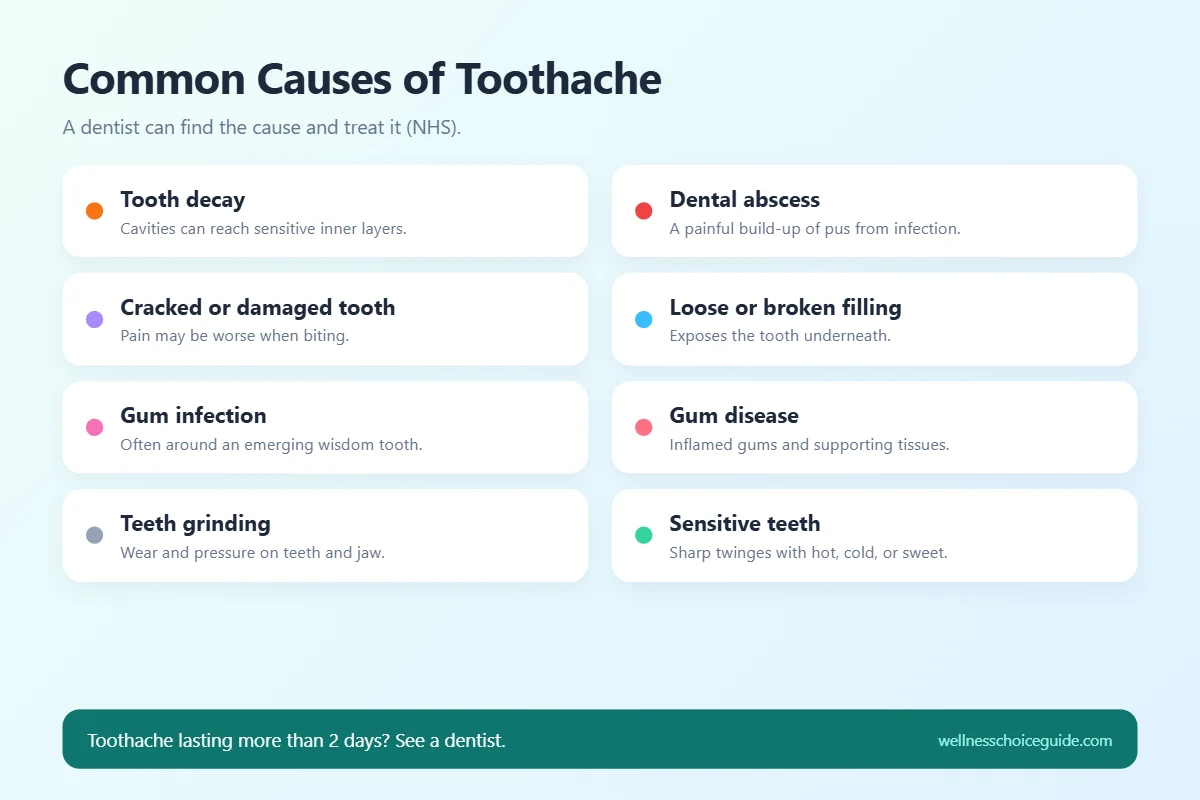
According to the NHS, toothache can be caused by:
- tooth decay, which can create cavities that reach the sensitive inner layers of a tooth;
- a dental abscess, a painful build-up of pus caused by infection;
- a cracked or damaged tooth;
- a loose or broken filling;
- an infection, which often happens when a tooth, such as a wisdom tooth, has broken through the gum but does not have enough room to come through fully;
- problems with braces;
- gum disease;
- grinding your teeth.
The NHS adds that tooth pain can also be caused by having sensitive teeth. Our guides to tooth decay, gum disease, teeth grinding, and tooth sensitivity cover these causes in more detail.
How to Ease Toothache While You Wait
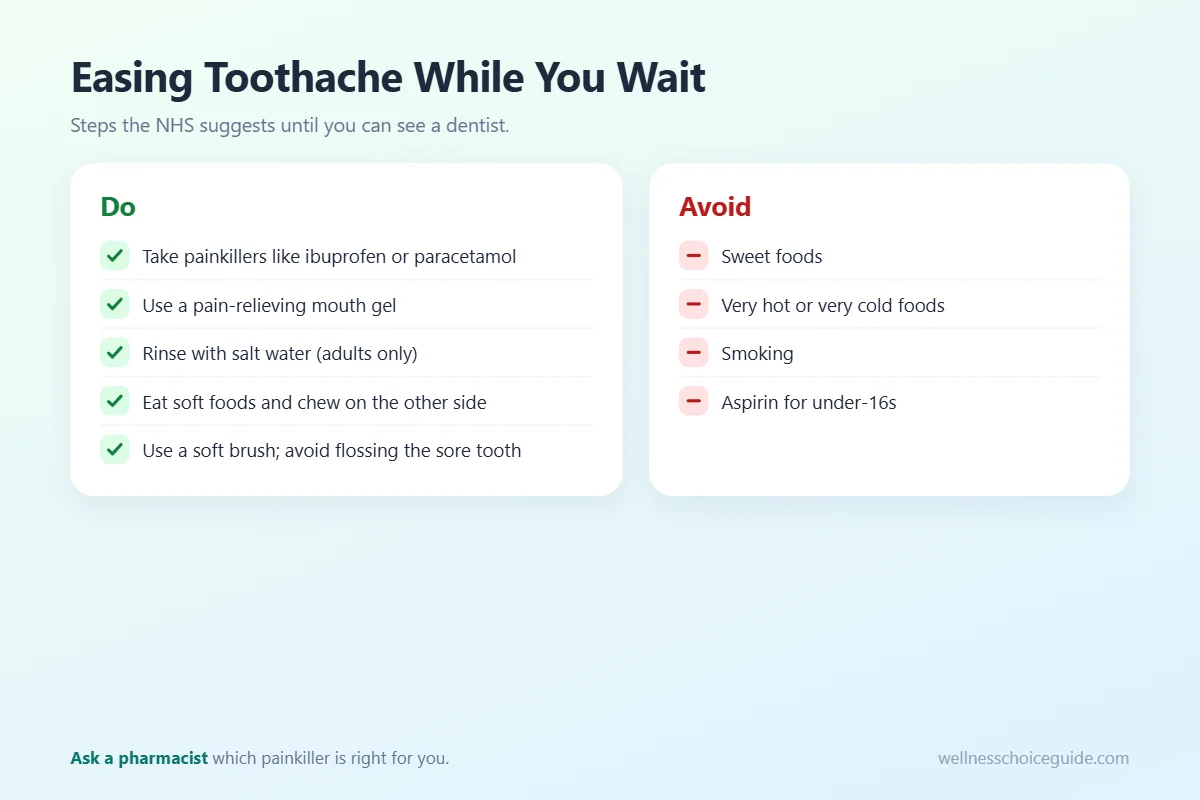
Toothache usually needs a dentist to treat the cause, but the NHS suggests some steps that may help while you wait for an appointment.
Things That May Help
- Take painkillers such as ibuprofen or paracetamol. Children under 16 should not take aspirin. A pharmacist can advise you on what is suitable.
- Use a pain-relieving gel for your mouth, available from pharmacies.
- Rinse with salt water. Dissolve half a teaspoon of salt in a glass of warm water, rinse, and spit it out. Children should not try this in case they swallow it.
- Eat soft foods, such as yogurt or scrambled eggs, and try to avoid chewing with the sore tooth.
- Use a soft toothbrush and avoid flossing around the sore tooth.
Things to Avoid
- foods that are sweet, very hot, or very cold;
- smoking, which can make some dental problems worse.
Always follow the directions on any medicine, and check with a pharmacist if you have other health conditions or take other medicines.
When to See a Dentist
The NHS advises seeing a dentist if you have toothache:
- that lasts more than 2 days;
- that does not go away when you take painkillers;
- with a high temperature, pain when you bite, red gums, or a bad taste in your mouth;
- and your cheek or jaw is swollen.
The NHS also notes that you should not go to your GP for toothache, as they will not be able to give you dental treatment. Contact a dentist instead. If your dentist is closed, their answerphone may tell you what to do.
When Toothache Is an Emergency
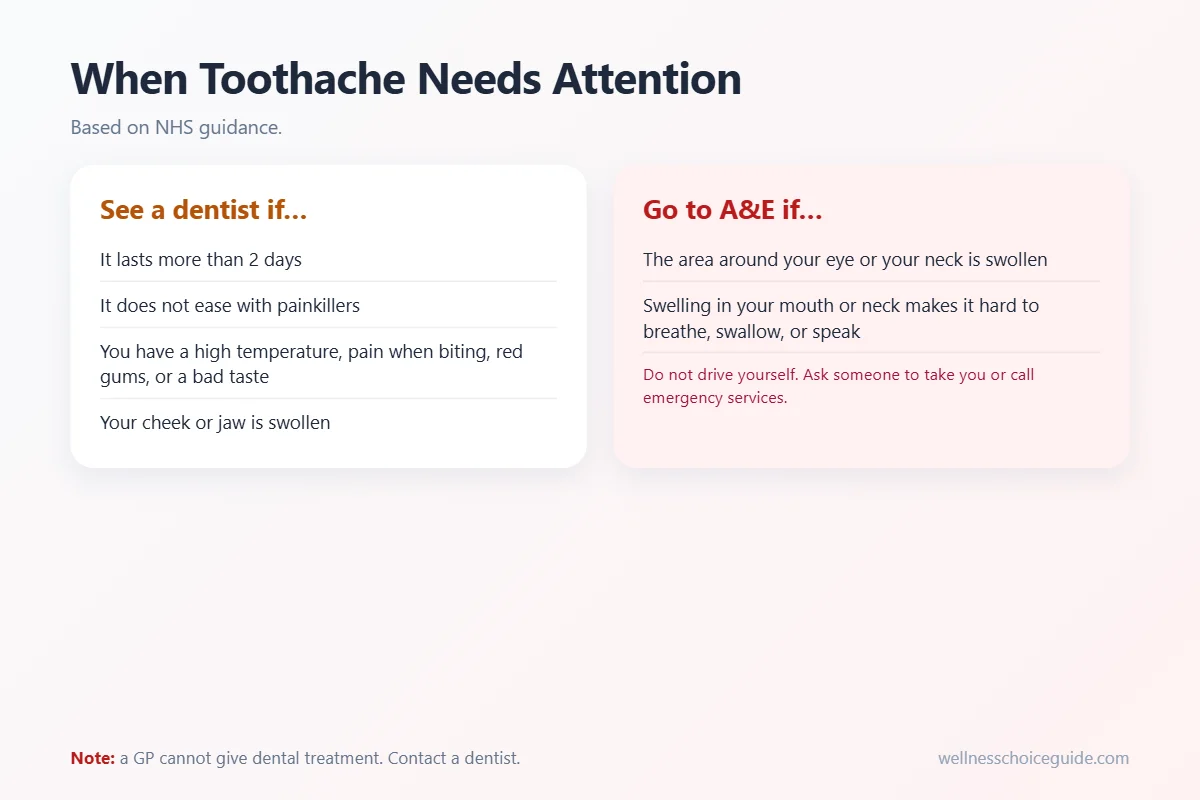
Some symptoms need urgent medical help. The NHS says to go to an emergency department if you have toothache and:
- the area around your eye or your neck is swollen;
- swelling in your mouth or neck is making it difficult to breathe, swallow, or speak.
Do not drive yourself. Ask someone to drive you or call emergency services, and bring any medicines you take with you.
Preparing for Your Dental Appointment
A few notes can help your dentist find the cause of the pain more quickly. Before your appointment, it may help to jot down:
- when the pain started and whether it comes and goes or is constant;
- what makes it worse, such as biting, hot or cold drinks, or sweet foods;
- whether you have noticed swelling, a bad taste, or a fever;
- any painkillers you have taken and when;
- any other medicines you take and any health conditions you have.
If your toothache started after an injury, or a filling or crown has come loose, mention that too.
How a Dentist May Treat Toothache
Treatment depends on the cause. A dentist will examine your mouth and may take an X-ray. Depending on what they find, treatment might include:
- a filling for a cavity;
- repairing a cracked tooth or a broken filling;
- treatment for an abscess or infection;
- root canal treatment if decay has reached the soft tissue in the middle of the tooth;
- in some cases, removing the tooth.
The NHS explains that a dentist can treat the cause of the pain and stop any problems from getting worse, which is why it is best not to wait too long.
How to Help Prevent Toothache
The NHS says the best way to prevent toothache is to keep your teeth and gums as healthy as possible. Everyday habits that help include:
- brushing twice a day with fluoride toothpaste, and spitting rather than rinsing afterward;
- cleaning between your teeth every day with floss, interdental brushes, or a water flosser;
- cutting down on sugary foods and drinks, and how often you have them;
- not smoking;
- having regular dental check-ups, so problems can be found early.
The National Institute of Dental and Craniofacial Research (NIDCR) notes that early tooth decay can be stopped or even reversed with fluoride, before a cavity forms. That is one reason regular check-ups and good daily care matter.
Toothache in Children
Children can get toothache too, often from tooth decay. Follow the same general advice, but remember that children under 16 should not take aspirin and children should not use salt water rinses in case they swallow them. If your child has toothache that does not settle, or any swelling, contact a dentist.
Frequently Asked Questions
How long can toothache last before I see a dentist?
The NHS advises seeing a dentist if toothache lasts more than 2 days, does not ease with painkillers, or comes with swelling, fever, or a bad taste.
Does salt water help toothache?
A warm salt water rinse is one of the steps the NHS suggests while waiting for a dentist. It is not suitable for children, who may swallow it.
Can toothache go away on its own?
Sometimes pain fades, but the underlying problem, such as decay or infection, usually needs treatment. It is best to see a dentist rather than wait.
Should I see a GP for toothache?
No. The NHS notes that GPs cannot provide dental treatment. Contact a dentist, or seek emergency care if you have serious swelling or trouble breathing or swallowing.
The Bottom Line
Toothache is usually a sign of an underlying problem such as decay, infection, a damaged tooth, or gum disease. Painkillers, a salt water rinse, soft foods, and avoiding sweet or very hot and cold foods may help while you wait.
See a dentist if pain lasts more than 2 days or comes with swelling, fever, or a bad taste, and seek urgent care if swelling affects your eye, neck, breathing, or swallowing.
Sources and Further Reading
- NHS: Toothache
- NHS: Tooth decay
- National Institute of Dental and Craniofacial Research: Tooth Decay