

A sip of iced water, a spoonful of ice cream, or even a breath of cold air, and suddenly there is a quick, sharp twinge in your teeth. Tooth sensitivity is very common, and for many people it comes and goes without much warning.
The good news is that everyday sensitivity often has understandable causes, and many people find that small changes in their routine make a noticeable difference. At the same time, sensitivity can sometimes point to a problem a dentist should look at.
This guide explains why teeth become sensitive, the most common triggers, practical ways to ease the discomfort, and the signs that it is time to book a dental visit.
This article is for general educational purposes and is not a substitute for professional advice. Please see our medical disclaimer.
Why Teeth Become Sensitive
The outer layer of a tooth crown is enamel, the hardest substance in the body. Below the gumline, the root is covered by a thinner layer called cementum. Underneath both is dentin, a layer that contains thousands of tiny channels, or tubules, leading toward the nerve inside the tooth.
When enamel wears down or gums recede, dentin can become exposed. Hot, cold, sweet, or acidic things can then travel through those tiny channels and stimulate the nerve, causing that short, sharp twinge. This is often called dentin hypersensitivity.
That is why sensitivity is usually a sign that something has changed at the surface of the tooth or along the gumline, rather than a problem on its own.
Common Causes of Tooth Sensitivity
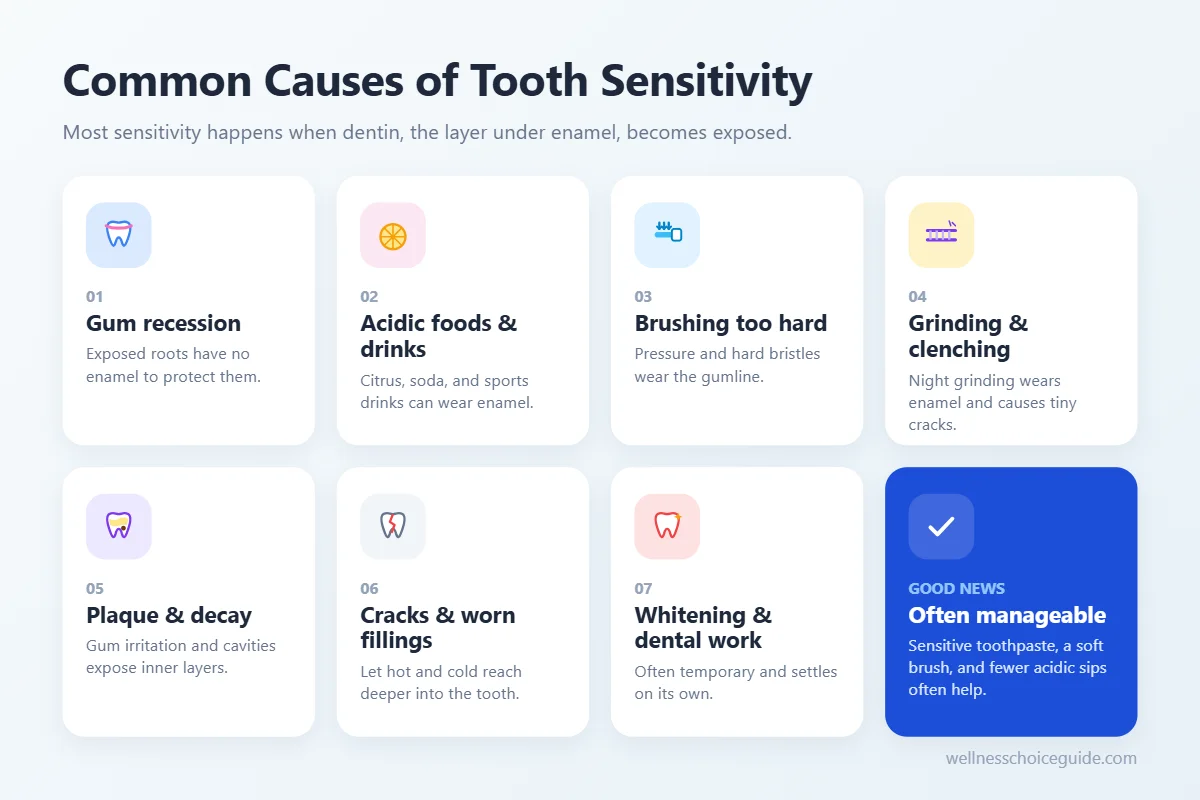
1. Gum Recession
When gums pull back from the teeth, the root surface becomes exposed. Roots do not have a protective enamel layer, so they tend to be more sensitive. Gum recession can be linked to gum disease, aging, genetics, or brushing too hard.
2. Enamel Wear From Acidic Foods and Drinks
Frequent exposure to acidic foods and drinks, such as citrus fruits, soda, sports drinks, wine, and some juices, can gradually soften and wear enamel. This process is called dental erosion.
3. Brushing Too Hard
Heavy pressure or a hard-bristled toothbrush can wear enamel near the gumline and contribute to gum recession over time. Our guide on how often to replace your toothbrush also explains why worn, splayed bristles are worth replacing.
4. Teeth Grinding or Clenching
Grinding or clenching, especially during sleep, can wear down enamel and create tiny cracks. Many people do not realize they grind until a dentist notices signs of wear.
5. Plaque, Gum Disease, and Tooth Decay
Plaque buildup along the gumline can irritate the gums and contribute to recession, and cavities can expose sensitive inner layers of the tooth. If you want to understand the difference between soft plaque and hardened buildup, see our guide to plaque vs. tartar.
6. Cracked Teeth or Worn Fillings
A cracked tooth or an old filling that has worn or chipped can allow temperature changes to reach the inner tooth more easily. Sensitivity that is limited to one tooth, or that happens when you bite down, is worth having checked.
7. After Whitening or Dental Work
Some people notice temporary sensitivity after teeth whitening, a professional cleaning, or a new filling. This usually settles on its own, but your dentist can advise if it lasts longer than expected.
Everyday Ways to Ease Sensitive Teeth
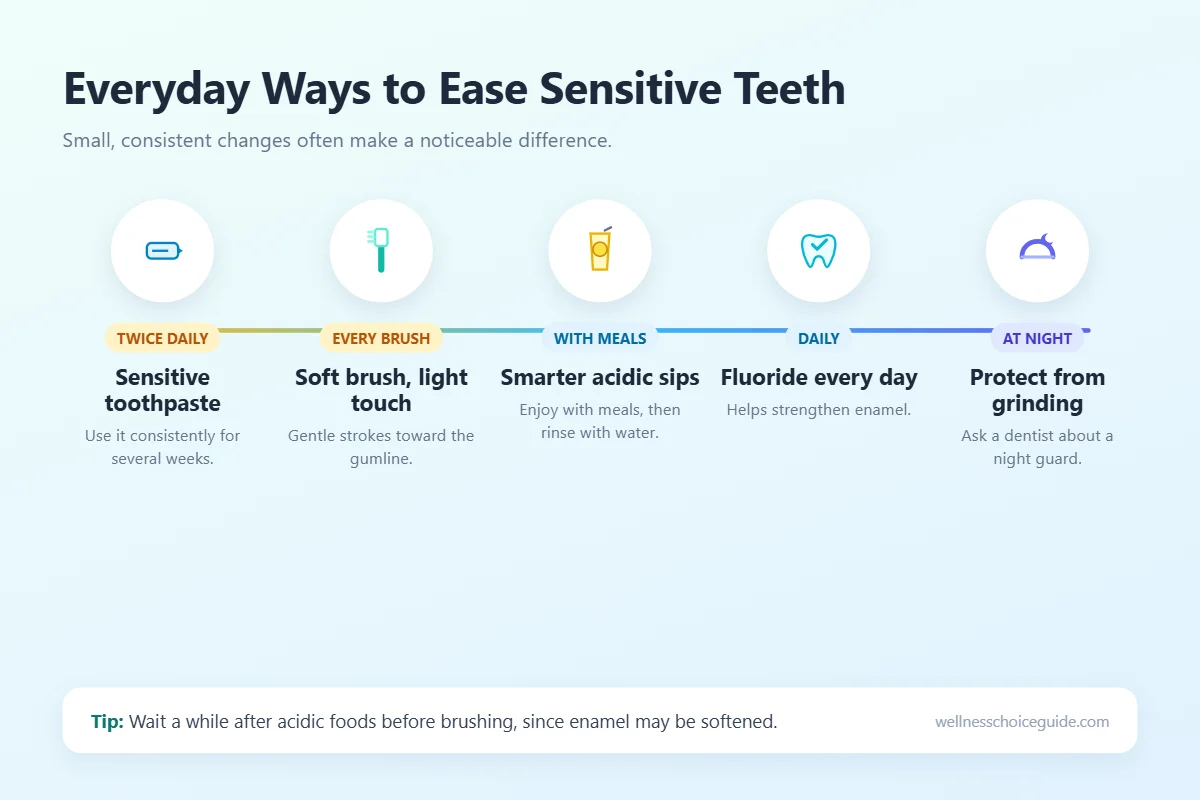
Try a Toothpaste for Sensitive Teeth
Toothpastes made for sensitive teeth usually contain ingredients such as potassium nitrate or stannous fluoride. These work by calming the nerve response or by helping block the tiny channels in exposed dentin. They generally need to be used consistently, twice a day, for several weeks before you notice the full effect.
Some people also find it helpful to gently apply a small amount of this toothpaste to the sensitive area and leave it there briefly before bed. Ask your dentist whether that approach suits you.
Brush Gently With a Soft Brush
Use a soft-bristled toothbrush and gentle, short strokes, angling the bristles toward the gumline. Scrubbing harder does not clean better and can make sensitivity worse over time.
Be Mindful of Acidic Foods and Drinks
You do not need to avoid acidic foods completely, but it helps to:
- enjoy acidic drinks with meals rather than sipping them throughout the day;
- rinse your mouth with water afterward;
- use a straw for acidic drinks when practical;
- wait a while after acidic foods or drinks before brushing, since enamel may be temporarily softened.
Use Fluoride
Fluoride helps strengthen enamel. Brushing twice a day with a fluoride toothpaste is the foundation, and a dentist may suggest an additional fluoride product or a professional fluoride treatment if sensitivity persists.
Protect Against Grinding
If you grind or clench your teeth at night, a dentist may recommend a custom night guard to reduce wear.
Keep a Consistent Routine
Cleaning between your teeth daily and brushing gently twice a day helps keep plaque and gum irritation under control. Our daily oral care routine guide walks through a simple approach. If your gums also bleed when you brush, our guide to bleeding gums may help.
What a Dentist May Do
If home care is not enough, a dentist can look for the underlying cause and may suggest options such as:
- a professional fluoride varnish or desensitizing treatment;
- bonding or sealing exposed root surfaces;
- repairing a worn filling, crack, or cavity;
- treating gum disease or, in some cases, a gum graft for significant recession;
- a night guard for grinding;
- a root canal in rare cases where the nerve is affected and other treatments have not helped.
When to See a Dentist
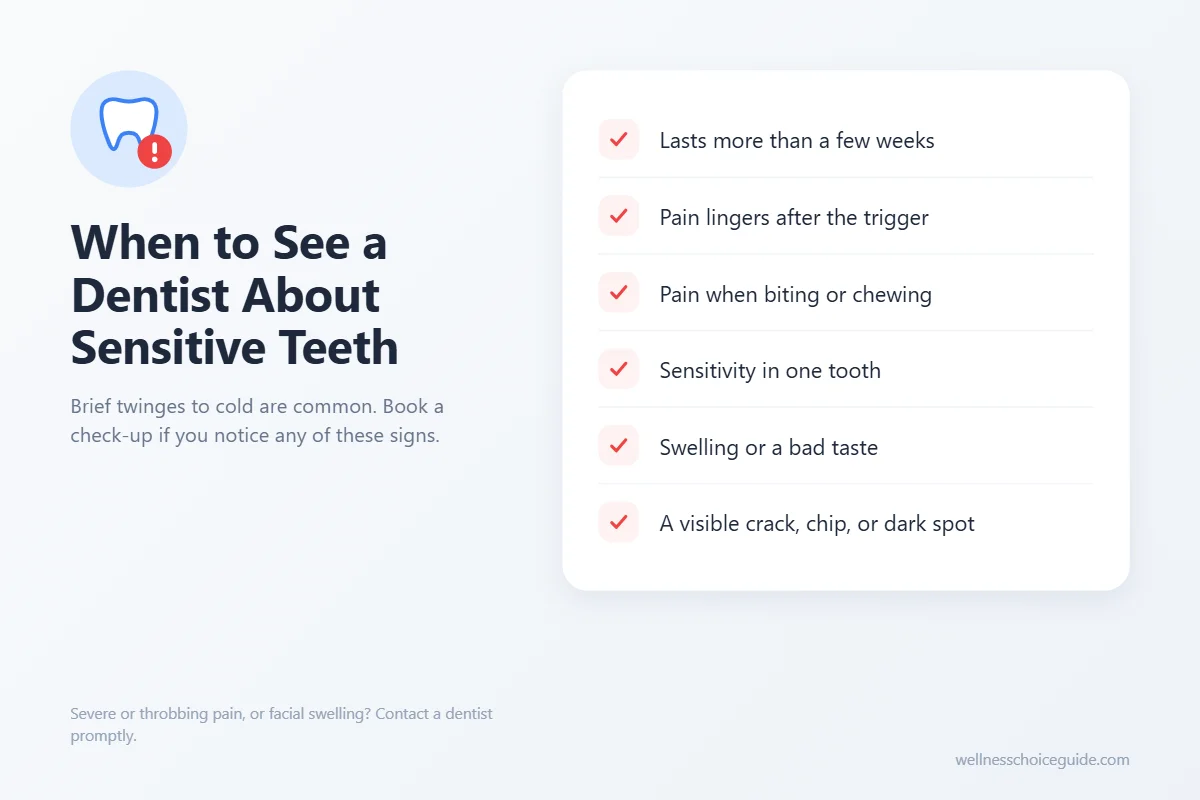
Mild, brief sensitivity to cold that improves with a sensitive toothpaste is common. However, it is a good idea to book a dental appointment if you notice:
- sensitivity that lasts more than a few weeks despite home care,
- pain that lingers after the hot or cold trigger is gone,
- pain when biting or chewing,
- sensitivity concentrated in one tooth,
- swelling, a bad taste, or signs of infection,
- a visible crack, chip, or dark spot on a tooth.
These can be signs of a cavity, a cracked tooth, or another problem that is easier to treat when it is caught early.
Frequently Asked Questions
Is tooth sensitivity normal?
It is very common, but it usually means something has changed, such as enamel wear or gum recession. Mild sensitivity often improves with gentle brushing and a toothpaste for sensitive teeth.
How long does sensitive toothpaste take to work?
Many people notice some improvement within a couple of weeks, but it often takes several weeks of consistent, twice-daily use to see the full effect.
Can tooth sensitivity go away on its own?
Temporary sensitivity, such as after whitening or a filling, often fades on its own. Sensitivity caused by ongoing enamel wear or gum recession usually needs a change in habits or professional care.
Can oral probiotics help sensitive teeth?
Tooth sensitivity is mainly related to exposed dentin, not to the balance of bacteria in the mouth. Oral probiotics are not a treatment for sensitive teeth and do not replace a sensitive toothpaste or dental care.
The Bottom Line
Tooth sensitivity usually happens when the protective outer layers of a tooth wear down or the gums recede, exposing the dentin underneath. A toothpaste for sensitive teeth, gentle brushing with a soft brush, fluoride, and smarter habits around acidic foods often help.
If sensitivity lingers, affects one tooth, or comes with pain when biting, a dentist can find the cause and recommend the right treatment.
Sources and Further Reading
- American Dental Association, MouthHealthy: Sensitive Teeth
- Cleveland Clinic: Sensitive Teeth
- American Dental Association: Toothpastes
- National Institute of Dental and Craniofacial Research: Periodontal (Gum) Disease