
Do you wake up with a sore jaw, a dull headache, or teeth that feel strangely sensitive? Or has a partner told you that you make a grinding noise in your sleep? You may be one of the many people who grind or clench their teeth, a habit known as bruxism.
Because teeth grinding often happens during sleep, many people do not realize they do it until a dentist spots signs of wear. The good news is that there are practical steps that may help, and simple ways a dentist can protect your teeth.
This guide explains the common signs of teeth grinding, what it is linked to, things you can try at home, and when to see a dentist or doctor.
This article is for general educational purposes and is not a substitute for professional advice. Please see our medical disclaimer.
What Is Teeth Grinding (Bruxism)?
Bruxism means grinding your teeth or clenching your jaw. According to the NHS, it can happen while you are awake or asleep. Some people clench their jaw during the day without noticing, especially when concentrating or under pressure, while others grind their teeth at night.
Occasional grinding may not cause problems. But when it happens often, the repeated pressure can wear down teeth, strain the jaw muscles, and contribute to pain.
Signs You May Be Grinding Your Teeth
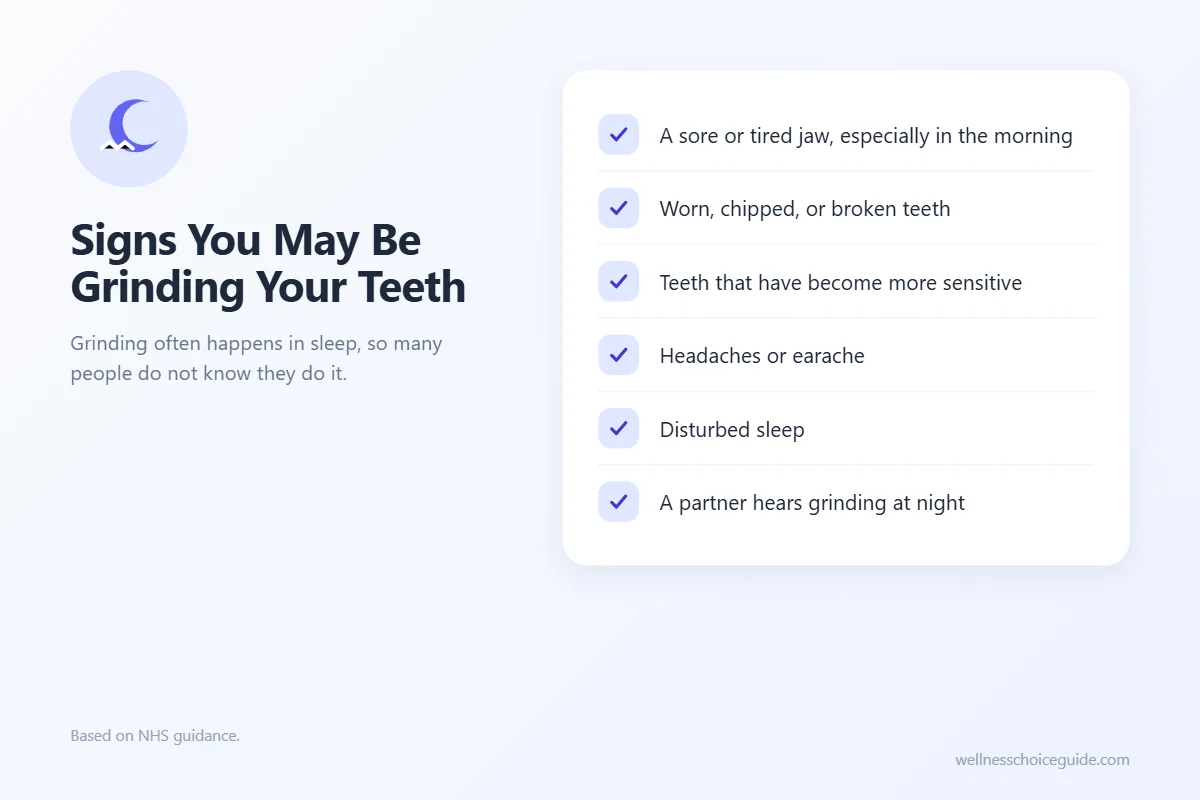
The NHS lists these common symptoms of teeth grinding, in addition to the grinding and clenching itself:
- a painful jaw, which can lead to a condition called temporomandibular disorder (TMD);
- worn-down or broken teeth, which can cause increased sensitivity and loss of teeth and fillings;
- headaches;
- earache;
- disturbed sleep.
A partner or family member hearing a grinding sound at night is another common clue. If your teeth have become more sensitive, our guide to tooth sensitivity causes and relief explains how worn enamel can play a role.
What Is Teeth Grinding Linked To?
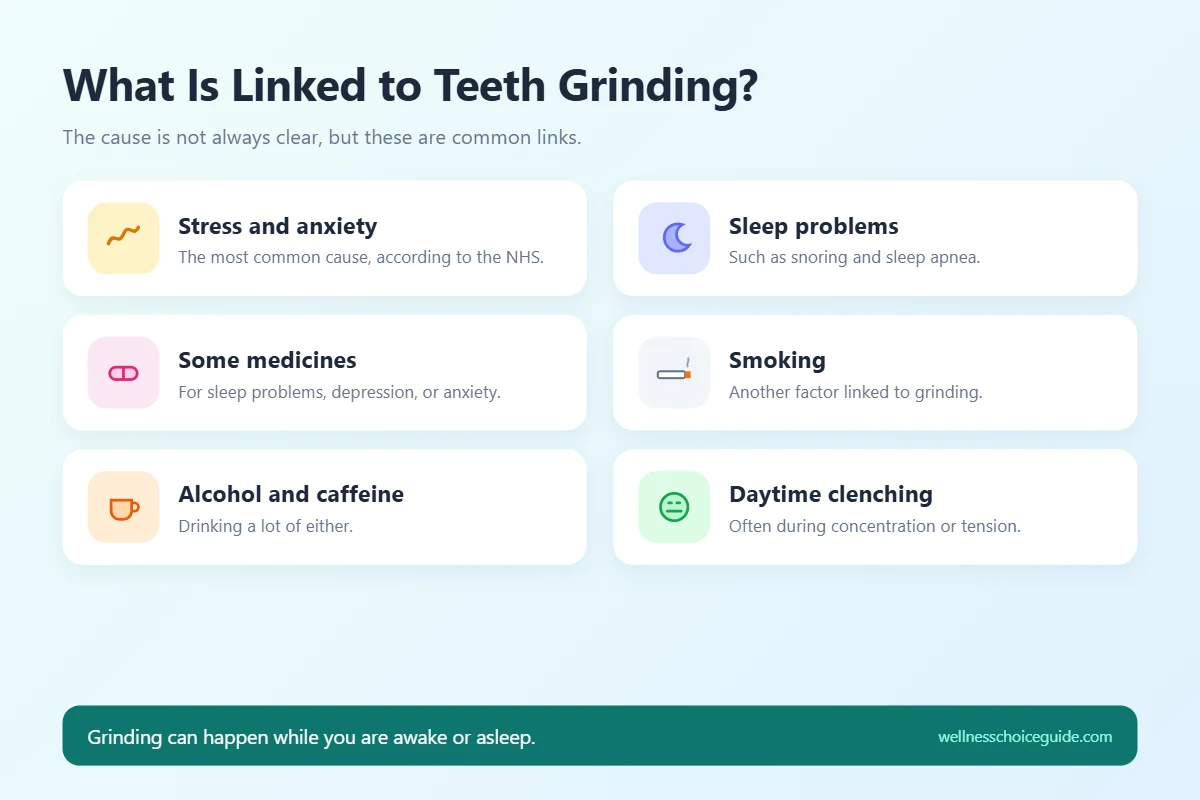
The NHS notes that it is not always clear what causes people to grind their teeth, but it is often linked to:
- Stress and anxiety, which the NHS describes as the most common cause. MedlinePlus also notes that daily stress may be the trigger in many people.
- Sleep problems, such as snoring and sleep apnea.
- Certain medicines, including some taken for sleep problems, depression, or anxiety.
- Smoking.
- Drinking a lot of alcohol or caffeine.
If you think a medicine might be involved, do not stop taking it on your own. Talk with your doctor about your options.
Ways to Reduce Teeth Grinding
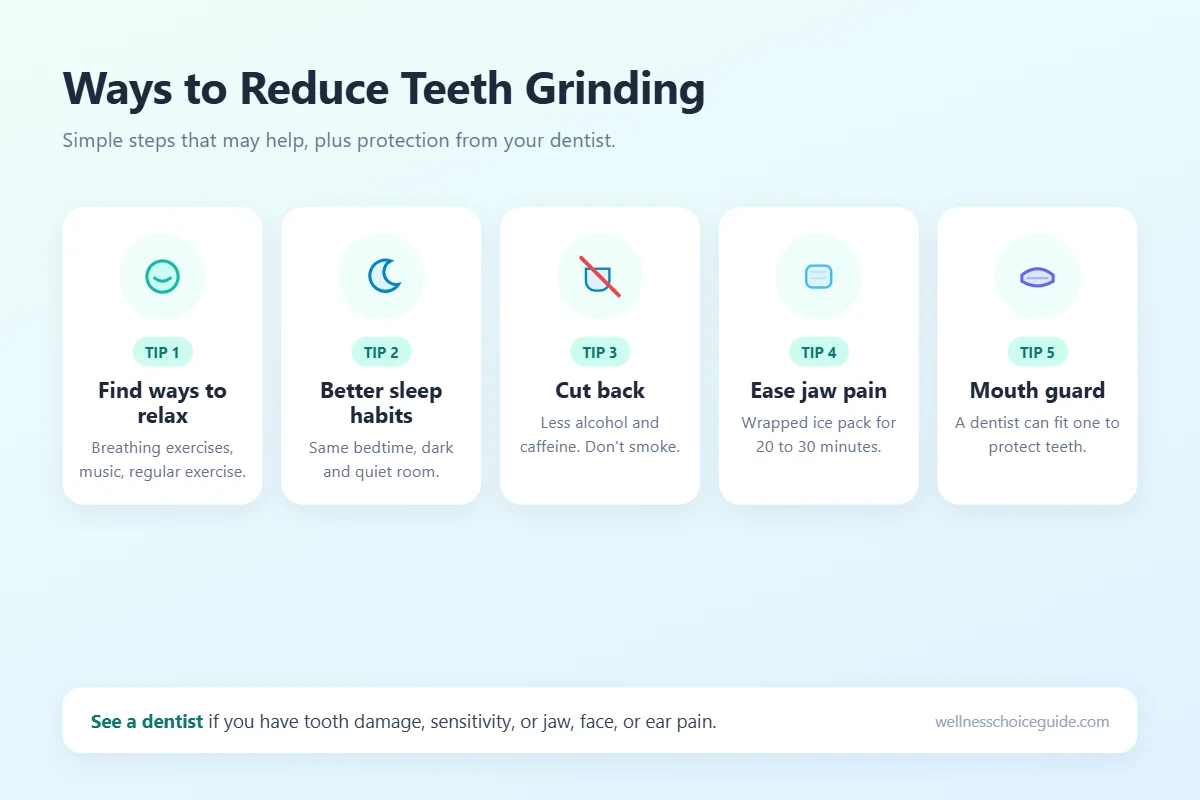
There are several things you can try that may help. The NHS suggests:
- Finding ways to relax, such as breathing exercises, listening to music, and regular exercise.
- Improving your sleep by going to bed at the same time every night, relaxing before bedtime, and keeping your bedroom dark and quiet.
- Cutting back on alcohol and caffeine, and not smoking.
- Easing jaw pain or swelling with an ice pack, or a bag of frozen peas, wrapped in a tea towel for 20 to 30 minutes. Painkillers such as paracetamol or ibuprofen may also help if they are suitable for you.
- Avoiding chewing gum and hard foods if you have tooth or jaw pain.
- Having regular dental check-ups, so wear can be spotted early.
It can also help to notice when you clench during the day. Some people find that gently reminding themselves to relax their jaw, with lips together and teeth slightly apart, makes them more aware of the habit.
Treatments a Dentist May Recommend
Treatment is not always needed. When it is, the most common option is protection for your teeth.
Mouth Guards and Splints
The NHS explains that a dentist may recommend a mouth guard or mouth splint, worn at night to protect your teeth from damage. These can be made by a dentist to fit precisely over your upper or lower teeth. MedlinePlus notes that a well-fitting splint can help minimize the effects of grinding, although some people find their symptoms return when they stop using it.
Repairing Damage
If grinding has already worn, chipped, or cracked your teeth, a dentist can assess the damage and discuss repairs. Treating sensitivity early can make everyday eating and drinking more comfortable.
Jaw Pain and TMD
Grinding and clenching can contribute to jaw problems known as temporomandibular disorders (TMDs). The National Institute of Dental and Craniofacial Research notes that many jaw joint and muscle problems are temporary and do not get worse, so simple treatment may be all that is needed. Because evidence for many TMD treatments is limited, experts recommend conservative treatments and avoiding treatments that permanently change the teeth, bite, or jaw joints.
Protecting Your Teeth Every Day
If you grind your teeth, good everyday care helps protect enamel that may already be under strain:
- brush gently twice a day with a soft-bristled brush and fluoride toothpaste;
- avoid scrubbing hard. Our comparison of an electric vs. manual toothbrush covers gentle technique;
- clean between your teeth once a day;
- be mindful of acidic drinks, which can soften enamel;
- keep up regular dental visits.
For a simple daily plan, see our daily oral care routine guide.
When to See a Dentist or Doctor
The NHS advises seeing a dentist if:
- you grind your teeth and have tooth damage or sensitive teeth;
- you grind your teeth and have pain in your jaw, face, or ear;
- your partner says you are grinding your teeth in your sleep;
- you are worried about your child grinding their teeth.
It also suggests seeing a GP or family doctor if you need help with some of the causes of grinding, such as stress, anxiety, smoking, or drinking too much. If you snore loudly or wake up feeling unrefreshed, it is worth mentioning that too, since sleep problems such as sleep apnea are also linked to grinding.
Frequently Asked Questions
Can teeth grinding go away on its own?
Sometimes. Grinding linked to a stressful period may ease when stress improves. If you have pain, tooth damage, or sensitivity, it is still worth seeing a dentist.
Do I need a mouth guard for teeth grinding?
Not everyone does. A dentist may recommend a custom-fitted mouth guard or splint if grinding is damaging your teeth or causing pain.
Can teeth grinding cause headaches?
Yes. The NHS lists headaches and earache among the symptoms of teeth grinding, along with jaw pain.
Does caffeine make teeth grinding worse?
Drinking a lot of caffeine or alcohol is linked to teeth grinding, according to the NHS, so cutting back may help.
Is teeth grinding common in children?
Children can grind their teeth too. If you are worried about your child’s grinding, the NHS recommends seeing a dentist.
The Bottom Line
Teeth grinding is often linked to stress, anxiety, and sleep problems, and many people do not realize they do it. Common signs include a sore jaw, worn or sensitive teeth, headaches, and disturbed sleep.
Relaxation, better sleep habits, and cutting back on alcohol and caffeine may help. If grinding is damaging your teeth or causing pain, a dentist can check for wear and may recommend a custom mouth guard to protect your teeth.
Sources and Further Reading
- NHS: Teeth grinding (bruxism)
- MedlinePlus Medical Encyclopedia: Bruxism
- National Institute of Dental and Craniofacial Research: TMD (Temporomandibular Disorders)