
A brighter smile is one of the most common cosmetic wishes people have for their teeth. Walk down any pharmacy aisle or scroll online and you will find whitening strips, gels, pens, toothpastes, and LED kits, all promising whiter teeth in days.
But whitening is not as simple as the packaging suggests. Not every type of discolouration responds to bleaching, whitening does not change the colour of crowns or fillings, and some options carry real risks to your teeth and gums if they are used incorrectly.
This guide explains why teeth change colour, the main whitening options, what to expect in terms of results and side effects, and how to whiten safely.
This article is for general educational purposes only and is not a substitute for advice from a dentist. Please see our medical disclaimer.
Why Do Teeth Become Discoloured?
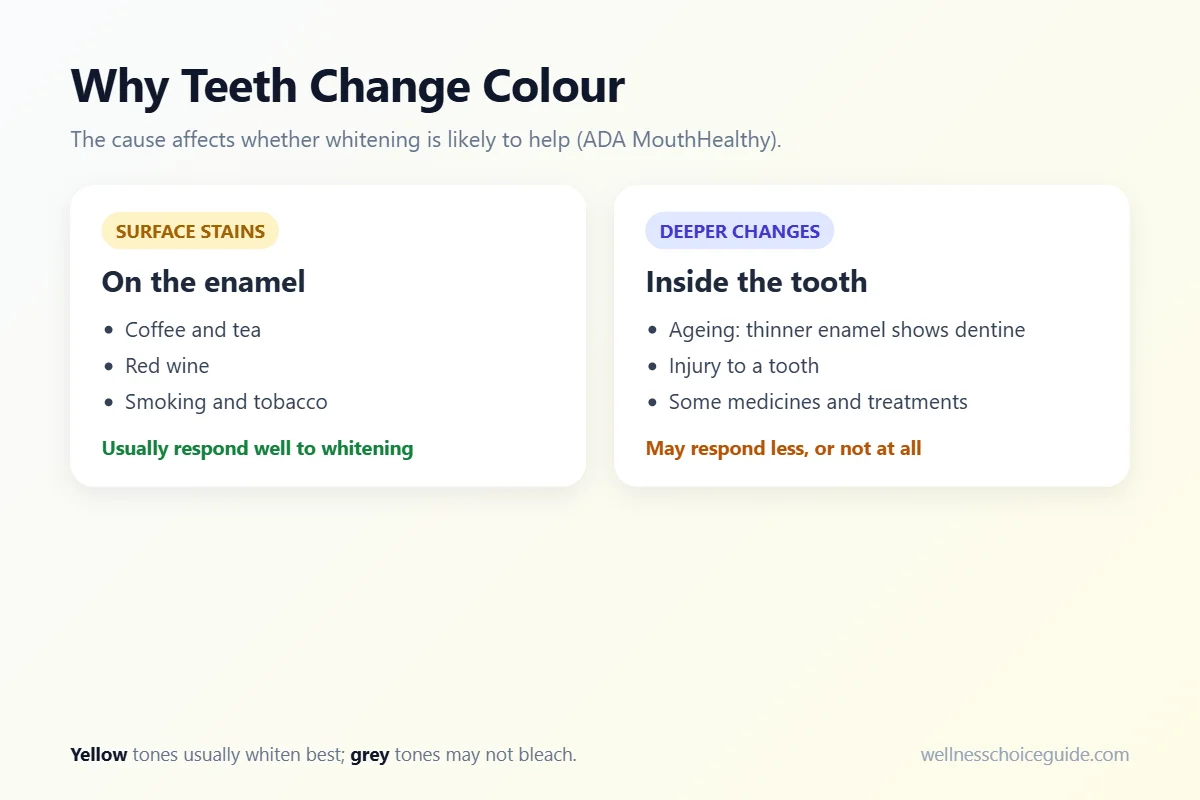
Understanding the cause of discolouration matters, because it affects whether whitening is likely to work. ADA MouthHealthy describes two broad groups of causes.
Surface stains
Coffee, tea, and red wine contain pigments that cling to the outer layer of the tooth. Tobacco, through tar and nicotine, also stains enamel. The NHS and the Oral Health Foundation both list tea, coffee, red wine, and smoking as common causes of staining.
Deeper discolouration
Some colour changes come from inside the tooth. According to ADA MouthHealthy:
- as enamel thins with age, more of the yellowish dentine underneath can show through;
- an injury to a tooth can cause it to darken;
- certain medicines, some antibiotics taken in early childhood, chemotherapy, and head and neck radiation can all affect tooth colour.
Enamel can also thin through acid wear. Our guide to dental erosion explains how acidic foods and drinks can make teeth look more yellow over time.
Does Whitening Work for Everyone?
No. ADA MouthHealthy notes that whitening generally works best on yellow-toned teeth. Brown-toned teeth may respond less well, and grey-toned teeth may not bleach at all. Whitening also may not help when discolouration is caused by medicines or an injury.
It is also important to know what whitening cannot change:
- Crowns, veneers, fillings, and bonding: the Oral Health Foundation and ADA MouthHealthy both state that whitening will not change their colour.
- Dentures and implants: the NHS notes that whitening only works on natural teeth.
This matters if you have visible fillings or crowns at the front of your mouth. Whitening the natural teeth around them could leave them looking darker by comparison, so it is worth discussing this with your dentist first.
Who Should Not Whiten Their Teeth?
According to the NHS, teeth whitening is not recommended for:
- people aged 17 or under;
- people with unhealthy teeth or gums;
- people who are pregnant or breastfeeding.
A dental check-up before whitening helps make sure there are no problems such as decay, gum disease, or worn enamel that need treatment first. See our guide on how often to have a dental check-up.
Your Whitening Options Compared
Whitening toothpaste
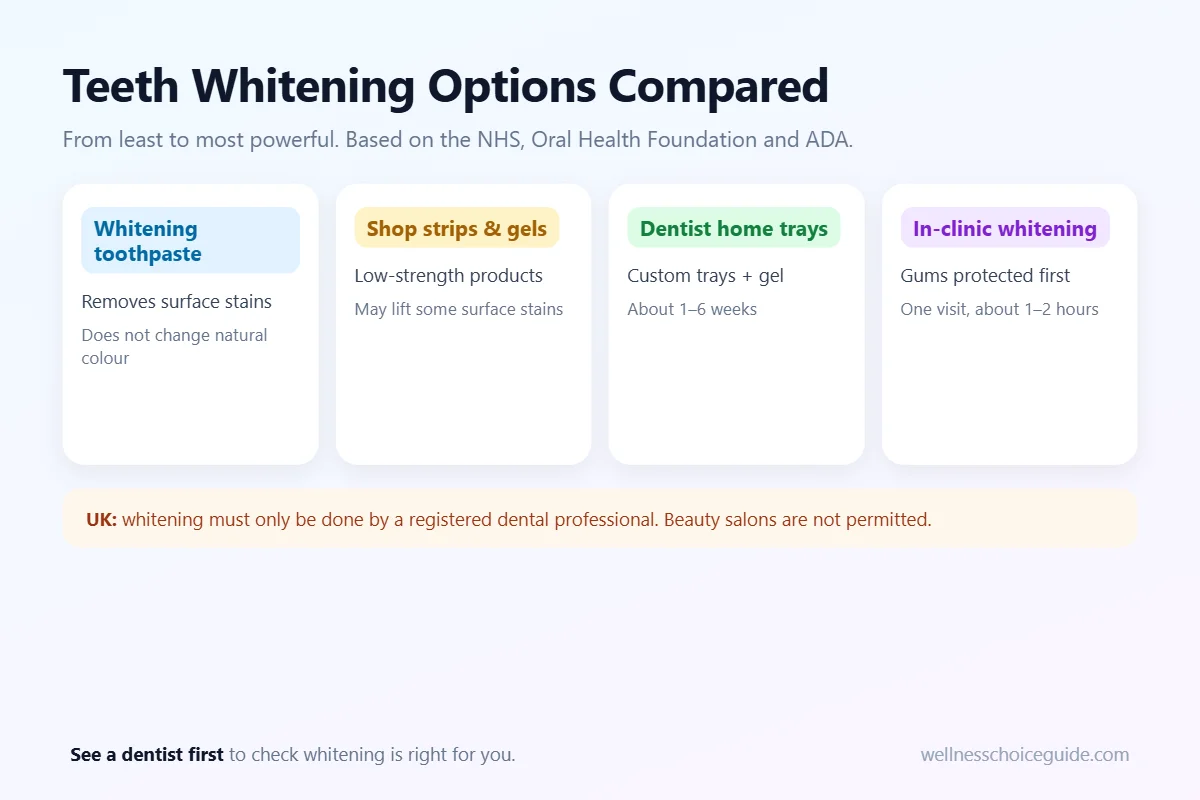
ADA MouthHealthy explains that whitening toothpastes use mild abrasives to remove surface stains. They do not change the natural colour of your teeth. If you use one, the ADA suggests looking for a product with its Seal of Acceptance, which means it has been evaluated for safety and effectiveness.
Over-the-counter strips and gels
Shop-bought whitening strips, gels, and paint-on products contain much lower levels of whitening agent than professional treatments. The Oral Health Foundation says they may help remove some surface stains but usually do not change the natural shade of the tooth much. ADA MouthHealthy recommends talking to your dentist before using them and following the directions exactly.
Dentist-supervised home whitening
A dentist can make custom-fitted trays that you fill with whitening gel and wear at home. The NHS says this usually takes around 2 to 6 weeks, while the Oral Health Foundation describes a typical course of 1 to 2 weeks. The exact timing depends on the product and your dentist’s instructions.
In-clinic whitening
In-clinic, or chairside, whitening is usually done in a single visit. The dental team protects your gums before applying the whitening gel, and a special light may be used. The NHS says this kind of appointment typically takes about 1 to 2 hours and is quicker than home whitening.
Is It Safe to Whiten Teeth at a Salon?
In the UK, the Oral Health Foundation states that tooth whitening must only be carried out by a registered dental professional, such as a dentist, or a dental hygienist or therapist working to a dentist’s prescription. Whitening in beauty salons is not permitted.
Both the NHS and the Oral Health Foundation warn about the risks of non-dental providers. The NHS says kits from beauty salons, pharmacies, or online may not work as well and can harm your teeth and gums, while the Oral Health Foundation warns that whitening by someone without dental training can permanently damage teeth and gums. You can check whether a practitioner is registered on the General Dental Council website.
Rules differ between countries, so wherever you live, the safest approach is to have whitening supervised by a qualified dental professional.
Side Effects to Know About
Whitening is generally considered safe when done properly, but side effects are common. According to the NHS, the Oral Health Foundation, and ADA MouthHealthy, these can include:
- Tooth sensitivity, especially to cold, which is usually temporary;
- sore or irritated gums, or white patches on the gums where gel has touched them;
- a sore throat, according to the NHS;
- enamel or gum damage from overuse, which ADA MouthHealthy warns about.
If sensitivity is a problem, ADA MouthHealthy notes that you can stop for a while and try again later. Our guide to tooth sensitivity causes and relief has more on managing it.
How Long Do Results Last?
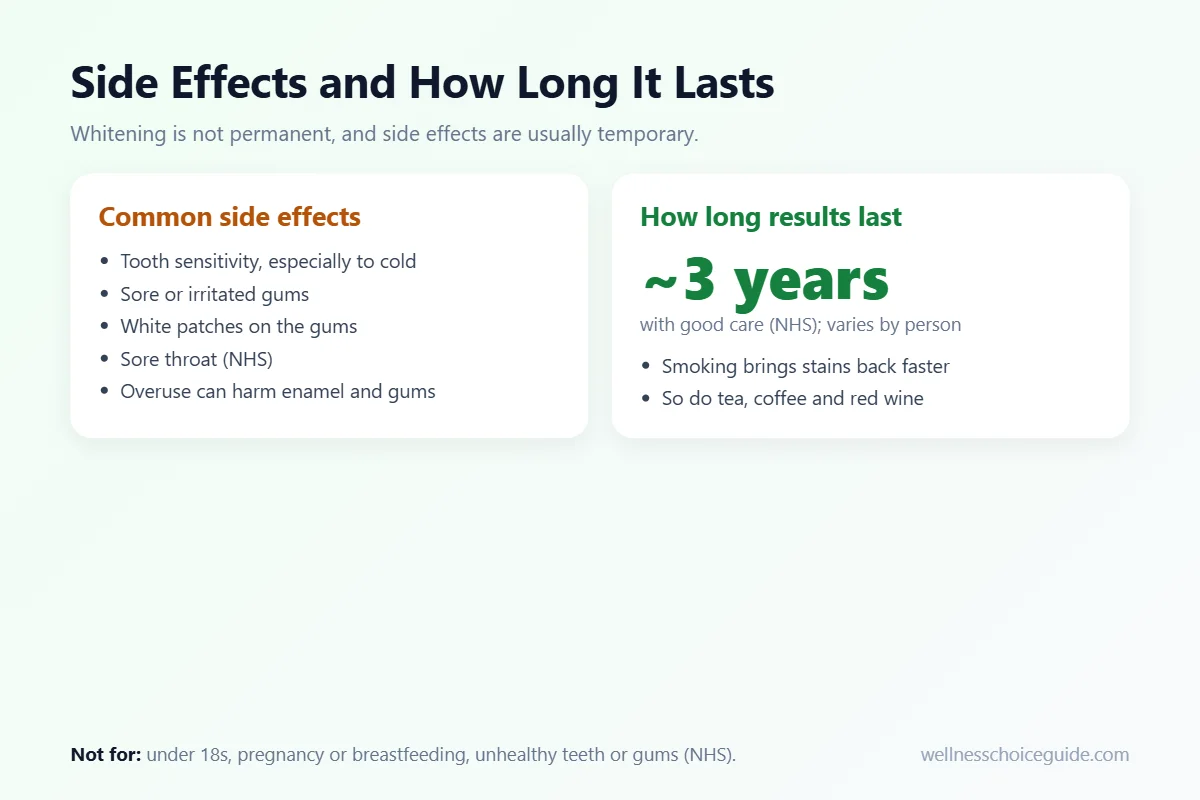
Whitening is not permanent. The NHS says results may last around 3 years if you follow your dentist’s advice, and the Oral Health Foundation says they can last several years but vary from person to person.
Both sources note that smoking and drinks such as tea, coffee, and red wine can make stains come back more quickly.
How to Keep Your Teeth Looking Bright
Whether or not you choose whitening, everyday habits play a big part in how your teeth look:
- Brush twice a day with fluoride toothpaste and clean between your teeth daily. ADA MouthHealthy identifies regular brushing and flossing as everyday ways to keep teeth bright.
- Have regular dental check-ups and cleanings. A professional clean can remove surface stains and hardened tartar. See our guide to plaque vs. tartar.
- Cut back on staining drinks such as tea, coffee, and red wine, or rinse with water afterwards.
- Stop smoking, which helps your teeth as well as your general health.
- Follow product directions exactly and avoid overusing whitening products.
Frequently Asked Questions
Does teeth whitening damage enamel?
Whitening carried out or supervised by a dental professional is generally considered safe. However, ADA MouthHealthy warns that overusing whitening products can damage enamel or gums, so always follow instructions and avoid frequent repeat treatments without advice.
Do whitening toothpastes actually whiten teeth?
Whitening toothpastes can remove surface stains using mild abrasives, but they do not change the natural colour of your teeth, according to ADA MouthHealthy.
Can I whiten my crowns or fillings?
No. Whitening only works on natural teeth. Crowns, veneers, fillings, and bonding will stay the same colour, so talk to your dentist before whitening if you have them on your front teeth.
Why are my teeth sensitive after whitening?
Sensitivity is one of the most common side effects. It is usually temporary. If it bothers you, pause the treatment and speak to your dentist.
How long does professional whitening last?
The NHS says results may last around 3 years with good care, though this varies. Smoking and staining drinks can shorten how long the results last.
The Bottom Line
Teeth whitening can lighten natural teeth, especially when they are yellow-toned and stained by everyday foods, drinks, or ageing. It does not work on crowns, fillings, or dentures, and it may not help with some deeper types of discolouration.
The safest route is to see a dentist first, choose whitening carried out or supervised by a registered dental professional, and be cautious about salon, online, or unregulated kits. Good daily brushing, regular cleaning, and cutting back on staining drinks will help your smile stay brighter for longer.
Sources and Further Reading
- NHS: Teeth whitening
- Oral Health Foundation: Tooth whitening
- American Dental Association, MouthHealthy: Teeth Whitening