
Plaque and tartar are two words people often hear at the dentist, sometimes used as if they mean the same thing. They are closely related, but they are not identical, and the difference matters for how you care for your teeth at home.
In simple terms, plaque is the soft film you can remove yourself every day. Tartar is what plaque can turn into when it is left in place, and once it forms, it usually needs a dental professional to remove it.
This guide explains what each one is, how plaque becomes tartar, how to tell them apart, and the everyday habits that help keep both under control.
This article is for general educational purposes and is not a substitute for professional advice. Please see our medical disclaimer.
What Is Plaque?
Plaque is a soft, sticky, colorless or pale-yellow film that forms on the teeth every day. It is made up mostly of bacteria, along with proteins from saliva and tiny bits of food.
Plaque is a normal part of life. It begins forming again shortly after you brush, which is why oral care is a daily habit rather than something you do once. The bacteria in plaque are part of the wider community of microbes that live in the mouth, which we cover in our guide to the oral microbiome.
When plaque stays on the teeth, especially along the gumline and between teeth, some of its bacteria can produce acids after you eat or drink sugars and starches. Over time, these acids can wear on tooth enamel. Plaque left along the gumline can also irritate the gums, which is a common reason gums become red, puffy, or prone to bleeding.
What Is Tartar?
Tartar, also called calculus, is plaque that has hardened. Minerals from saliva gradually build up in plaque that is not removed, turning the soft film into a hard, crusty deposit that bonds firmly to the tooth surface.
Tartar often looks yellow, tan, or brown, and it tends to collect in predictable spots, such as:
- the inside surfaces of the lower front teeth, near the salivary glands,
- the outer surfaces of the upper back teeth,
- along and just below the gumline.
Because tartar is rough, it gives new plaque an easier surface to stick to. That is one reason tartar buildup and gum irritation often go together.
Plaque vs. Tartar: The Key Differences
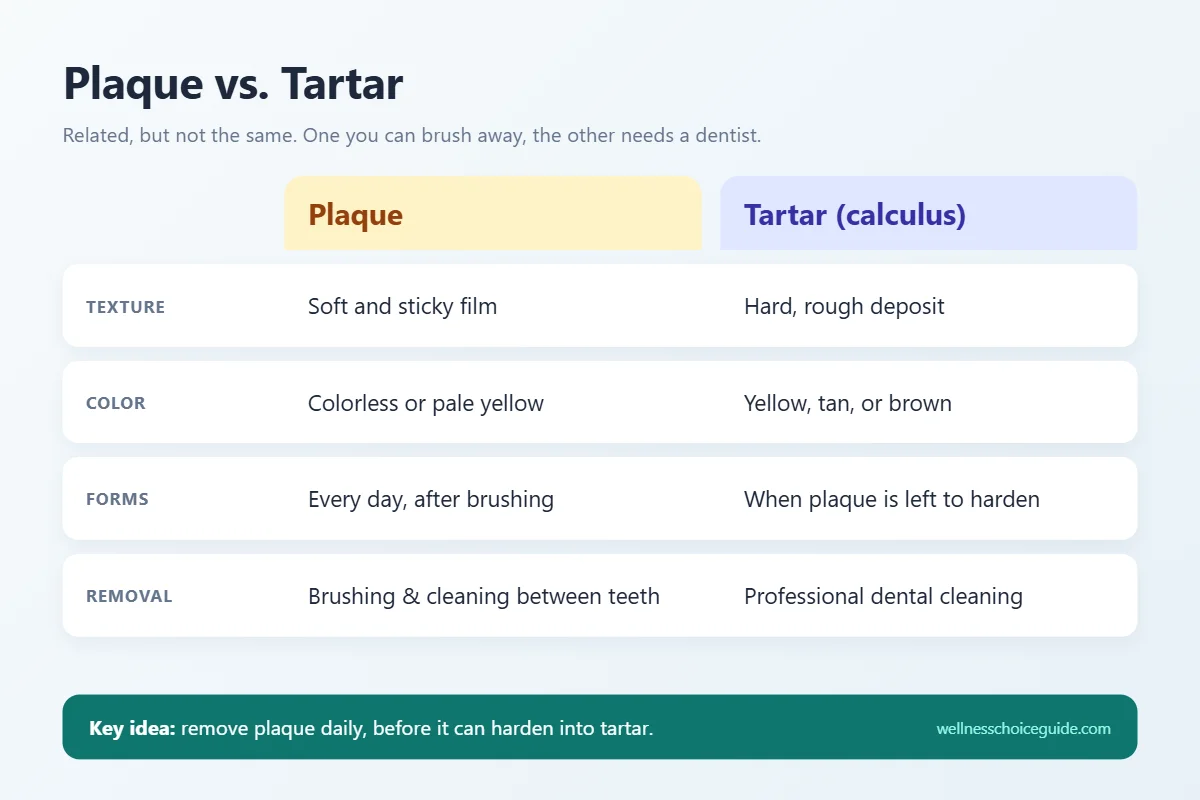
- Texture: plaque is soft and sticky; tartar is hard and rough.
- Color: plaque is usually colorless or pale yellow; tartar is often yellow, tan, or brown and can absorb stains.
- Removal: plaque can be removed at home with brushing and cleaning between teeth; tartar generally needs to be removed by a dentist or dental hygienist.
- Timing: plaque forms continuously every day; tartar develops when plaque is left in place over time.
The practical takeaway is simple: the best way to deal with tartar is to remove plaque before it has a chance to harden.
How Plaque Turns Into Tartar
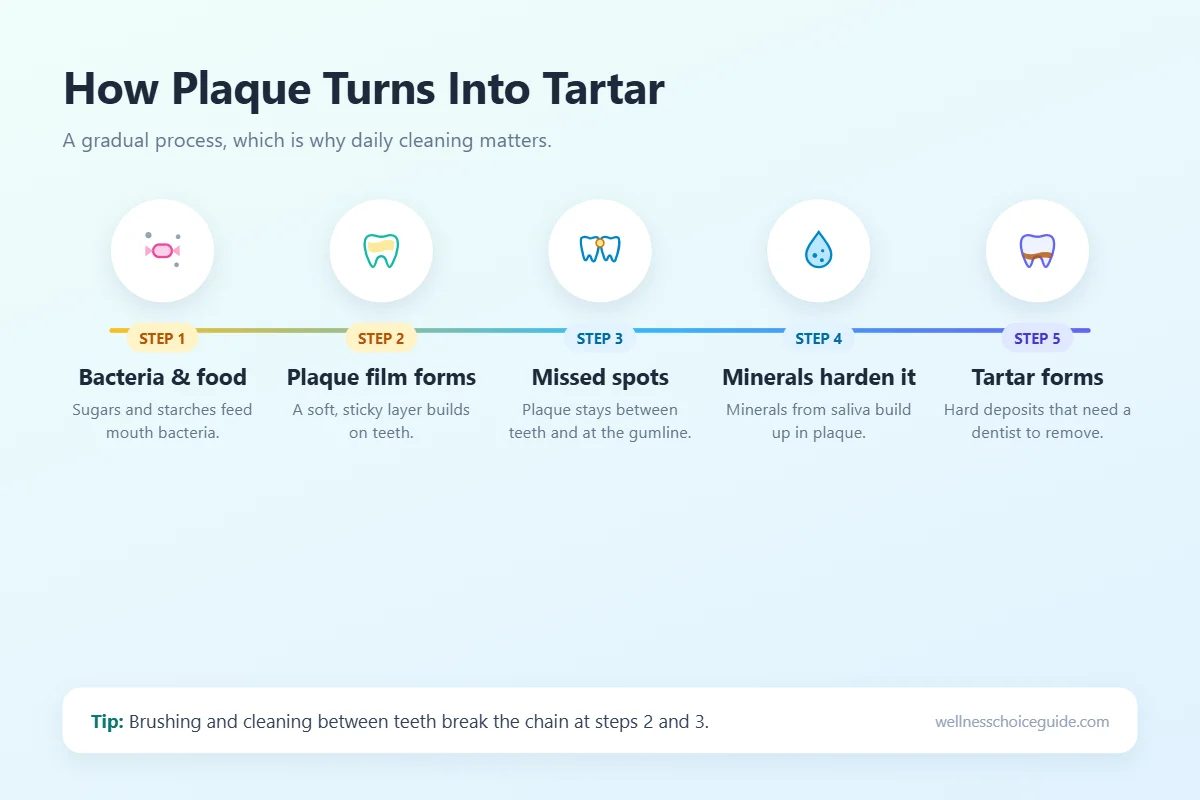
Plaque that is not cleaned away can begin to mineralize, picking up calcium and phosphate from saliva. How quickly this happens varies from person to person. Some people naturally build tartar faster than others, depending on factors such as saliva composition, diet, and how consistently and thoroughly they clean their teeth.
Areas that are easy to miss, like the spaces between teeth and the back of the mouth, are where plaque most often has time to harden. That is why thorough technique matters as much as how often you brush.
Why It Matters for Your Gums
Both plaque and tartar can affect gum health. Plaque along the gumline can lead to gum inflammation, known as gingivitis, which often shows up as redness, swelling, or bleeding when brushing or flossing. If you have noticed this, our guide to bleeding gums causes and everyday care explains more.
When tartar builds up along and below the gumline, it can make it harder to keep the area clean. Over time, ongoing inflammation may progress to more serious gum disease. Regular professional cleanings are an important part of preventing that.
How to Keep Plaque Under Control at Home
Brush Twice a Day, Thoroughly
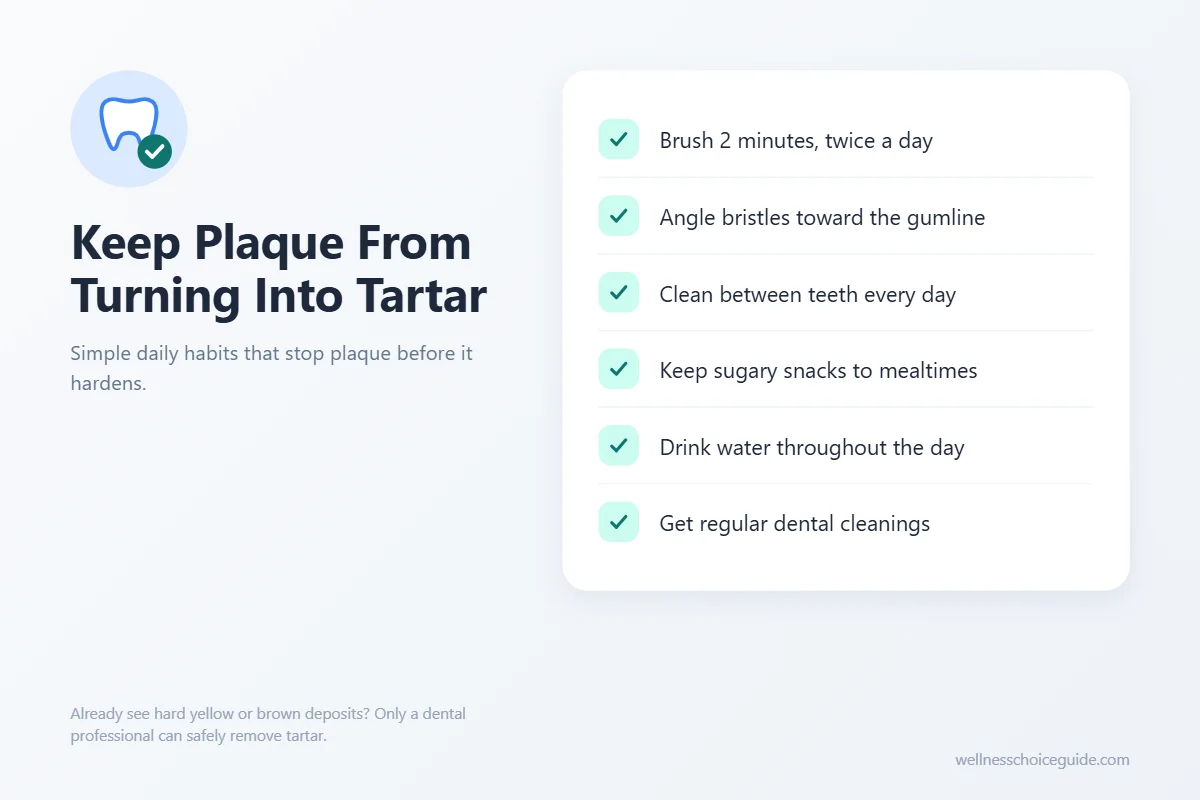
Brush for about two minutes with fluoride toothpaste, twice a day. Angle the bristles toward the gumline and use gentle, short strokes. Pay extra attention to the back teeth and the inside surfaces of the lower front teeth, where buildup is common.
Worn bristles do not clean as well, so replace your toothbrush or brush head regularly. Our guide on how often to replace your toothbrush explains what to look for.
Clean Between Your Teeth Every Day
A toothbrush cannot fully reach the tight spaces between teeth. Floss, interdental brushes, or a water flosser can help remove plaque there before it has a chance to harden.
Limit Frequent Sugary Snacks and Drinks
Plaque bacteria feed on sugars and starches. Frequent snacking or sipping sweet drinks throughout the day gives them more opportunities to produce acids. Drinking water and keeping sugary foods to mealtimes can help.
Stay Hydrated
Saliva helps rinse the mouth and neutralize acids. A dry mouth can allow plaque to build up more easily. If your mouth often feels dry, see our article on dry mouth causes and everyday comfort.
Build a Consistent Routine
Consistency matters more than any single product. Our daily oral care routine guide walks through a simple morning-to-night approach.
What About “Tartar Control” Toothpaste?
Some toothpastes are labeled “tartar control.” These are generally designed to help slow the formation of new tartar by making it harder for plaque to mineralize. They are not designed to remove tartar that has already formed.
They can be a reasonable choice for people who build tartar quickly, but they work alongside good brushing and cleaning between teeth, not instead of it. If you are unsure which toothpaste suits you, a dentist or dental hygienist can help.
Can You Remove Tartar at Home?
It is not recommended to try scraping tartar off at home. Dental tools sold online can scratch tooth enamel or injure the gums if they are not used correctly, and it is easy to push bacteria below the gumline or miss buildup you cannot see.
Dental professionals remove tartar with specialized instruments during a cleaning, often called scaling. This is a routine part of regular dental check-ups.
Where Do Oral Probiotics Fit In?
Because plaque is made up largely of bacteria, some people are curious about oral probiotics. Research in this area is still developing and is often strain-specific. Oral probiotics should not be seen as a way to remove plaque or tartar, and they do not replace brushing, cleaning between teeth, or professional cleanings.
When to See a Dentist
Regular check-ups and cleanings are the main way tartar is managed. It is also worth booking an appointment if you notice:
- hard yellow or brown deposits near the gumline,
- gums that bleed, look swollen, or feel tender,
- persistent bad breath despite good daily habits,
- gums that seem to be pulling away from the teeth,
- teeth that feel loose or sensitive.
Persistent bad breath is often connected to plaque and gum health. Our guide to bad breath causes and fresher-breath habits covers this in more detail.
Frequently Asked Questions
Is plaque the same as tartar?
No. Plaque is a soft, sticky film of bacteria that forms every day and can be brushed away. Tartar is plaque that has hardened and usually needs to be removed by a dental professional.
Can brushing remove tartar?
Brushing removes plaque, but it generally cannot remove tartar once it has hardened. That is why preventing tartar through daily plaque removal is so important.
Why does tartar build up faster for some people?
Tartar formation varies from person to person. Factors such as saliva composition, diet, and how thoroughly plaque is removed can all play a role.
How often should I get a professional cleaning?
Many people have cleanings as part of regular dental check-ups, but the right schedule depends on your individual needs. Your dentist can recommend how often is right for you.
The Bottom Line
Plaque and tartar are connected but different. Plaque is the soft film you can remove at home every day, while tartar is hardened plaque that usually needs a professional to remove.
The most effective approach is to stop plaque before it hardens: brush thoroughly twice a day, clean between your teeth daily, limit frequent sugary snacks, and keep up with regular dental visits.
Sources and Further Reading
- American Dental Association, MouthHealthy: Plaque
- Cleveland Clinic: Dental Plaque
- NHS: How to keep your teeth clean
- National Institute of Dental and Craniofacial Research: Periodontal (Gum) Disease