
Mouth ulcers, also called canker sores, are small, painful sores that appear inside the mouth. They are very common, and while they are usually harmless, they can make eating, drinking, and even talking uncomfortable for a few days.
Most mouth ulcers heal on their own. Knowing what triggers them, how to ease the discomfort, and when a sore needs to be checked can help you look after your mouth with confidence.
This article is for general educational purposes and is not a substitute for professional advice. Please see our medical disclaimer.
What Is a Mouth Ulcer?
MedlinePlus describes a canker sore as a painful, open sore in the mouth. Canker sores are a common form of mouth ulcer. They are usually white or yellow and surrounded by a bright red area, and they are most often smaller than about 1 centimeter across.
According to the NHS, mouth ulcers usually appear inside the mouth on the cheeks or lips, and they can also appear on the tongue. You may have more than one at a time.
Mouth Ulcers vs. Cold Sores
Mouth ulcers are not contagious and should not be confused with cold sores. The NHS explains that cold sores appear on the lips or around the mouth and often begin with a tingling, itching, or burning feeling. MedlinePlus also notes that a canker sore is not the same as a cold sore, sometimes called a fever blister.
How Long Do Mouth Ulcers Last?
The NHS says mouth ulcers should clear up on their own within a week or two. MedlinePlus adds that the pain often goes away in 7 to 10 days, and that it can take 1 to 3 weeks for a canker sore to heal completely. Larger ulcers can take longer.
What Causes Mouth Ulcers?
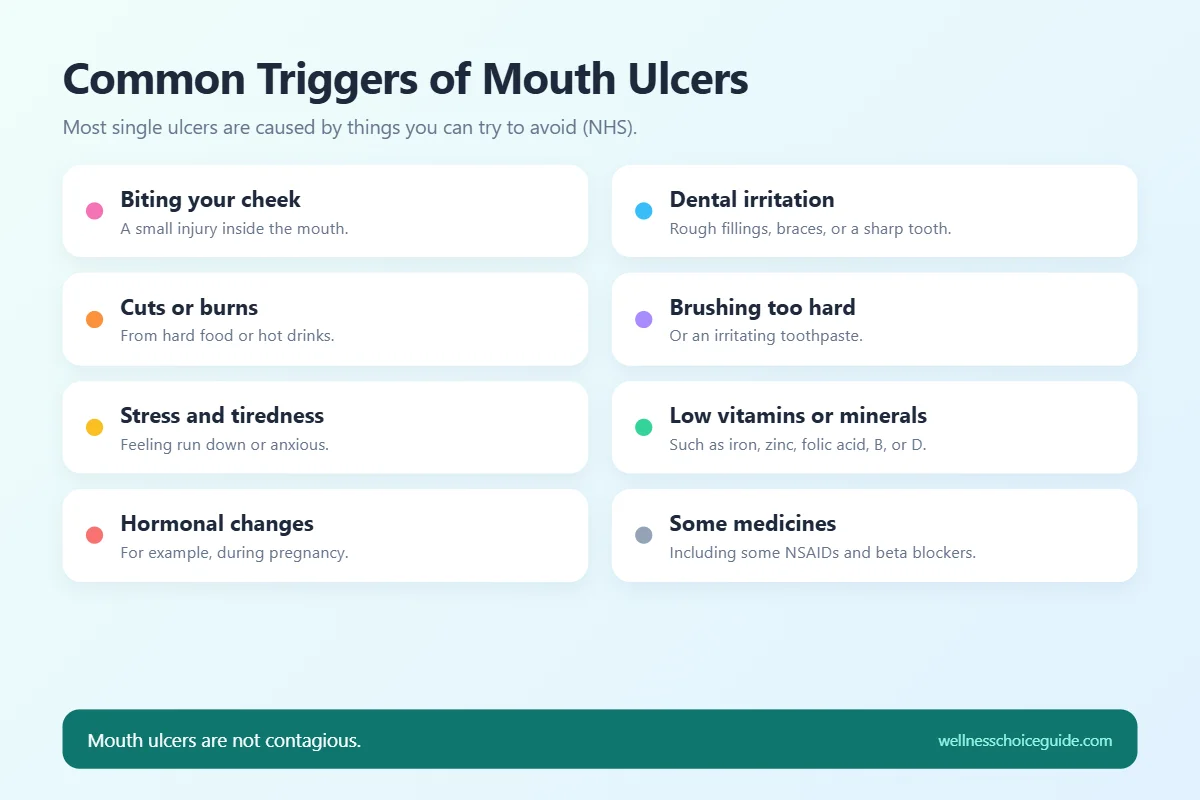
According to the NHS, most single mouth ulcers are caused by things you can try to avoid, such as:
- biting the inside of your cheek;
- badly fitting dentures, braces, rough fillings, or a sharp tooth;
- cuts or burns while eating or drinking, for example from hard food or hot drinks;
- a food intolerance or allergy;
- damaging your gums with a toothbrush or using an irritating toothpaste;
- feeling tired, stressed, or anxious.
Sometimes they are triggered by things you cannot always control, including hormonal changes such as during pregnancy, your genes, a vitamin or mineral deficiency (such as iron, zinc, folic acid, vitamin B, or vitamin D), some medicines, and stopping smoking. MedlinePlus notes that in some cases the cause is unknown, and that women are more likely to get canker sores than men.
If you often injure your gums while brushing, our comparison of an electric vs. manual toothbrush covers gentle technique.
How to Ease a Mouth Ulcer at Home
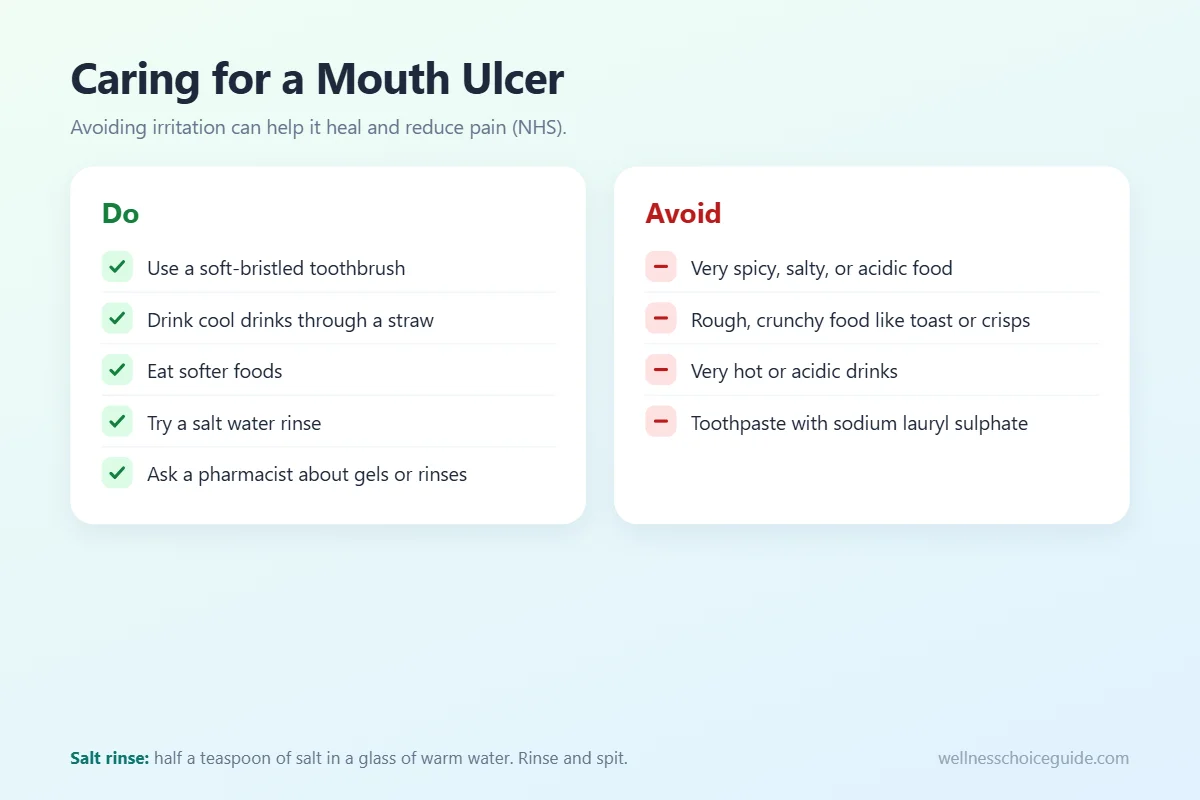
The NHS notes that mouth ulcers need time to heal and there is no quick fix. However, avoiding things that irritate the ulcer can help speed up healing, reduce pain, and lower the chance of it coming back.
Things That Can Help
- use a soft-bristled toothbrush;
- drink cool drinks through a straw;
- eat softer foods;
- eat a healthy, balanced diet;
- get regular dental check-ups.
Things to Avoid
- very spicy, salty, or acidic food;
- rough, crunchy food such as toast or crisps;
- very hot or acidic drinks, such as fruit juice;
- toothpaste containing sodium lauryl sulphate.
A Simple Salt Water Rinse
The NHS describes how to make a salt mouthwash: dissolve half a teaspoon of salt in a glass of warm water, rinse your mouth with it, and spit it out without swallowing. You can repeat this as often as you like.
Treatments From a Pharmacist
A pharmacist can recommend treatments to speed up healing, prevent infection, or reduce pain. According to the NHS, these may include an antimicrobial mouthwash, a painkilling tablet, mouthwash, gel or spray, corticosteroid lozenges, or a salt mouthwash. Many are available without a prescription. Always follow the product instructions, and ask the pharmacist if a product is suitable for children or during pregnancy.
If you are unsure about using mouthwash generally, our guide to mouthwash types and how to use them explains the basics.
When to See a Dentist or GP
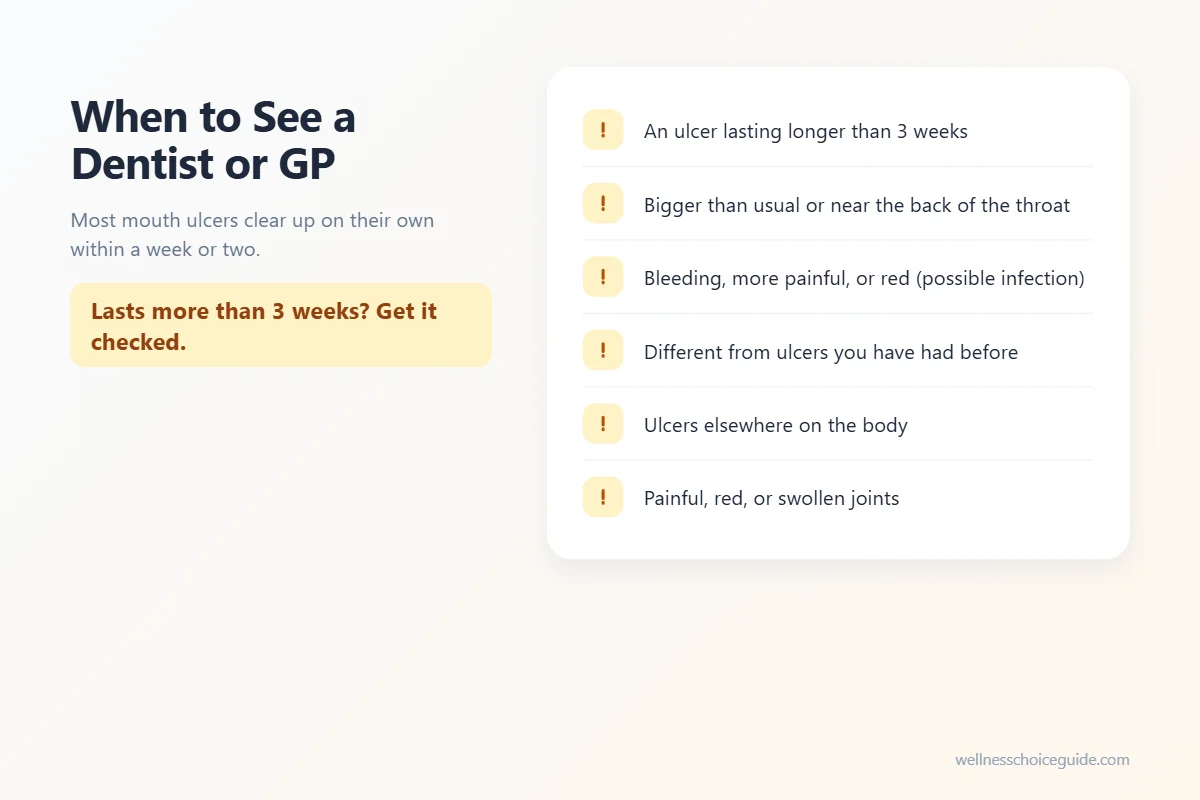
The NHS advises seeing a dentist or GP if your mouth ulcer:
- lasts longer than 3 weeks;
- is different from other ulcers you have had, for example bigger than usual or near the back of your throat;
- bleeds or becomes more painful and red, which may be a sign of infection.
Although most mouth ulcers are harmless, the NHS notes that a long-lasting mouth ulcer is sometimes a sign of mouth cancer, so it is best to get it checked. You should also see a GP if you have other symptoms, such as ulcers elsewhere on your body or painful, red, or swollen joints.
The NHS also explains that having several mouth ulcers can sometimes be a symptom of another condition, such as hand, foot and mouth disease, oral lichen planus, Crohn’s disease or coeliac disease, or a weakened immune system. A doctor can help find out what is going on.
Treatment From a Dentist or GP
For severe, persistent, or infected mouth ulcers, a GP or dentist may prescribe stronger medicine. The NHS lists options such as steroid sprays or tablets, painkilling gels, ointments, sprays, or tablets, and mouthwashes to kill or remove germs.
Can You Prevent Mouth Ulcers?
You may not be able to prevent every ulcer, but these steps may lower the chances:
- brush gently with a soft brush and a toothpaste that does not irritate your mouth;
- ask your dentist to check rough fillings, sharp teeth, or poorly fitting dentures or braces;
- take care with very hot drinks and hard, sharp foods;
- eat a balanced diet, and ask your doctor about a blood test if you get ulcers often, since some vitamin and mineral deficiencies are linked to them;
- look after your overall wellbeing, since stress and tiredness can be triggers.
For an everyday routine that keeps your mouth healthy, see our daily oral care routine guide. If your mouth often feels dry, our guide to dry mouth causes and relief may also help.
Frequently Asked Questions
Are mouth ulcers contagious?
No. Mouth ulcers are not contagious. They are different from cold sores, which are caused by a virus and usually appear on or around the lips.
How long does a mouth ulcer take to heal?
Most heal within a week or two. Pain often eases in 7 to 10 days, and complete healing can take 1 to 3 weeks. See a dentist or GP if an ulcer lasts longer than 3 weeks.
Does salt water help mouth ulcers?
A salt water rinse is one of the options the NHS lists. Dissolve half a teaspoon of salt in a glass of warm water, rinse, and spit.
Why do I keep getting mouth ulcers?
Repeated ulcers can be linked to injury, stress, certain toothpastes, hormonal changes, family history, or a vitamin or mineral deficiency. If you get them often, talk to your dentist or GP.
The Bottom Line
Mouth ulcers are common, not contagious, and usually heal on their own within a week or two. Avoiding spicy, acidic, or rough foods, using a soft toothbrush, and trying a salt water rinse or pharmacy treatment can make them more comfortable.
See a dentist or GP if an ulcer lasts longer than 3 weeks, looks different from usual, or comes with other symptoms, since a long-lasting ulcer should always be checked.
Sources and Further Reading
- NHS: Mouth ulcers
- MedlinePlus Medical Encyclopedia: Canker sore