
Few oral care questions come up as often as this one: is an electric toothbrush really better than a manual one? Electric toothbrushes have become much more affordable, and many come with timers, pressure sensors, and app connections. But a simple manual brush still costs very little and does the job for millions of people.
The short answer is that both types can keep your teeth and gums clean when used well. Research suggests electric toothbrushes may have a modest edge for plaque and gum inflammation, but how you brush, how long you brush, and how consistently you do it matter more than the brush itself.
This guide compares electric and manual toothbrushes, explains what the evidence shows, and helps you decide which one makes sense for you.
This article is for general educational purposes and is not a substitute for professional advice. Please see our medical disclaimer.
What Official Guidance Says
Major health organizations agree that either type can work. The NHS states that it does not matter whether you use an electric or manual toothbrush, although some people find it easier to clean their teeth thoroughly with an electric one. The American Dental Association’s MouthHealthy site takes a similar view, describing the manual-versus-powered debate as “a wash” and recommending that you choose a soft-bristled brush of either type.
In other words, the best toothbrush is the one you will use correctly, twice a day.
Electric vs. Manual Toothbrush: Side by Side
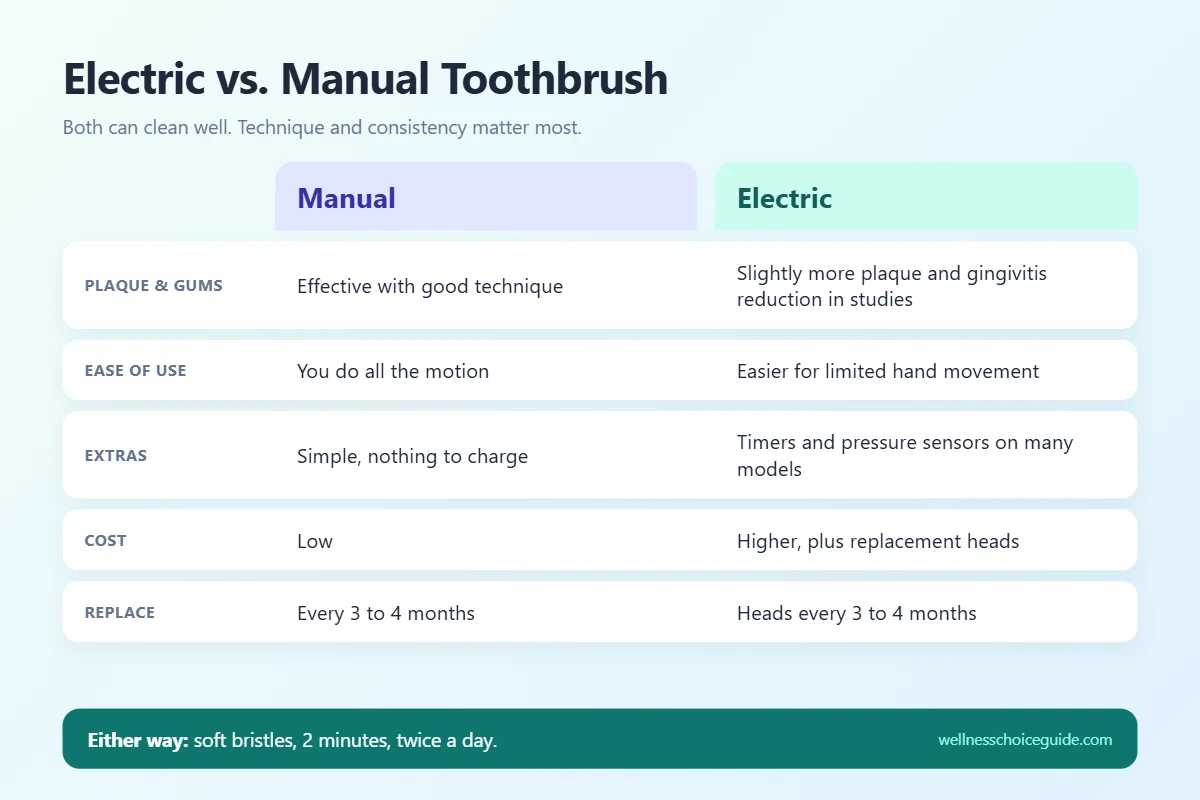
Manual Toothbrush
A manual toothbrush is simple, inexpensive, and easy to carry. It needs no charging and comes in many head sizes and bristle styles. The downside is that you supply all the motion, so results depend heavily on your technique and on brushing for the full two minutes.
Electric Toothbrush
An electric or “powered” toothbrush moves the bristles for you, usually with a rotating-oscillating head or a side-to-side sonic motion. Many models include a two-minute timer and a pressure sensor that warns you if you press too hard. They cost more up front, and you need to buy replacement heads.
What the Research Shows
A 2014 Cochrane review, one of the most thorough looks at this question, analyzed 51 trials with more than 4,600 participants. It found moderate-quality evidence that powered toothbrushes reduced plaque and gingivitis (early gum inflammation) more than manual brushing, in both the short and long term.
The size of the difference was modest. Over three months or more, plaque was reduced by about 21% and gingivitis by about 11% compared with manual brushing. The reviewers also noted that the clinical importance of these differences is unclear. Brushes with a rotating-oscillating action had the largest body of evidence.
So electric toothbrushes may offer a small advantage, but a careful manual brusher can still achieve excellent results. Our guide to plaque vs. tartar explains why removing soft plaque every day matters.
What Matters More Than the Brush
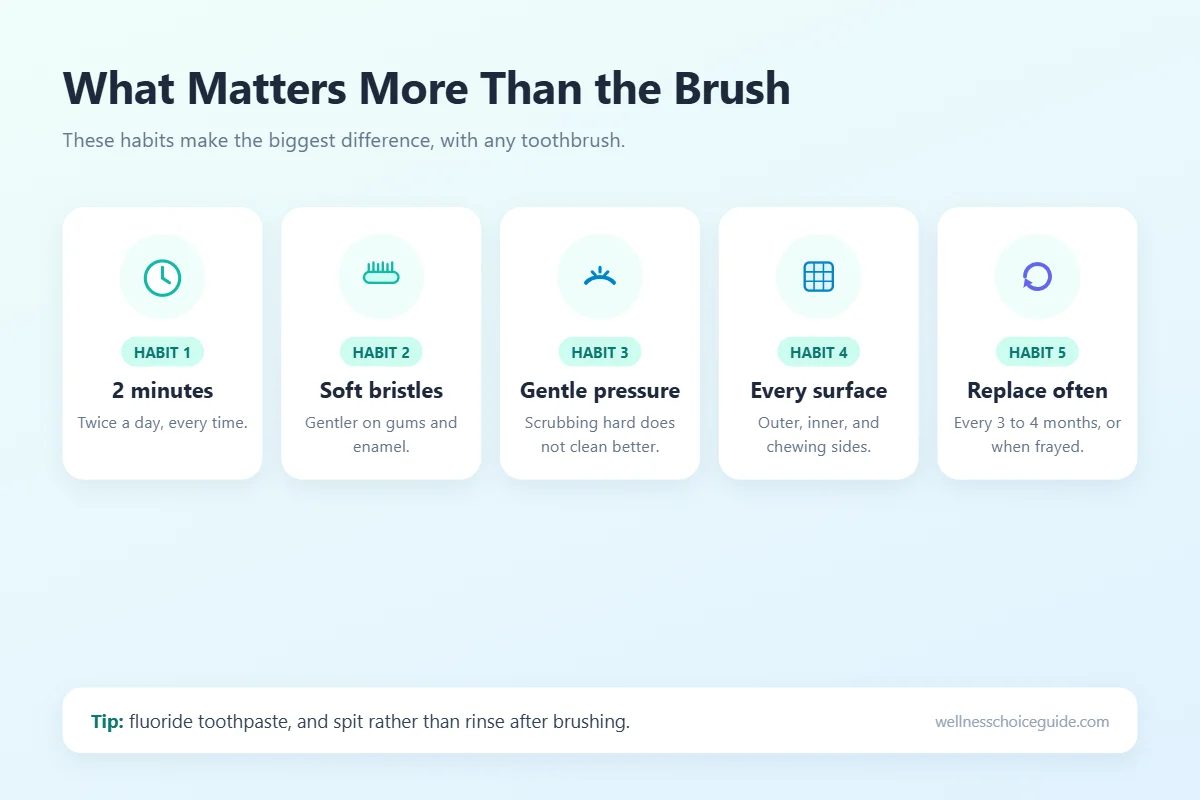
Whichever type you choose, these habits make the biggest difference:
- Brush for about 2 minutes, twice a day. The NHS recommends brushing with fluoride toothpaste twice a day for about 2 minutes.
- Choose soft bristles. MouthHealthy recommends a soft-bristled brush whether manual or powered. The NHS notes that medium or soft bristles are best for most people.
- Use gentle pressure. Scrubbing hard does not clean better and can wear enamel and irritate gums, which may contribute to tooth sensitivity.
- Clean every surface. Reach the outer, inner, and chewing surfaces of every tooth, and angle the bristles toward the gumline.
- Replace your brush or head regularly. MouthHealthy recommends replacing your toothbrush every three to four months, or sooner if the bristles are frayed. See our guide on how often to replace your toothbrush.
- Spit, don’t rinse. After brushing, spit out excess toothpaste rather than rinsing with water, so the fluoride stays on your teeth longer.
Brushing is also only part of the routine. Cleaning between your teeth once a day, with floss, interdental brushes, or a water flosser, reaches areas a toothbrush cannot.
Who May Find an Electric Toothbrush Helpful
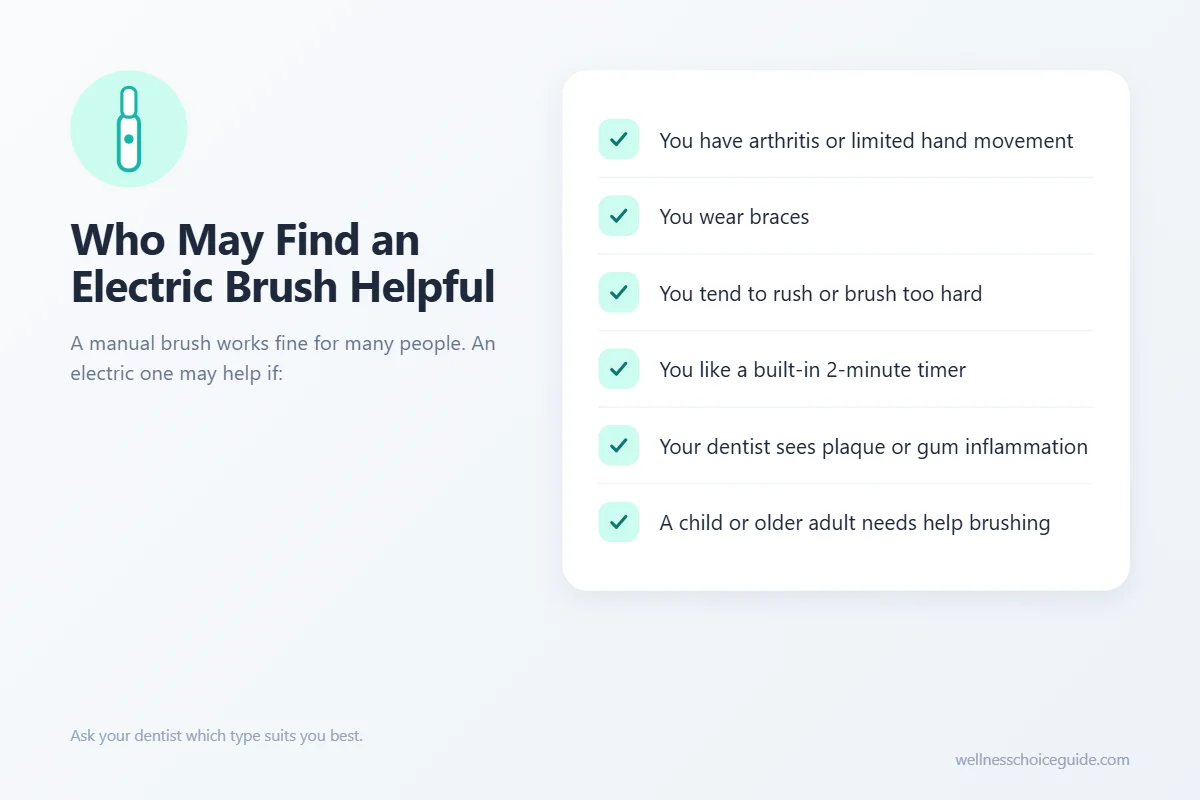
A manual brush works well for many people. An electric toothbrush may be worth considering if you:
- have arthritis or limited hand movement, since MouthHealthy notes that people who find a manual brush difficult may find a powered one more comfortable;
- wear braces or have other dental work that makes cleaning harder;
- tend to rush or brush too hard, and would benefit from a timer or pressure sensor;
- have been told by your dentist that plaque or gum inflammation is a concern. Our guide to bleeding gums explains common causes;
- help a child or an older adult brush.
When a Manual Toothbrush May Be the Better Fit
A manual brush can be a perfectly good choice if:
- you already brush thoroughly for two minutes with gentle pressure;
- you want a low-cost option without replacement heads;
- you travel often and prefer not to deal with chargers;
- you dislike the vibration or noise of an electric brush.
Tips for Choosing a Toothbrush
- Pick a head size that fits your mouth. The NHS suggests that a small head with a compact, angled arrangement of long and short round-end bristles is fine for most adults.
- Look for a seal of acceptance. In the United States, MouthHealthy recommends choosing a brush with the ADA Seal.
- For electric brushes, consider the extras that help you. A built-in timer and a pressure sensor are the most practical features for most people. App connectivity is optional.
- Ask your dentist. They can suggest the type and bristle style that suits your teeth and gums.
For a full daily routine, see our daily oral care routine guide.
Frequently Asked Questions
Is an electric toothbrush better than a manual one?
Research suggests electric toothbrushes may remove a little more plaque and reduce gum inflammation slightly more than manual brushing. However, the NHS and the ADA say either type works well when used properly.
Can an electric toothbrush damage my gums?
Used gently, an electric toothbrush should not harm your gums. Pressing too hard with any brush can irritate the gums, which is why many electric models include pressure sensors.
How often should I replace an electric toothbrush head?
Like a manual brush, replace the head every three to four months, or sooner if the bristles look frayed or bent.
Do I still need to floss with an electric toothbrush?
Yes. No toothbrush fully cleans between teeth, so daily cleaning between your teeth is still recommended.
Are electric toothbrushes good for children?
Some children find electric toothbrushes fun and easier to use, which can help with brushing. Supervise young children, use an age-appropriate brush head, and ask your dentist for advice.
The Bottom Line
Both electric and manual toothbrushes can keep your mouth healthy. Electric toothbrushes may offer a modest advantage for plaque and gum inflammation and can be especially helpful for people with limited hand movement, braces, or a habit of brushing too hard.
Whatever you choose, the most important things are a soft-bristled brush, gentle technique, two minutes of brushing twice a day with fluoride toothpaste, and cleaning between your teeth daily.
Sources and Further Reading
- NHS: How to keep your teeth clean
- American Dental Association, MouthHealthy: Toothbrushes
- Yaacob M, et al. Powered versus manual toothbrushing for oral health. Cochrane Database of Systematic Reviews, 2014.