
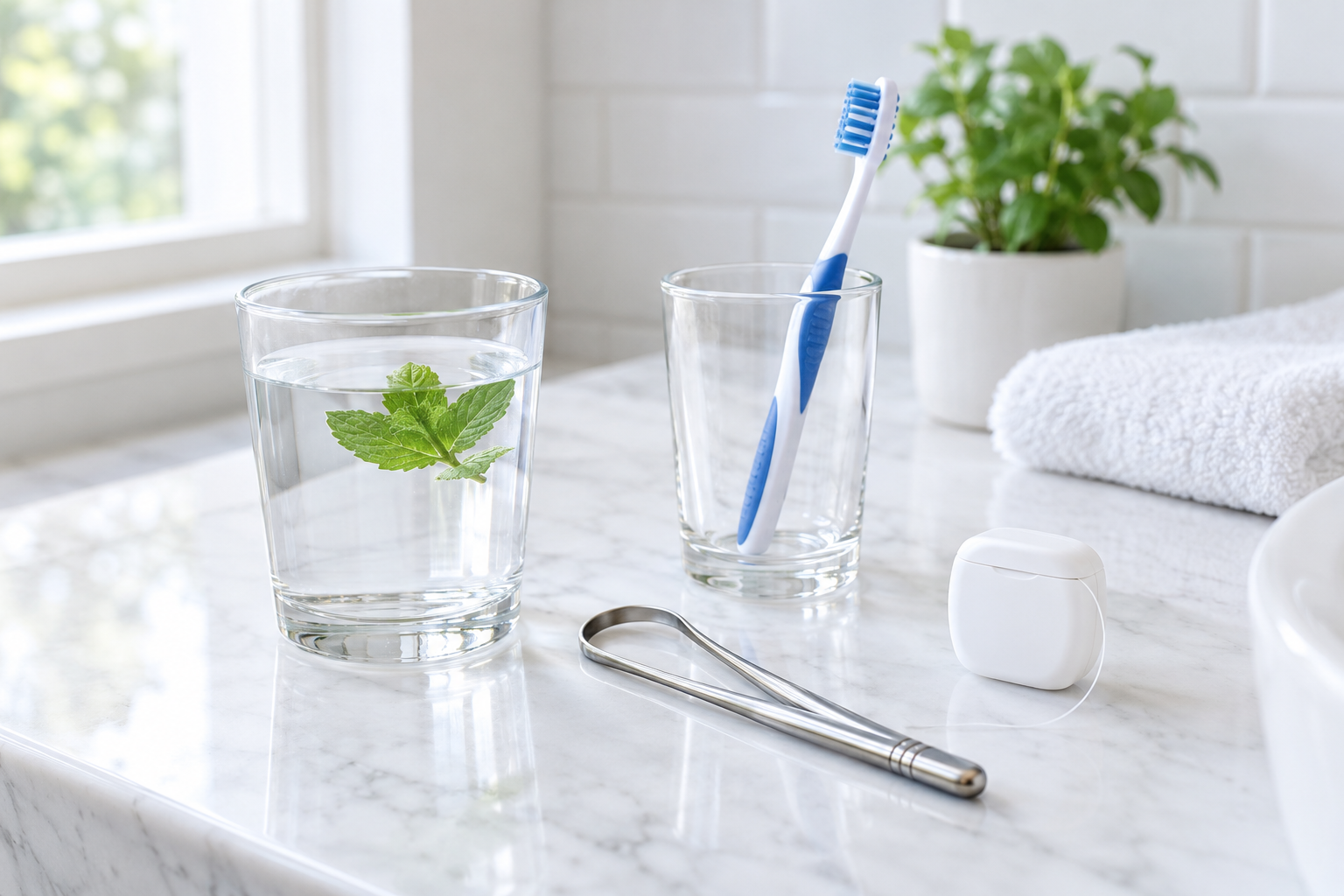
Most people notice bad breath at an awkward moment: right before a meeting, after a cup of coffee, or first thing in the morning. It is one of the most common oral concerns, and in most cases it is not a sign of anything serious.
Still, it can be frustrating. Mints and mouthwash may cover the smell for a while, but the odor often comes back because the underlying cause has not changed.
The good news is that everyday breath odor usually has a few familiar sources, and many of them can be addressed with simple, consistent habits. This guide walks through the most common causes, practical steps you can build into your routine, and the signs that mean it is time to talk with a dentist or doctor.
This article is for general educational purposes and is not a substitute for professional advice. Please see our medical disclaimer.
Why Bad Breath Happens
The mouth is home to a large community of microorganisms, often called the oral microbiome. Most of these microbes are a normal and healthy part of the mouth.
Some bacteria, however, break down leftover food particles, dead cells, and proteins. As they do, they release gases known as volatile sulfur compounds. These compounds are responsible for much of the unpleasant smell people associate with bad breath.
That is why breath odor tends to get worse when:
- food debris stays in the mouth longer than usual,
- saliva flow is reduced,
- or bacteria build up in areas that are harder to clean, such as the back of the tongue or between teeth.
In other words, bad breath is often less about one “bad” food and more about the conditions in the mouth that allow odor-producing bacteria to thrive.
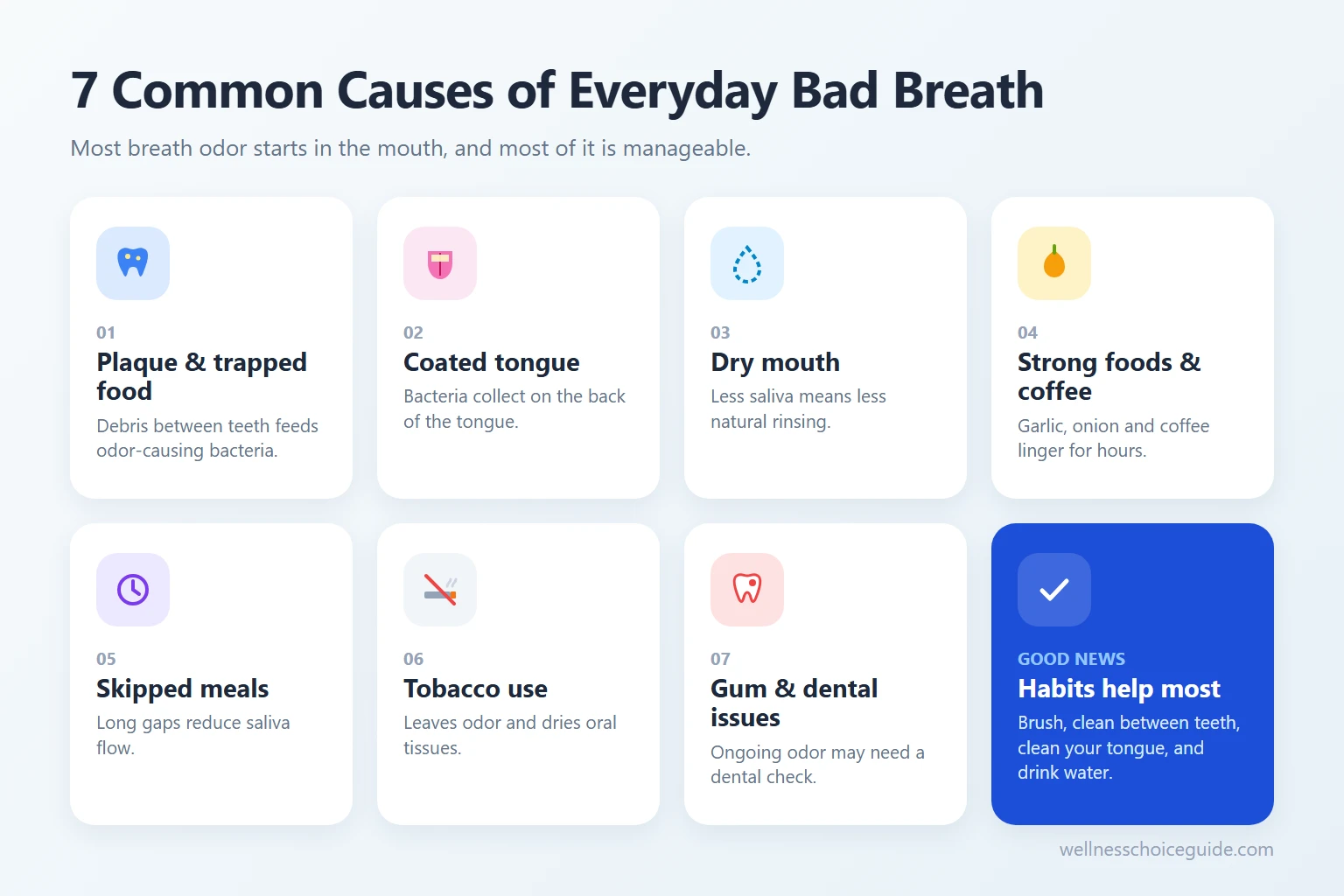
7 Common Causes of Everyday Bad Breath
1. Plaque and Food Left Between Teeth
When brushing misses certain areas, plaque and small food particles remain on and between the teeth. Over time, bacteria feed on this material and produce odor.
Brushing alone does not reach the tight spaces between teeth very well. That is one reason dental professionals recommend cleaning between the teeth once a day, using floss, interdental brushes, or another tool that suits you.
2. A Coated Tongue
The surface of the tongue is not smooth. It has small grooves and bumps that can trap bacteria, food debris, and dead cells, especially toward the back.
Many people brush their teeth carefully but never clean their tongue. A whitish or yellowish coating on the back of the tongue is a common contributor to breath odor.
3. Dry Mouth
Saliva helps rinse away food particles and keeps bacterial growth in check. When the mouth becomes dry, that natural cleaning process slows down.
This is the main reason “morning breath” happens: saliva production drops during sleep, especially for people who breathe through their mouth at night. Dry mouth can also be linked to dehydration, certain medications, and some health conditions. We cover this topic in more detail in our guide to dry mouth causes and everyday ways to support oral comfort.
4. Strong-Smelling Foods and Drinks
Garlic, onions, certain spices, and coffee are well-known culprits. Some of the compounds from these foods are absorbed into the bloodstream and released through the lungs, which is why the smell can last even after brushing.
This type of odor is usually temporary and fades once the food has been processed by the body.
5. Skipping Meals or Very Low-Carbohydrate Eating
Long gaps between meals can reduce saliva flow, which may make breath odor more noticeable. Some people following very low-carbohydrate diets also notice a distinct breath smell as the body changes how it uses energy.
6. Tobacco Use
Smoking and other tobacco products leave their own odor in the mouth and can also dry out oral tissues. Tobacco use is also associated with gum problems, which can further contribute to bad breath.
7. Gum and Dental Problems
Gum inflammation, cavities, and dental appliances that are not cleaned well (such as dentures, retainers, or aligners) can all harbor bacteria. If bad breath persists despite a good routine, an underlying dental issue is one of the first things a dentist will look for.
Everyday Habits That Support Fresher Breath
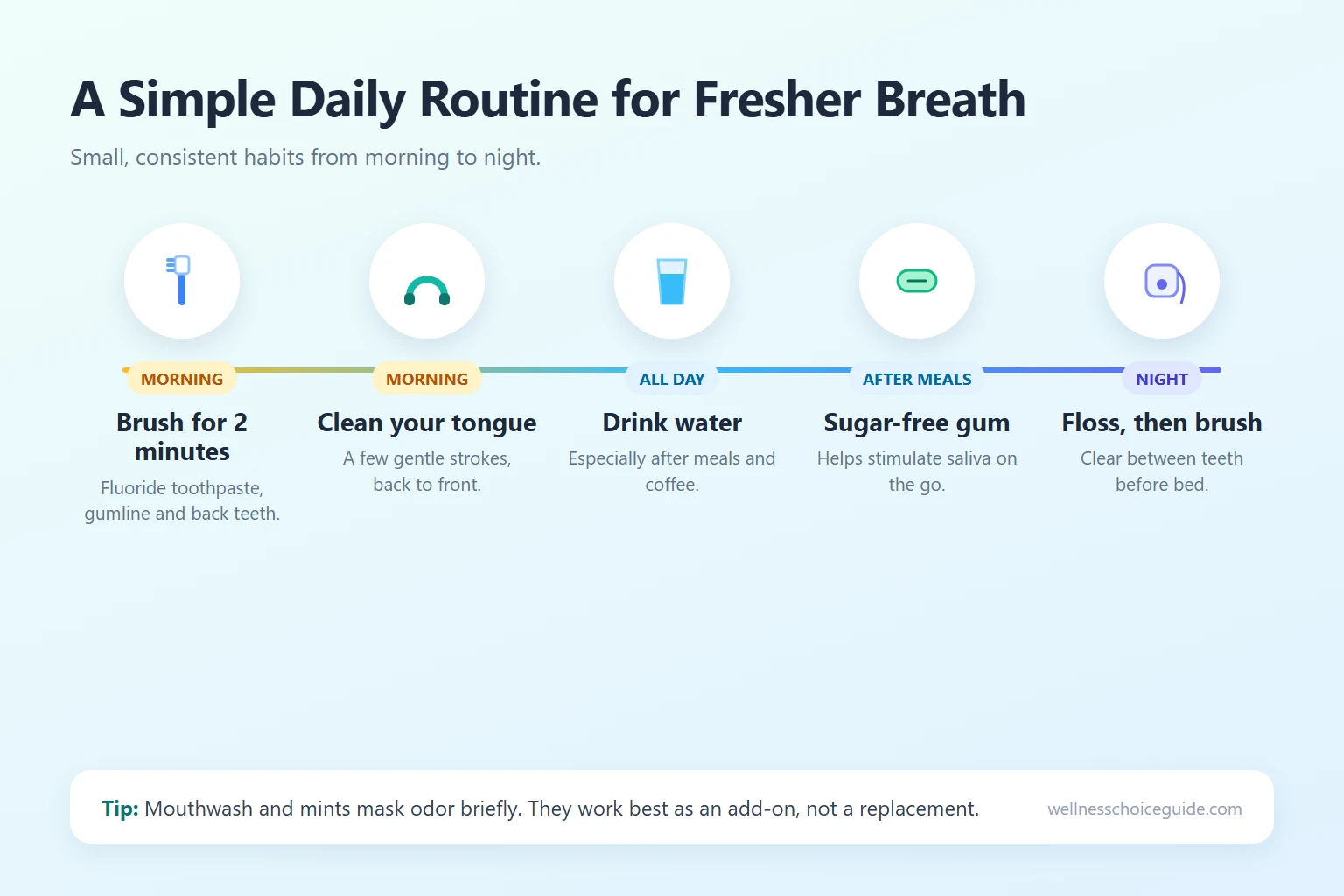
There is no single trick that guarantees fresh breath. What usually works best is a combination of small, consistent habits.
Brush Twice a Day, Thoroughly
Brush for about two minutes, twice a day, with a fluoride toothpaste. Pay attention to the gumline and the back teeth, where plaque tends to collect.
Also remember that worn bristles do not clean as effectively. If you are not sure when to swap yours, see our guide on how often to replace your toothbrush.
Clean Between Your Teeth Once a Day
Floss, interdental brushes, or a water flosser can help remove debris that brushing misses. The best tool is the one you will actually use consistently.
Add Tongue Cleaning to Your Routine
Gently clean your tongue from back to front using a tongue scraper or your toothbrush. A few light strokes are enough. There is no need to scrub hard.
This step takes less than 30 seconds and is one of the most overlooked parts of an oral-care routine.
Stay Hydrated
Drinking water throughout the day helps keep the mouth moist and supports natural saliva flow. A glass of water after meals or coffee can also help rinse away food particles.
Chew Sugar-Free Gum
Chewing sugar-free gum can stimulate saliva, which may help temporarily when brushing is not possible. Choosing sugar-free options matters, because sugary gum and mints feed the bacteria you are trying to control.
Keep Dental Appliances Clean
If you wear dentures, a retainer, a night guard, or clear aligners, clean them daily according to your dentist’s or the manufacturer’s instructions. These appliances can quietly collect bacteria and odor.
Build a Simple Daily Routine
Consistency matters more than any single product. If you want a step-by-step framework, our daily oral care routine guide walks through a practical morning-to-night approach.
What About Mouthwash and Mints?
Mouthwash and breath mints can be useful, but it helps to understand what they do.
- Cosmetic mouthwashes and mints mainly mask odor for a short time.
- Therapeutic mouthwashes contain active ingredients intended to reduce plaque or bacteria. Your dentist or pharmacist can help you decide whether one is appropriate for you.
Some people find that alcohol-based mouthwashes leave their mouth feeling dry. If dry mouth is part of your concern, an alcohol-free option may feel more comfortable.
In either case, mouthwash works best as an addition to brushing and cleaning between teeth, not as a replacement.
Where Do Oral Probiotics Fit In?
Because bad breath is closely tied to the balance of bacteria in the mouth, there is growing interest in oral probiotics as part of an oral wellness routine.
Research in this area is still developing, and results are often strain-specific. That means a finding about one probiotic strain does not automatically apply to every product on the shelf. Oral probiotics should not be viewed as a cure for bad breath or as a replacement for brushing, flossing, and professional dental care.
If you are curious about them, these guides may help:
- What do oral probiotics do?
- How to choose an oral probiotic: 7 factors to compare
- How to add oral probiotics into your daily routine
As with any supplement, it is a good idea to check with your dentist, doctor, or pharmacist first, especially if you have a health condition, are pregnant, or take other medications.
A Quick Way to Check Your Breath
It is surprisingly hard to judge your own breath, because people tend to become used to their own smell.
A simple at-home check is to lick the inside of your wrist, let it dry for a few seconds, and then smell it. If there is a noticeable odor, it may be a sign that your tongue or the back of your mouth needs more attention. You can also ask someone you trust for honest feedback.
When to See a Dentist or Doctor
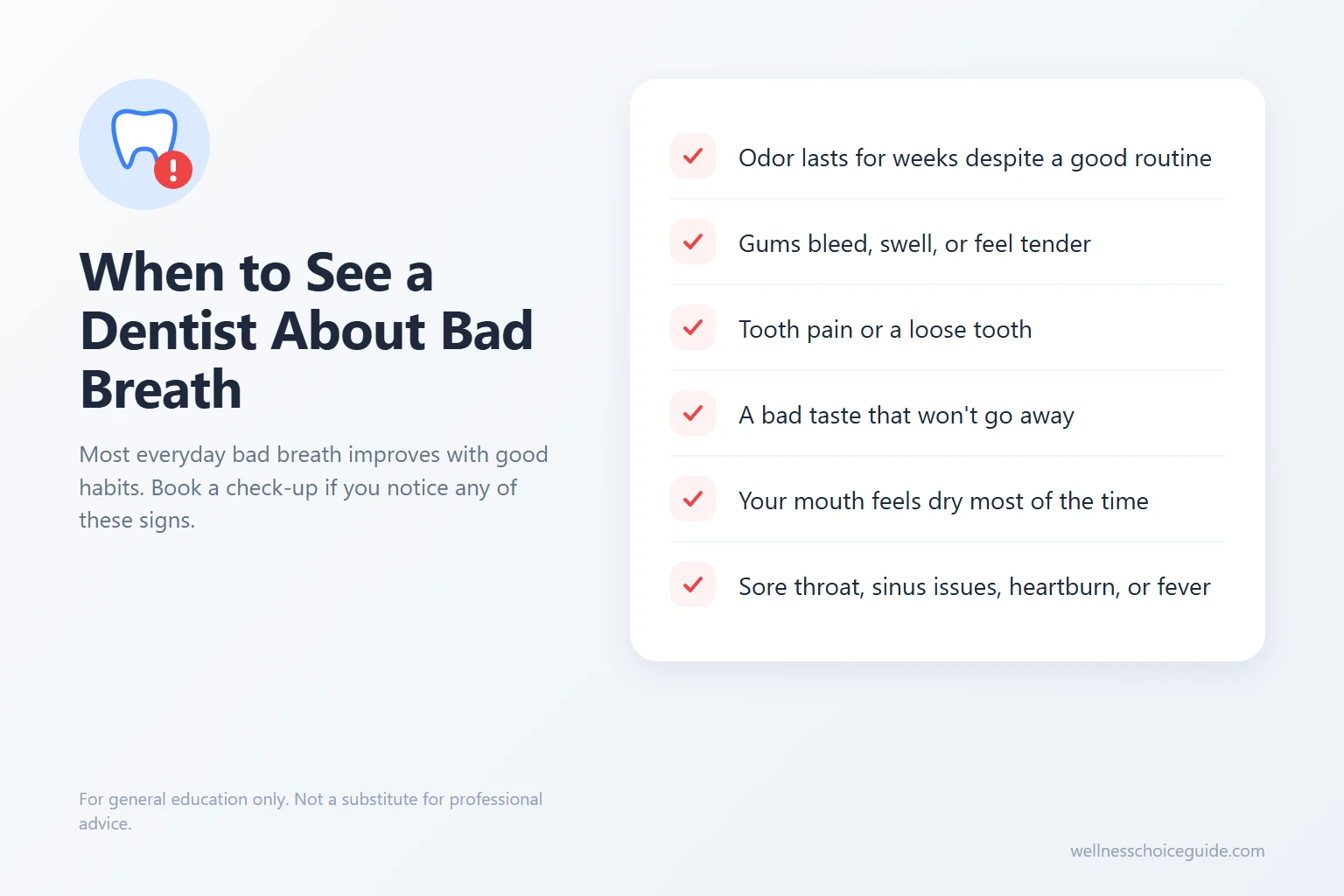
Most everyday bad breath improves with better oral hygiene and hydration. However, it is worth booking an appointment if:
- bad breath continues for several weeks despite a consistent routine,
- your gums bleed, are swollen, or feel tender,
- you have tooth pain, a loose tooth, or a bad taste that will not go away,
- your mouth feels dry most of the time,
- or you have other symptoms such as a sore throat, nasal congestion, heartburn, or fever.
A dentist can check for gum disease, cavities, or other dental causes. If your mouth looks healthy, they may suggest seeing a doctor, since persistent breath odor can occasionally be related to issues elsewhere in the body, such as the sinuses, throat, or digestive system.
Frequently Asked Questions
Why do I have bad breath even after brushing?
Brushing cleans the teeth, but odor often comes from the tongue, the spaces between teeth, or a dry mouth. Adding tongue cleaning, daily interdental cleaning, and enough water usually makes a bigger difference than brushing harder.
Is morning breath normal?
Yes. Saliva flow drops during sleep, which allows bacteria to build up overnight. Morning breath usually improves after brushing, cleaning your tongue, and drinking water.
Can drinking water really help bad breath?
Water does not “cure” bad breath, but it supports saliva flow and helps rinse away food particles. Staying hydrated is one of the simplest everyday habits for fresher breath.
Are oral probiotics a treatment for bad breath?
No. Oral probiotics are supplements, not treatments. Some people include them as part of a broader oral wellness routine, but they should not replace brushing, flossing, or professional dental care.
The Bottom Line
Everyday bad breath is common and usually manageable. In many cases, it comes down to bacteria on the tongue and between the teeth, combined with a mouth that is drier than it should be.
A consistent routine of brushing twice a day, cleaning between teeth, cleaning the tongue, and staying hydrated covers most of the basics. If the problem continues despite good habits, a dental visit is the best next step to rule out an underlying cause.
Sources and Further Reading
- NHS: Bad breath
- American Dental Association, MouthHealthy: Bad Breath
- Cleveland Clinic: Bad Breath (Halitosis)