

Seeing a little pink in the sink after brushing can be unsettling. Bleeding gums are a common experience, and many people notice it at some point, often when they start flossing again or switch to a new toothbrush.
In many cases, bleeding gums are linked to plaque building up along the gumline. That is something everyday habits can usually help with. But bleeding can also be the body’s early signal that the gums are inflamed, and it is not something to ignore if it keeps happening.
This guide explains the most common reasons gums bleed, practical ways to care for them day to day, and the signs that mean it is time to see a dentist.
This article is for general educational purposes and is not a substitute for professional advice. Please see our medical disclaimer.
Why Gums Bleed
Healthy gums are usually firm, pale pink, and fit snugly around the teeth. They do not normally bleed with gentle brushing or flossing.
When plaque, the soft, sticky film of bacteria that forms on teeth every day, is left along the gumline, the gum tissue can become irritated and inflamed. Inflamed gums tend to look redder, feel slightly puffy, and bleed more easily when touched.
This early stage of gum inflammation is called gingivitis. According to the American Dental Association and other health organizations, gingivitis is common and is generally considered reversible with good daily oral hygiene and regular professional cleanings.
If plaque is not removed, it can harden into tartar (also called calculus), which brushing and flossing cannot remove at home. Over time, ongoing inflammation may progress to a more serious form of gum disease called periodontitis, which can affect the tissues and bone that support the teeth. That is why persistent bleeding is worth paying attention to.
The bacteria involved are part of the wider community of microbes that live in the mouth. If you would like to understand that bigger picture, see our guide to the oral microbiome and everyday dental wellness.
Common Reasons Your Gums May Bleed
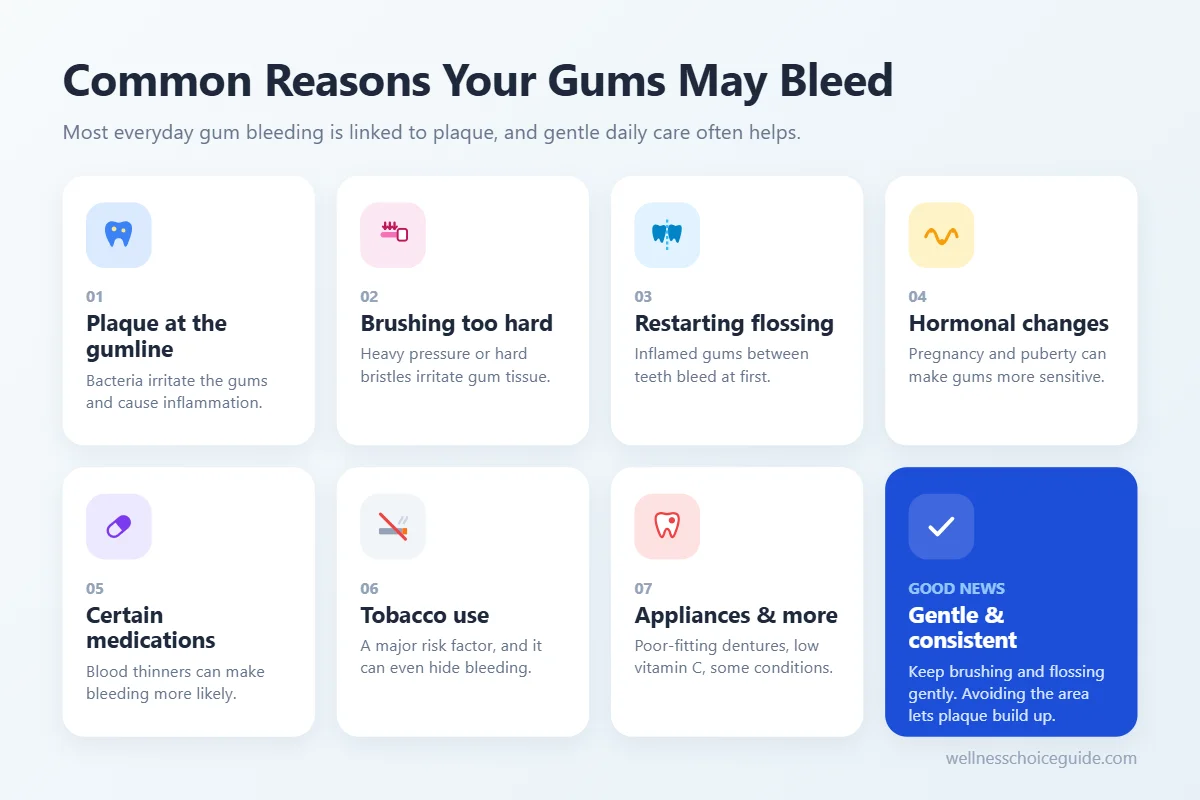
1. Plaque Buildup Along the Gumline
This is the most common cause. Areas that are easy to miss, such as the back teeth, the inside surfaces of the lower front teeth, and the spaces between teeth, are where plaque tends to collect and where bleeding often shows up first.
2. Brushing Too Hard
Scrubbing with a lot of pressure does not clean better. It can irritate the gums and, over time, may contribute to gum recession. A soft-bristled brush with gentle, short strokes is usually recommended.
Worn, splayed bristles can also be harsher on the gums and less effective at removing plaque. Our guide on how often to replace your toothbrush explains what to look for.
3. Starting (or Restarting) Flossing
Many people notice bleeding when they begin flossing after a break. This often happens because the gums between the teeth are already inflamed. With gentle, consistent daily cleaning, this type of bleeding commonly becomes less noticeable within a week or two. If it does not improve, it is a good idea to check in with a dentist.
4. Hormonal Changes
Hormonal shifts, such as those during pregnancy, puberty, or around menstruation, can make gums more sensitive and more likely to bleed. Pregnancy-related gum inflammation is common enough that dentists often recommend paying extra attention to oral care during that time.
5. Certain Medications
Some medications, including blood thinners, can make bleeding more likely. Other medications can cause dry mouth, which may allow plaque to build up more easily. Never stop or change a prescribed medication on your own. If you notice new or increased gum bleeding, talk with your doctor, dentist, or pharmacist.
6. Smoking and Tobacco Use
Tobacco use is a well-established risk factor for gum disease. Interestingly, smoking can also reduce blood flow to the gums, which may hide bleeding even when gum problems are present. Less bleeding does not always mean healthier gums for people who smoke.
7. Dental Appliances and Other Factors
Dentures, retainers, or other appliances that do not fit well can rub against the gums. Less commonly, bleeding gums can be related to nutritional deficiencies, such as a lack of vitamin C, or to certain medical conditions that affect blood clotting. These are reasons why bleeding that does not have an obvious cause should be checked by a professional.
Everyday Care for Gums That Bleed
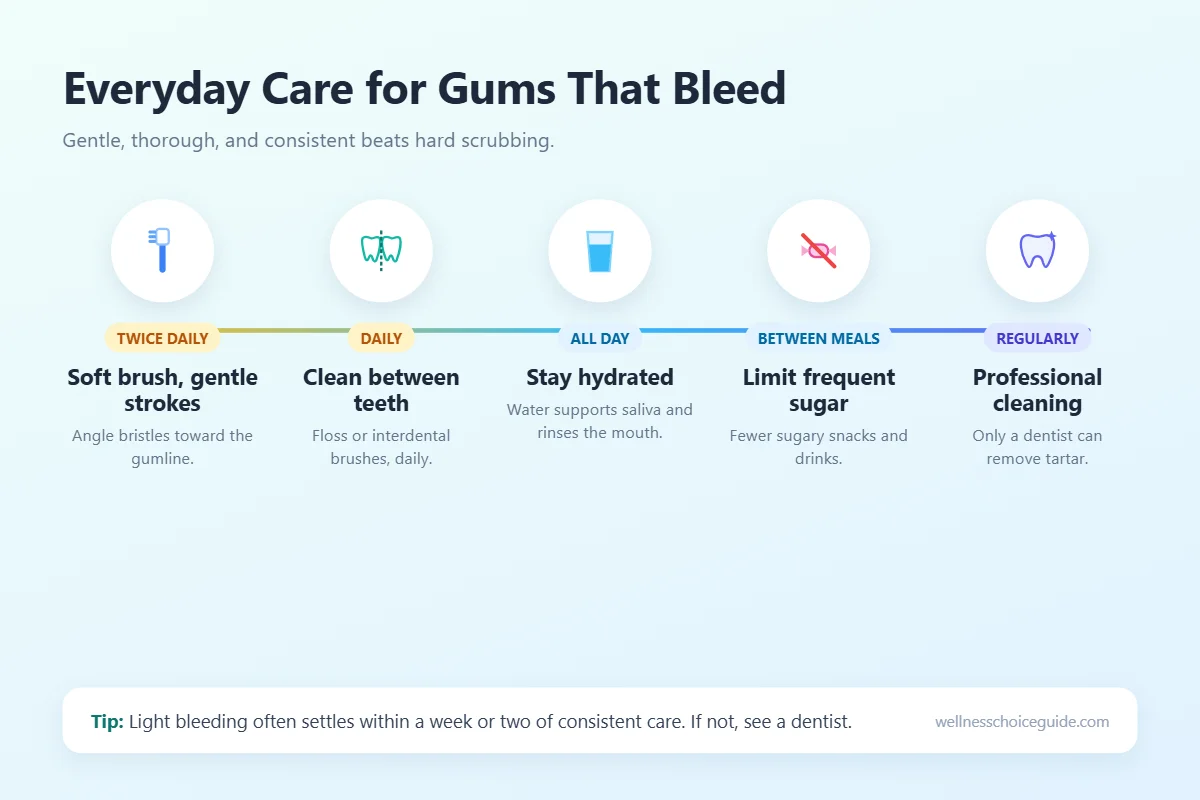
The instinct for many people is to avoid brushing or flossing the area that bleeds. In most everyday cases, that can make things worse, because plaque keeps building up. Gentle, thorough, and consistent cleaning is usually the better approach.
Brush Gently, Twice a Day
- Use a soft-bristled toothbrush and fluoride toothpaste.
- Angle the bristles toward the gumline, at about 45 degrees.
- Use small, gentle strokes rather than hard scrubbing.
- Brush for about two minutes, covering every surface.
Clean Between Your Teeth Every Day
Floss, interdental brushes, or a water flosser can all help remove plaque between the teeth. Slide floss gently along the side of each tooth and slightly below the gumline, rather than snapping it down onto the gums.
Keep a Consistent Routine
Gum inflammation often responds to consistency more than to any single product. A simple morning and evening routine, done well every day, matters most. Our daily oral care routine guide walks through a practical step-by-step approach.
Stay Hydrated and Watch Frequent Sugar
Saliva helps rinse the mouth and keep bacteria in check. Drinking water throughout the day and limiting frequent sugary snacks and drinks can support a healthier environment for your teeth and gums. If your mouth often feels dry, our article on dry mouth causes and everyday comfort may help.
Keep Up With Professional Cleanings
Once plaque hardens into tartar, only a dental professional can remove it. Regular check-ups and cleanings help catch early gum problems before they become harder to manage.
What About Mouthwash?
Some therapeutic mouthwashes are formulated to help reduce plaque and gingivitis. A dentist or pharmacist can suggest whether one is appropriate for you.
Mouthwash can be a helpful addition, but it does not remove plaque the way brushing and cleaning between teeth do. If you are relying on mouthwash to cover up bleeding or bad breath, it is worth having your gums checked. Persistent bad breath and gum inflammation often go together, which we cover in our guide to bad breath causes and fresher-breath habits.
Can Oral Probiotics Help Bleeding Gums?
Because gum inflammation is connected to the bacteria in the mouth, some people are curious about oral probiotics. Research on probiotics and gum health is ongoing, and findings tend to depend on the specific strains studied.
At this point, oral probiotics should not be seen as a treatment for bleeding gums or gum disease. They are not a substitute for brushing, cleaning between teeth, or professional dental care. If you are considering one, talk with your dentist first, especially if your gums are bleeding regularly.
When to See a Dentist
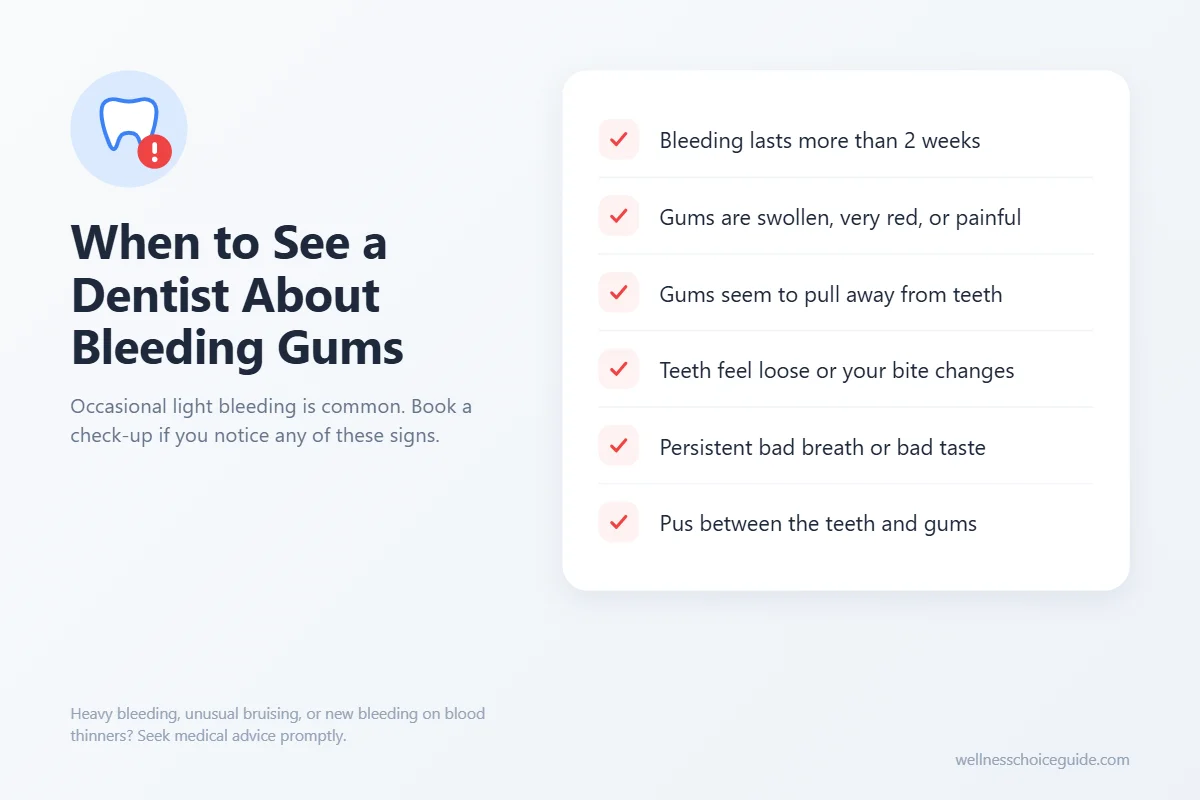
Occasional, light bleeding that improves within a week or two of better oral care is common. However, it is a good idea to make a dental appointment if you notice:
- bleeding that continues for more than two weeks despite gentle, consistent care,
- gums that are swollen, very red, tender, or painful,
- gums that seem to be pulling away from the teeth,
- teeth that feel loose or a change in how your teeth fit together,
- persistent bad breath or a bad taste in your mouth,
- pus between the teeth and gums.
Seek medical advice promptly if bleeding is heavy or hard to stop, if you also notice unusual bruising or bleeding elsewhere on your body, or if you take blood-thinning medication and notice new bleeding.
Frequently Asked Questions
Should I stop flossing if my gums bleed?
Usually not. Bleeding when you start flossing is often a sign that the gums between your teeth are inflamed. Gentle daily flossing commonly helps the bleeding settle over time. If it continues beyond about two weeks, see a dentist.
Is it normal for gums to bleed when brushing?
It is common, but it is not a sign of healthy gums. Healthy gums do not usually bleed with gentle brushing. Occasional bleeding is often linked to plaque and can improve with better daily care.
Can brushing too hard make gums bleed?
Yes. Too much pressure or a hard-bristled brush can irritate the gums. A soft-bristled brush and gentle strokes are generally recommended.
Can bleeding gums go away on their own?
Bleeding caused by early gum inflammation often improves with consistent brushing, cleaning between teeth, and professional cleanings. It is less likely to improve if plaque and tartar are left in place, so it should not simply be ignored.
The Bottom Line
Bleeding gums are common, and in many cases they point to plaque along the gumline and early gum inflammation. The most helpful response is usually not to avoid the area, but to clean it gently and consistently: soft brushing twice a day, daily cleaning between the teeth, and regular dental visits.
If bleeding continues for more than a couple of weeks, comes with swelling, pain, or loose teeth, or seems unusual for you, a dentist can help find the cause and recommend the right next steps.
Sources and Further Reading
- National Institute of Dental and Craniofacial Research: Periodontal (Gum) Disease
- American Dental Association, MouthHealthy: Gingivitis
- NHS: Gum disease
- Cleveland Clinic: Gingivitis and Periodontal Disease