
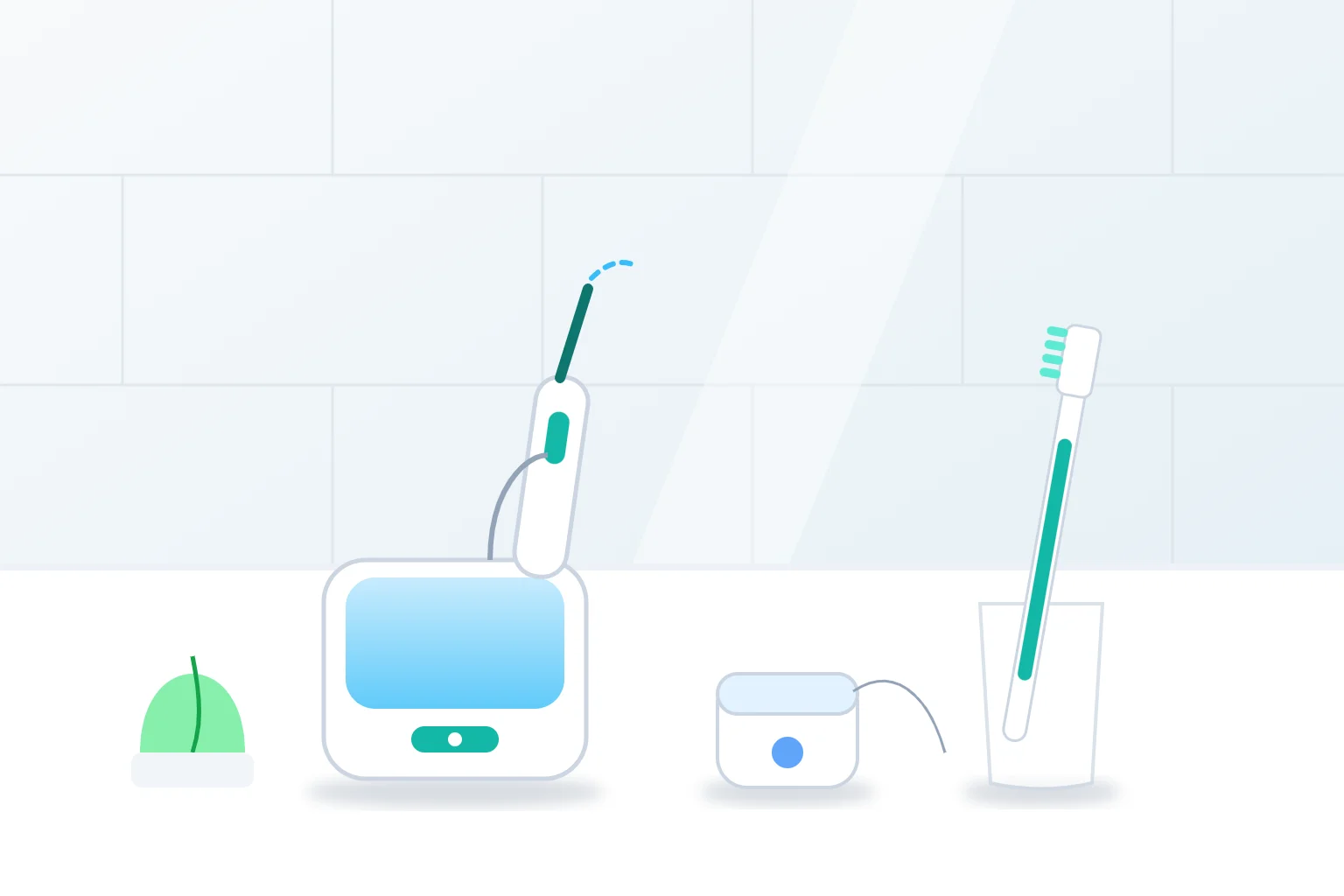
Cleaning between your teeth is one of those habits most people know they should do, but many find hard to stick with. String floss has been the standard for decades, while water flossers have become popular as an easier, more comfortable-feeling alternative.
So which one is better? The honest answer is that both can work, and the best choice is usually the one you will actually use every day. This guide compares string floss and water flossers, explains what the research suggests, and helps you figure out which might suit you.
This article is for general educational purposes and is not a substitute for professional advice. Please see our medical disclaimer.
Why Cleaning Between Teeth Matters
A toothbrush cleans the front, back, and chewing surfaces of your teeth well, but its bristles cannot fully reach the tight spaces between them. That is where plaque and food debris tend to collect, and where gum inflammation and cavities often start.
The American Dental Association recommends brushing twice a day and cleaning between your teeth once a day with floss or another interdental cleaner. Left in place, plaque can harden into tartar, which only a dental professional can remove. Our guide to plaque vs. tartar explains why daily removal matters.
String Floss vs. Water Flosser at a Glance
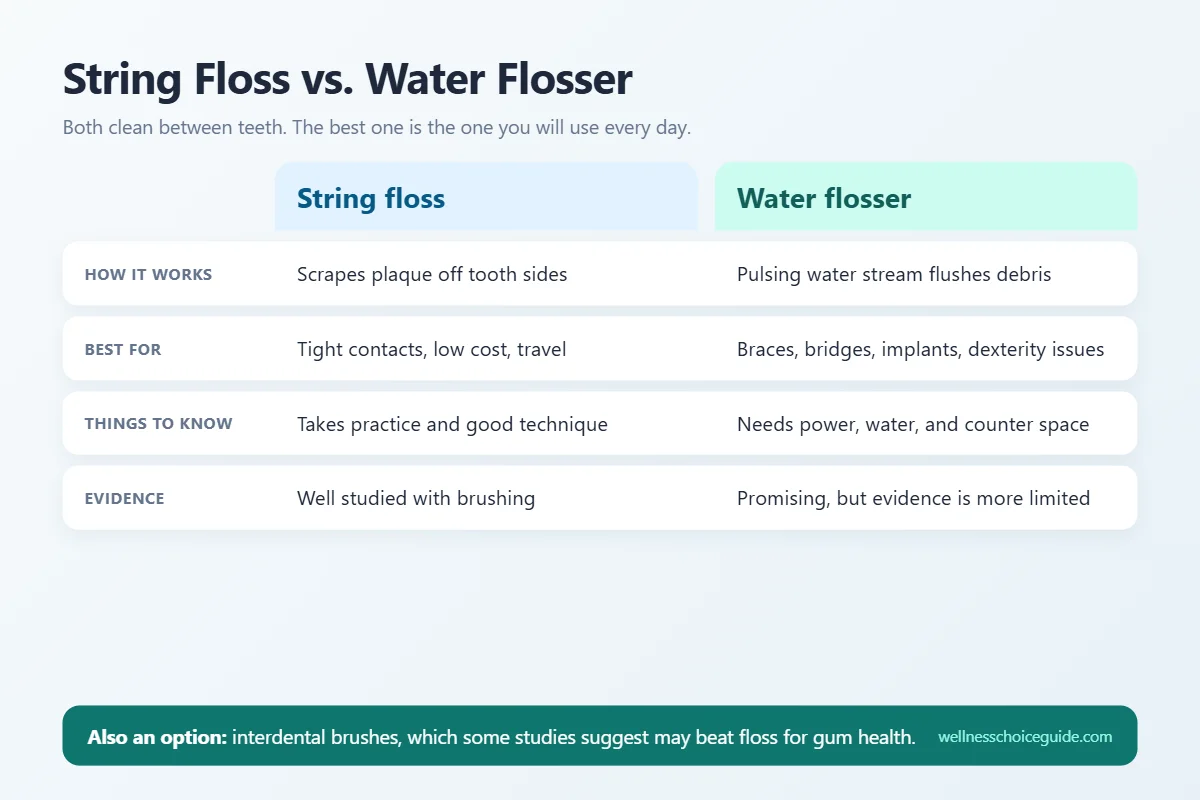
- String floss physically scrapes plaque off the sides of each tooth and just below the gumline.
- A water flosser, sometimes called an oral irrigator, uses a pulsing stream of water to flush food and plaque from between teeth and along the gumline.
- Interdental brushes, small brushes that fit between teeth, are another option worth knowing about.
String Floss: Pros and Cons
Pros
- inexpensive and widely available;
- small and easy to carry anywhere;
- works well for tight contacts between teeth;
- no power, water, or counter space needed.
Cons
- takes practice to use correctly;
- can be hard for people with limited hand dexterity;
- more difficult around braces, bridges, or implants;
- some people find it uncomfortable at first, especially if their gums are inflamed.
Water Flosser: Pros and Cons
Pros
- easier for many people to use consistently;
- helpful around braces, bridges, and implants;
- a good option for people with arthritis or limited dexterity;
- often feels gentler on sensitive gums.
Cons
- more expensive than floss;
- needs electricity or charging, water, and counter space;
- less convenient for travel;
- can be messy while you are learning to use it.
What Does the Research Say?
A 2019 Cochrane review looked at home-use devices for cleaning between teeth, in addition to toothbrushing. It found that flossing plus brushing may reduce gum inflammation (gingivitis) in the short term compared with brushing alone, and that interdental brushes may be more effective than floss for reducing gingivitis.
For water flossers, the evidence was more limited and inconsistent. The review also noted that the overall certainty of the evidence was low to very low, with most studies lasting only one to three months.
In practical terms, this means no single tool is clearly the winner for everyone. Cleaning between your teeth every day, with a tool you can use well, matters more than which tool you choose.
How to Floss the Right Way
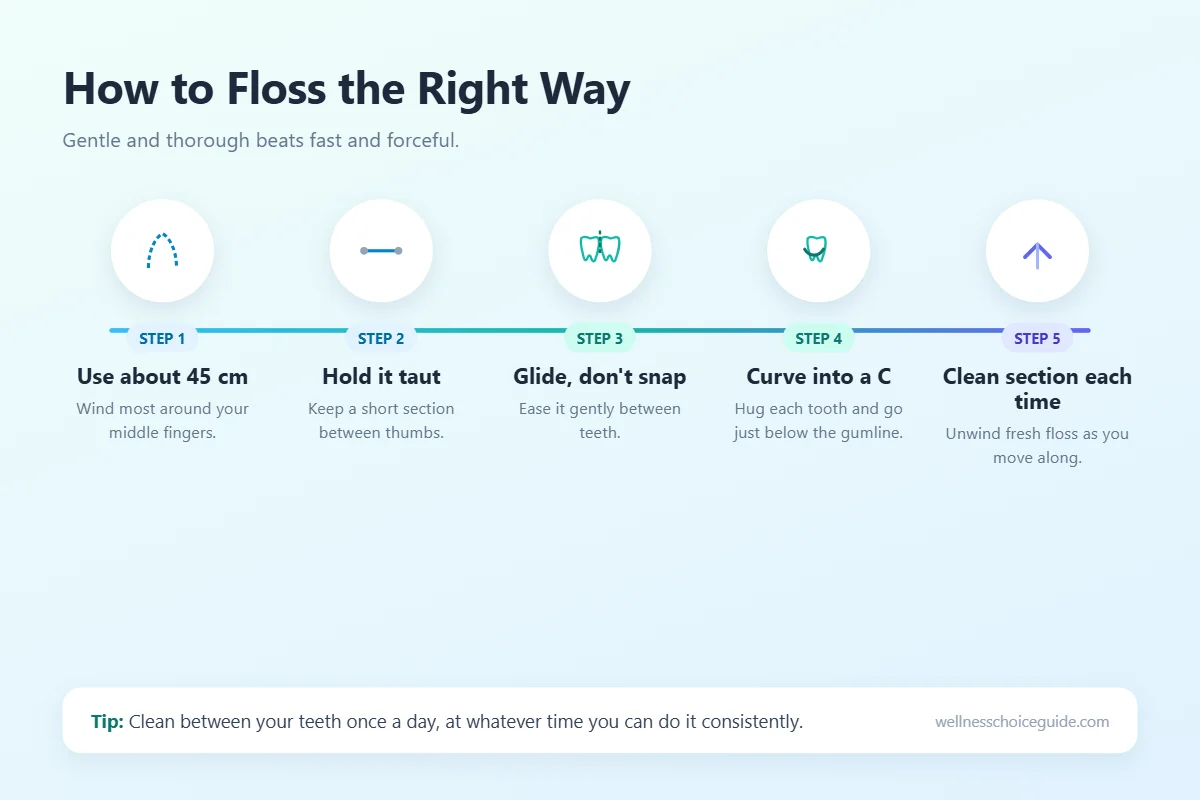
- Use about 45 centimeters (18 inches) of floss and wind most of it around your middle fingers.
- Hold it taut between your thumbs and index fingers.
- Gently glide it between your teeth. Avoid snapping it down onto your gums.
- Curve it into a C shape against one tooth and slide it gently just below the gumline, then repeat on the neighboring tooth.
- Use a clean section of floss as you move from tooth to tooth.
A little bleeding when you first start is common if your gums are inflamed, and it often settles with consistent, gentle cleaning. Our guide to bleeding gums explains more.
Tips for Using a Water Flosser
- Start on the lowest pressure setting and increase gradually.
- Lean over the sink and keep your lips partly closed to reduce splashing.
- Aim the tip at the gumline and pause briefly between each tooth.
- Work systematically so you do not miss any spaces.
- Clean the reservoir and tip regularly, following the manufacturer’s instructions.
Who May Prefer a Water Flosser?
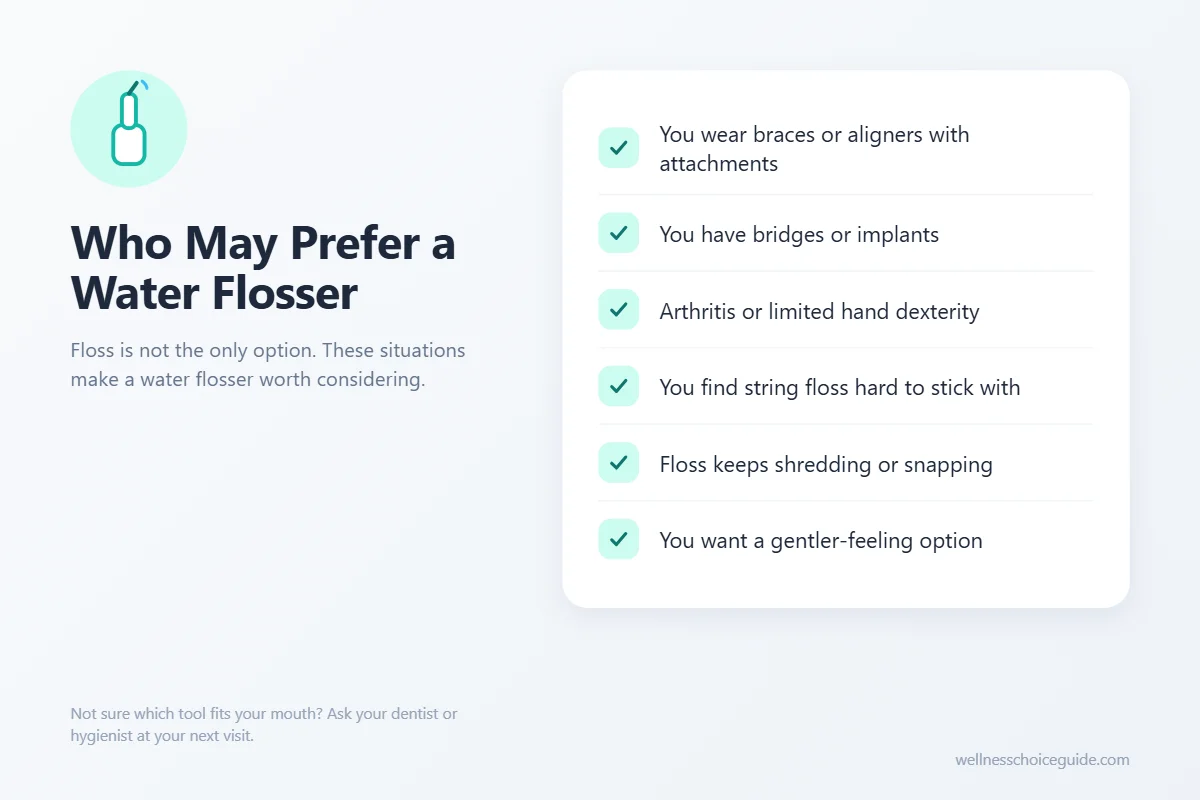
A water flosser may be worth considering if you:
- wear braces or aligners with attachments;
- have bridges, crowns, or dental implants;
- have arthritis or limited hand dexterity;
- find string floss hard to stick with;
- have floss that keeps shredding or catching;
- prefer a gentler-feeling option.
Some people use both: a water flosser for daily convenience and string floss or interdental brushes for tight spots. Your dentist or hygienist can recommend what fits your mouth.
Building It Into Your Routine
The best time to clean between your teeth is whenever you can do it consistently. Many people prefer the evening, before brushing at night. If you are building a full routine, our daily oral care routine guide shows where it fits. Clean between-teeth spaces also help with fresher breath, as explained in our bad breath guide.
Common Mistakes to Avoid
Snapping floss into the gums
Forcing floss down quickly can irritate or cut the gums. Ease it in with a gentle back-and-forth motion instead.
Only cleaning the front teeth
The back teeth are harder to reach, but they are where plaque often builds up. Take a moment to reach every space, including behind the last molars.
Using the same section of floss
Reusing one section can move plaque from one space to the next. Unwind a fresh section as you go.
Turning a water flosser up too high
Higher pressure does not always mean better cleaning, and it can be uncomfortable. Start low and increase only as much as feels comfortable.
Skipping days
Occasional cleaning helps less than a steady habit. If daily flossing feels like a chore, a water flosser, floss picks, or interdental brushes may make it easier to stay consistent.
Frequently Asked Questions
Can a water flosser replace string floss?
For many people, yes, especially if it means they clean between their teeth every day. The evidence for water flossers is more limited, so ask your dentist what they recommend for your teeth and gums.
Should I floss before or after brushing?
Either order can work. Some people like to floss first so that brushing can sweep away loosened debris. Consistency matters most.
Are interdental brushes better than floss?
Some research suggests interdental brushes may reduce gum inflammation more than floss, especially where there is enough space between teeth. They come in different sizes, so a dental professional can help you choose.
Is it normal for gums to bleed when I start flossing?
Mild bleeding is common at first if your gums are inflamed. It often improves within a week or two of gentle daily cleaning. If it does not, see a dentist.
The Bottom Line
String floss and water flossers both help clean the spaces your toothbrush misses. Floss is inexpensive and portable, while water flossers can be easier for people with braces, dental work, or limited dexterity. Interdental brushes are another strong option.
The research does not crown a single winner, so choose the tool you will use every day, use it gently, and ask your dentist if you are unsure.
Sources and Further Reading
- American Dental Association: Dental Floss/Interdental Cleaners
- American Dental Association, MouthHealthy: Flossing
- Cochrane: Home use of devices for cleaning between the teeth
- NHS: How to keep your teeth clean