
Tooth decay is one of the most common health problems in the world, and it often starts quietly. In the early stages there may be no pain at all, which is why many people only find out about a cavity at a dental check-up or once a tooth starts to hurt.
The encouraging part is that tooth decay is largely preventable, and in its very earliest stage it can even be stopped or reversed. This guide explains how tooth decay develops, the signs to watch for, how it is treated, and the everyday habits that help protect your teeth.
This article is for general educational purposes and is not a substitute for professional advice. Please see our medical disclaimer.
What Causes Tooth Decay?
According to the NHS, tooth decay is often caused by having too much sugary food and drink and not cleaning your teeth and gums regularly. It happens when bacteria form a sticky layer called plaque over your teeth, which damages the surface of the teeth over time.
The National Institute of Dental and Craniofacial Research (NIDCR) explains the process in more detail. When decay-causing bacteria come into contact with sugars and starches from food and drinks, they form an acid. This acid attacks the tooth’s outer surface, called enamel, causing it to lose minerals. If teeth are exposed to acid again and again, for example through frequent sugary snacks and drinks, the enamel keeps losing minerals.
Our guide to plaque vs. tartar explains how plaque builds up and why removing it every day matters.
How Tooth Decay Develops
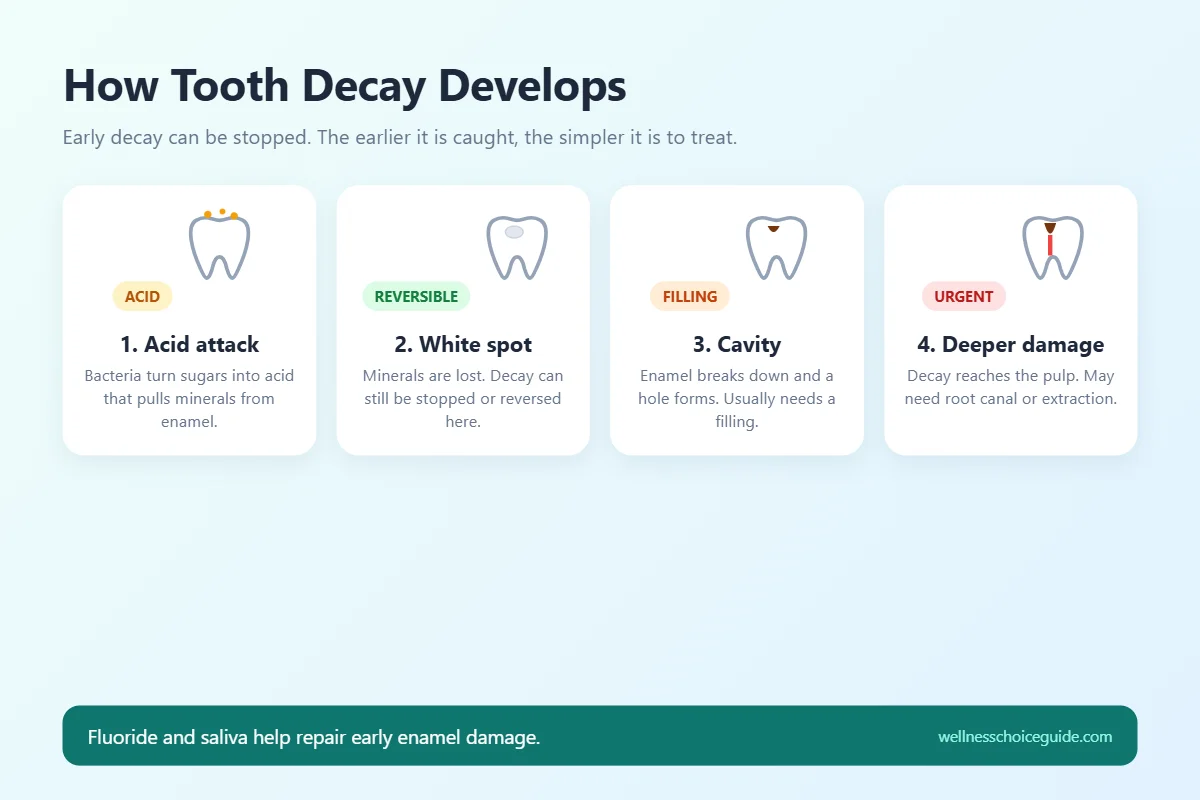
Tooth decay usually progresses in stages:
- Acid attack. Bacteria turn sugars into acid, which pulls minerals out of the enamel.
- White spot. The NIDCR notes that a white spot may appear where minerals have been lost. At this point, tooth decay can be stopped or reversed.
- Cavity. If more minerals are lost than can be restored, the enamel weakens and breaks down, forming a hole, or cavity.
- Deeper damage. If decay is left untreated, it can reach the soft tissue in the middle of the tooth, called the pulp, and may lead to infection.
The NIDCR explains that enamel can repair itself using minerals from saliva and fluoride from toothpaste, or through fluoride applied by a dentist or dental hygienist. That is why fluoride is so important in the early stages. See our guide on how to use fluoride toothpaste.
Signs of Tooth Decay
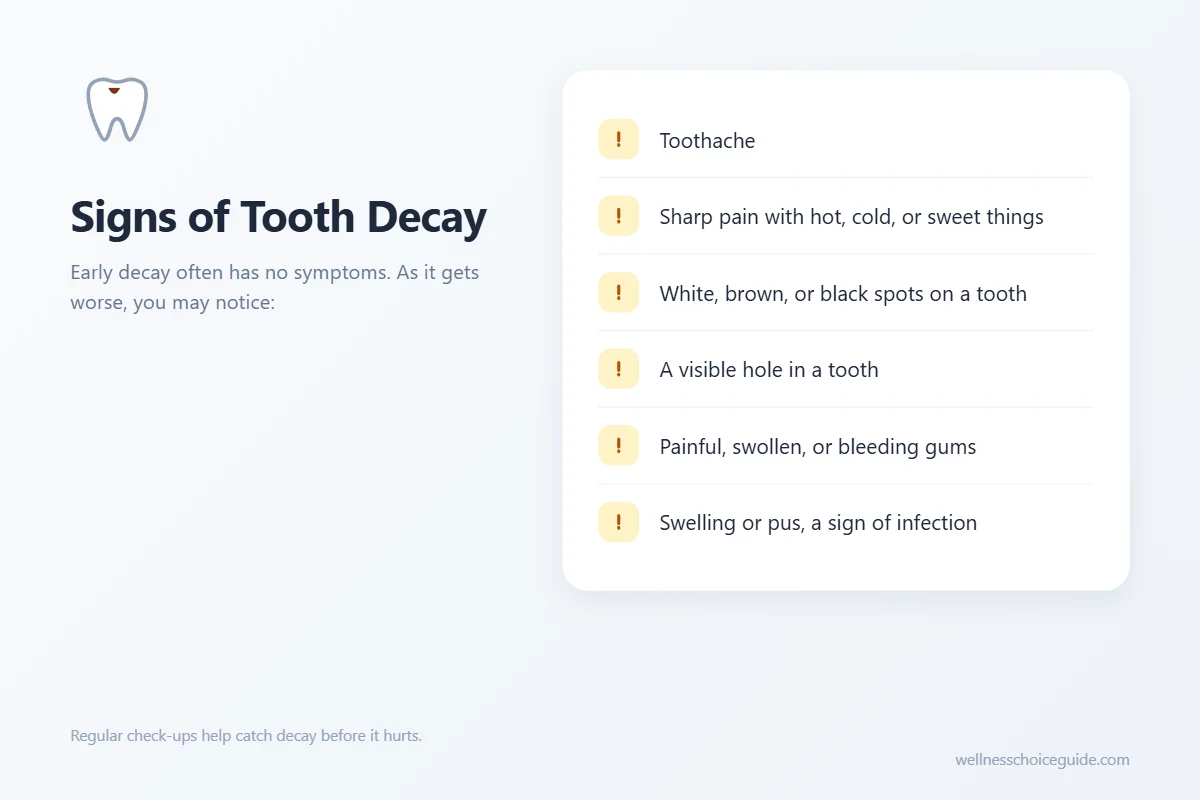
The NHS points out that tooth decay may not cause any symptoms at first. If it gets worse and a hole forms, you may notice:
- toothache;
- a sharp pain in your tooth when eating or drinking hot, cold, or sweet things;
- white, brown, or black spots on your tooth.
Sometimes the tooth or gum can become infected, leading to a painful build-up of pus, known as a dental abscess. If you notice sudden sensitivity, our guide to tooth sensitivity explains other possible causes too.
How Tooth Decay Is Treated
The NHS explains that treatment depends on how severe the decay is:
- Early decay: a dentist can prescribe fluoride treatments, such as a fluoride mouthwash or varnish, to reverse early tooth decay.
- A cavity: you will probably need a filling if there is a hole in your tooth.
- Decay that reaches the pulp: you may need root canal treatment.
- Severe damage: sometimes the affected tooth may need to be removed.
The earlier decay is found, the simpler treatment usually is. That is one of the main reasons regular dental check-ups matter, even when nothing hurts.
How to Help Prevent Tooth Decay
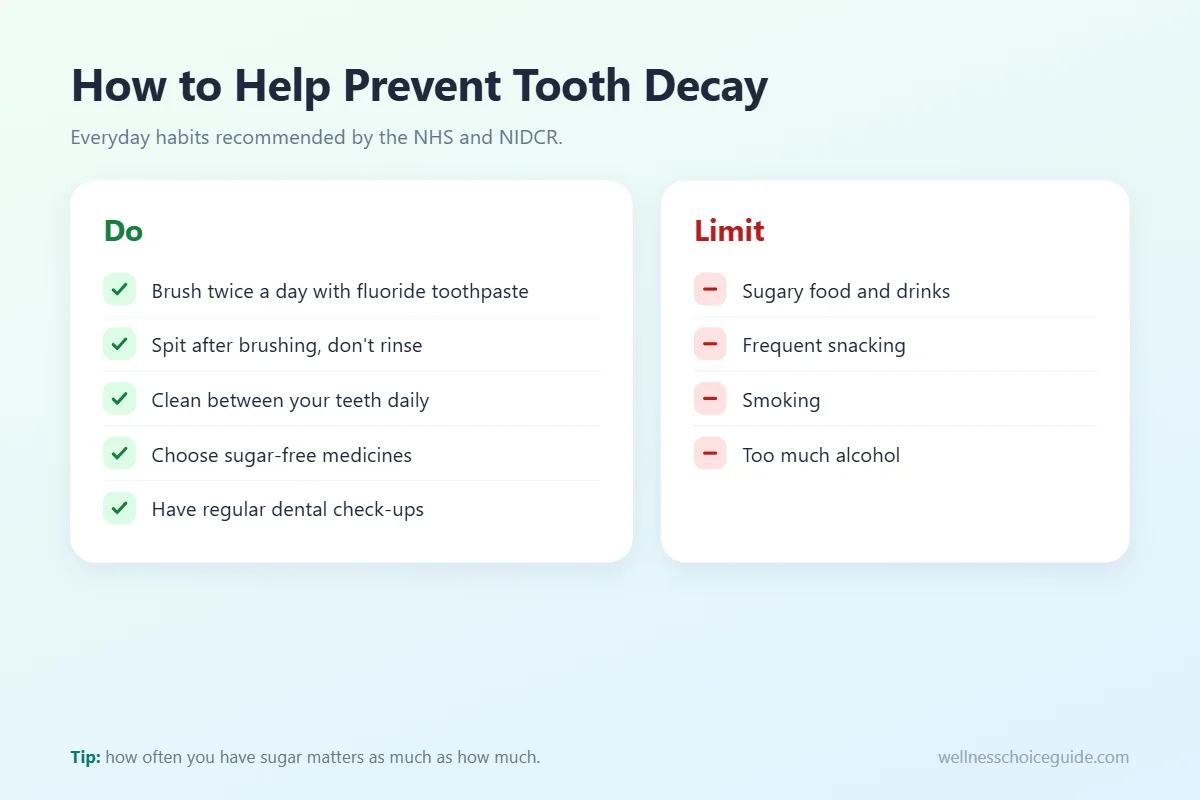
The NHS and the NIDCR recommend these everyday habits:
- Brush at least twice a day with fluoride toothpaste, and spit after brushing rather than rinsing.
- Clean between your teeth every day using floss or interdental brushes. A water flosser can also be an option for some people.
- Cut down on sugary food and drinks.
- Limit snacking. The NIDCR recommends eating nutritious, balanced meals and limiting snacks, since frequent exposure to sugars and starches keeps teeth under acid attack.
- Use sugar-free medicines where possible.
- Don’t smoke, and avoid regularly drinking more than 14 units of alcohol a week.
- Have regular dental check-ups. Your dentist can advise how often you need to go.
For a simple daily plan, see our daily oral care routine guide. A gentle technique with a soft brush also matters. Our comparison of an electric vs. manual toothbrush covers the basics.
Why How Often You Eat Sugar Matters
It is not only the total amount of sugar that counts, but how often your teeth are exposed to it. Each time you have something sugary or starchy, the bacteria in plaque produce acid. If you sip a sweet drink or snack throughout the day, your teeth have less time to recover between acid attacks.
A practical approach is to keep sweet foods and drinks to mealtimes, choose water or milk between meals, and avoid sipping sugary drinks over long periods. Saliva also helps protect teeth, so if your mouth often feels dry, our guide to dry mouth causes and relief may help.
Tooth Decay in Children
The NHS notes that tooth decay is common in children, so it is important to help them look after their teeth and gums from an early age. Supervising brushing, using the right amount of fluoride toothpaste for their age, and limiting sugary snacks and drinks all help.
When to See a Dentist
The NHS advises seeing a dentist if you have toothache or a sharp pain in a tooth when eating or drinking, or if your gums are painful, swollen, or bleed when you brush. You should also have regular check-ups even if you do not have any problems. If you notice facial swelling, a bad taste, or pus, contact a dentist promptly, as these can be signs of infection.
Frequently Asked Questions
Can tooth decay be reversed?
In its earliest stage, yes. The NIDCR explains that when a white spot first appears, decay can be stopped or reversed with fluoride and good oral care. Once a cavity forms, a dentist usually needs to repair it.
Does a cavity always hurt?
No. Tooth decay may not cause any symptoms at first, which is why regular dental check-ups are important.
Can a cavity heal on its own?
Once a hole has formed in the enamel, it does not grow back. A dentist will usually recommend a filling to stop the decay from getting worse.
Do oral probiotics prevent cavities?
Research on oral probiotics is still developing. They are not a substitute for brushing with fluoride toothpaste, cleaning between your teeth, and limiting sugar.
The Bottom Line
Tooth decay starts when bacteria turn sugars into acid that weakens enamel. Caught early, at the white-spot stage, it can be stopped or reversed with fluoride. Left untreated, it can lead to cavities, pain, and infection.
Brushing twice a day with fluoride toothpaste, cleaning between your teeth, cutting down on sugary snacks and drinks, and seeing your dentist regularly are the most effective ways to protect your teeth.
Sources and Further Reading
- NHS: Tooth decay
- National Institute of Dental and Craniofacial Research: Tooth Decay