
Gum disease is very common, yet many people do not realize they have it. It often starts quietly, with gums that bleed a little when you brush, and it can progress without much pain. You may have heard the terms gingivitis and periodontitis. They describe two different stages of the same problem, and knowing the difference can help you act early.
This guide explains what gingivitis and periodontitis are, how they differ, the warning signs to look for, how gum disease is treated, and the everyday habits that help keep your gums healthy.
This article is for general educational purposes and is not a substitute for professional advice. Please see our medical disclaimer.
What Causes Gum Disease?
According to the NHS, gum disease is caused by a build-up of plaque on your teeth. If plaque is not removed by brushing and cleaning between your teeth regularly, it builds up and irritates your gums.
The National Institute of Dental and Craniofacial Research (NIDCR) explains that plaque can harden into tartar, also called calculus. Only a professional cleaning by a dentist or dental hygienist can remove tartar. Plaque and tartar contain bacteria that can trigger inflammation, which damages the gums and the tissues that support the teeth. Our guide to plaque vs. tartar explains the difference in more detail.
Gingivitis vs. Periodontitis: The Key Differences
Gingivitis: The Early Stage
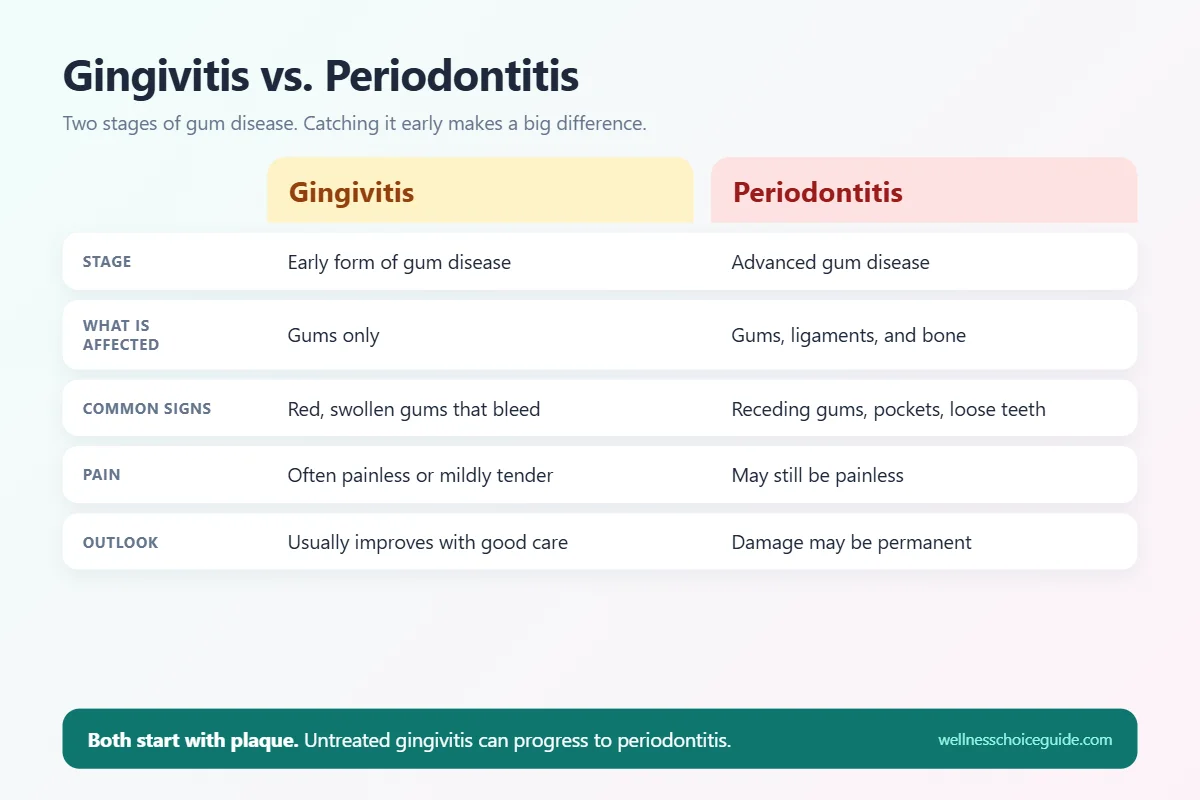
MedlinePlus describes gingivitis as an early form of periodontal disease. It is caused by the short-term effects of plaque deposits on the teeth, which irritate and inflame the gums. With gingivitis, the gums may look red and swollen and may bleed easily, but they are often painless or only mildly tender.
The encouraging news is that gingivitis usually responds well to treatment. MedlinePlus notes that bleeding and tenderness of the gums should lessen within 1 or 2 weeks after a professional cleaning and good oral care at home.
Periodontitis: The Advanced Stage
MedlinePlus explains that periodontitis is a chronic infection of the gums that may develop when gingivitis is not treated. It affects not only the gums but also the ligaments and bone that support the teeth. Over time, inflammation can cause gaps called pockets to form between the gums and teeth. These pockets collect more plaque and bacteria.
As the supporting tissues and bone break down, teeth can become loose and may eventually fall out. The NIDCR notes that in advanced gum disease, the bone supporting the teeth is destroyed, which may cause teeth to loosen and shift.
Signs of Gum Disease
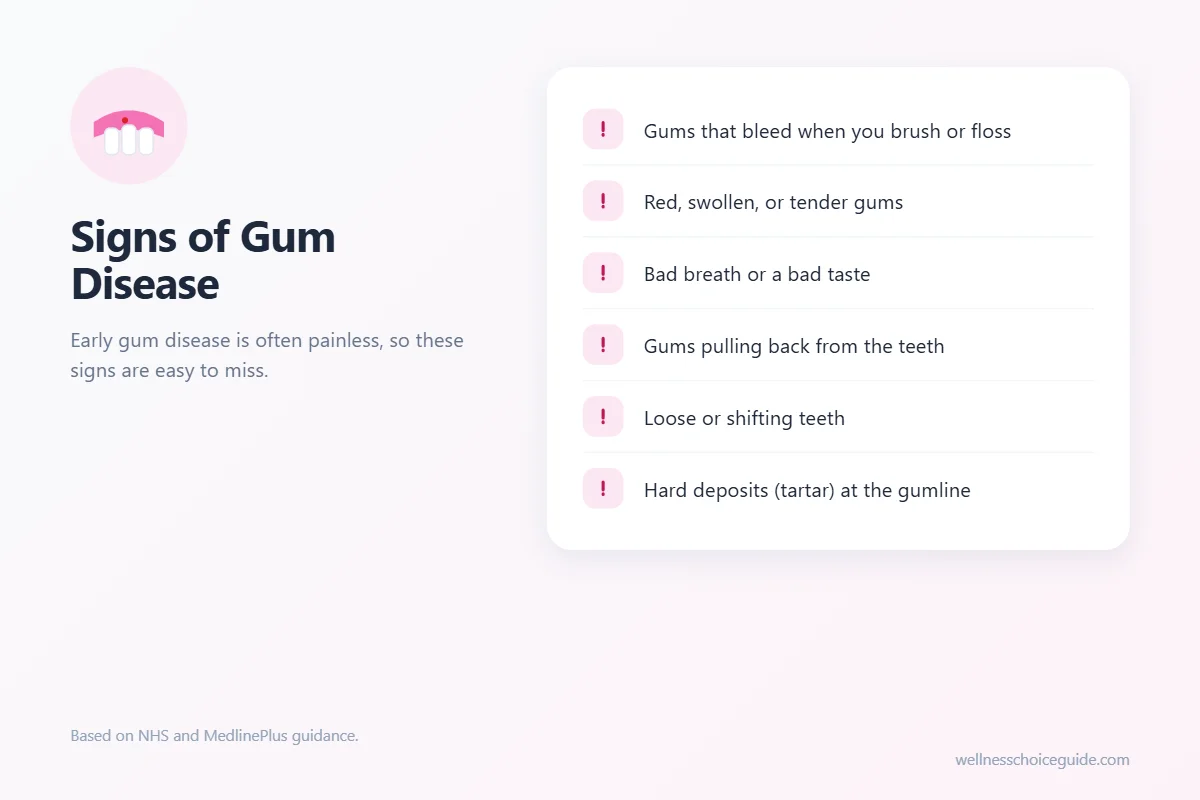
The NHS lists these common symptoms of gum disease:
- gums that bleed when you brush your teeth, floss, or eat hard foods such as apples;
- gums that are swollen, red, and sore.
The NHS adds that gum disease can lead to bad breath and a bad taste in the mouth, gums shrinking, teeth becoming loose or falling out, and a dental abscess. MedlinePlus also lists signs of periodontitis such as receding gums, gaps between the teeth and gums, shifting teeth, and hard deposits on the teeth.
Because early gum disease is often painless, regular dental check-ups are important even when your mouth feels fine. If bleeding is your main concern, our guide to bleeding gums covers common causes and everyday care, and our article on bad breath explains how gum health and breath are linked.
Who Is More at Risk?
The NIDCR explains that smoking or using tobacco is the most significant risk factor for gum disease. Other risk factors include older age, diabetes, and genetics. Stress, certain illnesses and the medicines used to treat them, and hormonal changes in girls and women are also associated with gum disease.
MedlinePlus also notes that gingivitis often develops during puberty or early adulthood because of hormonal changes.
What Happens at a Gum Check?
During a check-up, a dentist looks for signs of gum disease that you may not notice yourself. The NIDCR explains that the dentist may ask about your medical history, since conditions such as diabetes and habits such as tobacco use can contribute to gum disease.
The dentist may also use a tiny ruler called a probe to measure the spaces around your teeth, known as pockets. In a healthy mouth, these pockets are usually between 1 and 3 millimeters deep. Deeper pockets can be a sign of periodontal disease. An X-ray can show whether there has been any bone loss.
How Gum Disease Is Treated
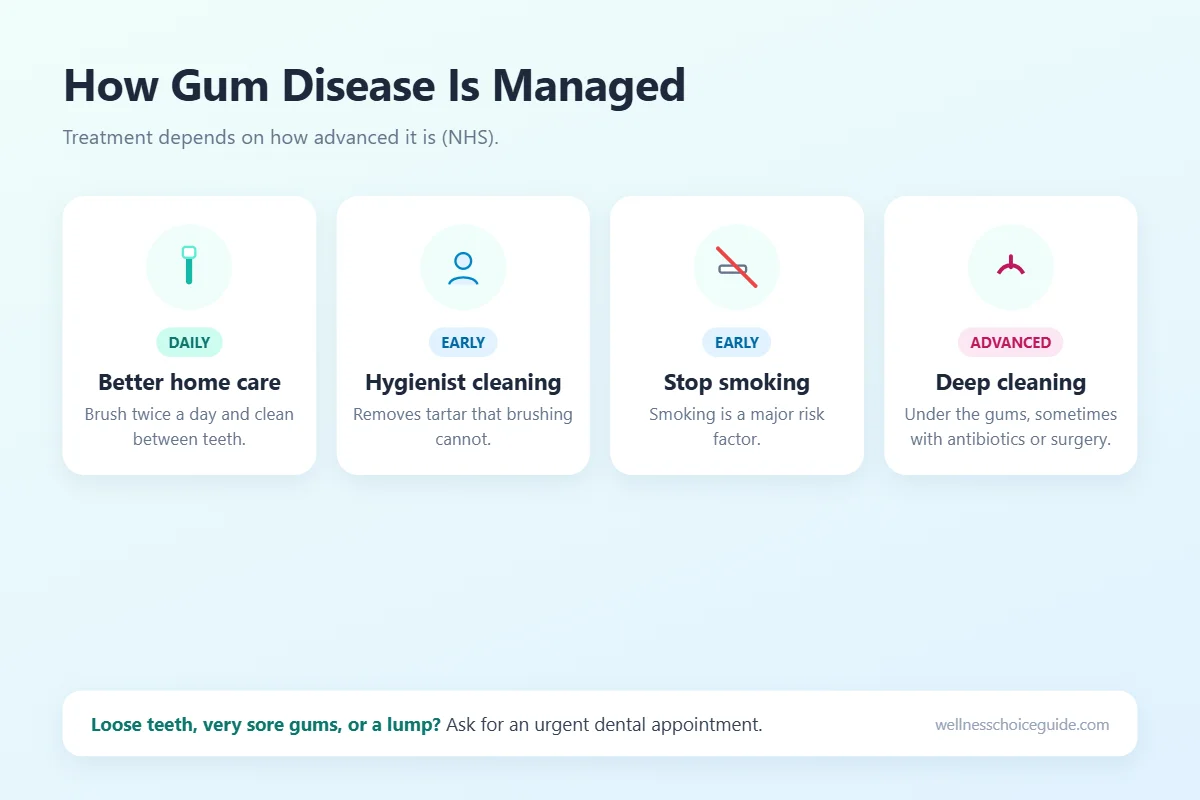
The NHS explains that treatment depends on how severe the gum disease is. Your dentist will check your teeth and gums and may refer you to a specialist.
In the early stages, your dentist will usually:
- give you advice on keeping your teeth clean, such as using interdental brushes;
- advise you to stop smoking, if you smoke;
- suggest a cleaning by a dental hygienist.
If gum disease is more serious, you may need:
- deep cleaning under the gums, sometimes called scaling and root planing;
- antibiotics;
- some teeth removed;
- gum surgery.
How to Help Prevent Gum Disease
Daily habits make the biggest difference. The NHS recommends:
- brushing your teeth with fluoride toothpaste at least twice a day, and spitting rather than rinsing afterward. See our guide on how to use fluoride toothpaste;
- cleaning between your teeth every day using floss or interdental brushes. A water flosser may suit some people;
- not smoking;
- having regular dental check-ups.
Brushing gently with a soft brush also helps. Our comparison of an electric vs. manual toothbrush covers technique, and our daily oral care routine guide brings these habits together.
When to See a Dentist
The NHS advises seeing a dentist if:
- your gums bleed when you brush your teeth or eat hard foods;
- your gums are painful and swollen;
- you have bad breath;
- your child has sore, bleeding gums.
Ask for an urgent dental appointment if you or your child has gum disease along with very sore and swollen gums, teeth becoming loose or falling out, ulcers or red patches in the mouth, or a lump in the mouth or on the lip.
Frequently Asked Questions
Can gingivitis be reversed?
Gingivitis usually improves with a professional cleaning and good oral care at home. MedlinePlus notes that bleeding and tenderness should lessen within 1 or 2 weeks. Ongoing daily care is needed to keep it from returning.
Can periodontitis be cured?
Periodontitis can be treated and managed, but some damage to bone and supporting tissues may be permanent. Early treatment and good daily care help prevent it from getting worse.
Is gum disease painful?
Often not, especially in the early stages. MedlinePlus notes that gums with gingivitis are usually painless or only mildly tender, which is why regular check-ups matter.
Does mouthwash cure gum disease?
Some antibacterial rinses may help as part of treatment, but mouthwash cannot remove tartar or replace brushing, cleaning between teeth, and professional care. See our guide to mouthwash types.
The Bottom Line
Gingivitis is the early, usually reversible stage of gum disease, while periodontitis is a more advanced infection that can damage the bone and tissues supporting your teeth. Both start with plaque.
Brushing twice a day with fluoride toothpaste, cleaning between your teeth daily, not smoking, and having regular dental check-ups are the best ways to keep your gums healthy. If your gums bleed, swell, or feel sore, see a dentist early.
Sources and Further Reading
- NHS: Gum disease
- National Institute of Dental and Craniofacial Research: Gum (Periodontal) Disease
- MedlinePlus Medical Encyclopedia: Gingivitis
- MedlinePlus Medical Encyclopedia: Periodontitis