
Fluoride toothpaste is probably the most important product in your bathroom cabinet, and also one of the easiest to use the wrong way. Using too little, rinsing it off straight away, or choosing a toothpaste without fluoride can all reduce how well it protects your teeth.
This guide explains how fluoride works, how much toothpaste to use for adults and children, how to read the fluoride level on the box, and the simple “spit, don’t rinse” habit that helps fluoride do its job.
This article is for general educational purposes and is not a substitute for professional advice. Please see our medical disclaimer.
How Fluoride Protects Your Teeth
Tooth decay starts when bacteria in plaque feed on sugars and release acids. Those acids attack tooth enamel, the hard outer layer of your teeth. Over time, repeated acid attacks can lead to cavities.
According to the American Dental Association’s MouthHealthy site, fluoride helps prevent tooth decay by making enamel stronger and more resistant to cavities, and it helps repair the damage these acids can cause. That is why fluoride is often called a natural cavity fighter, and why brushing with fluoride toothpaste is a cornerstone of everyday oral care.
If you want to understand how plaque builds up in the first place, see our guide to plaque vs. tartar.
How Much Toothpaste Should You Use?
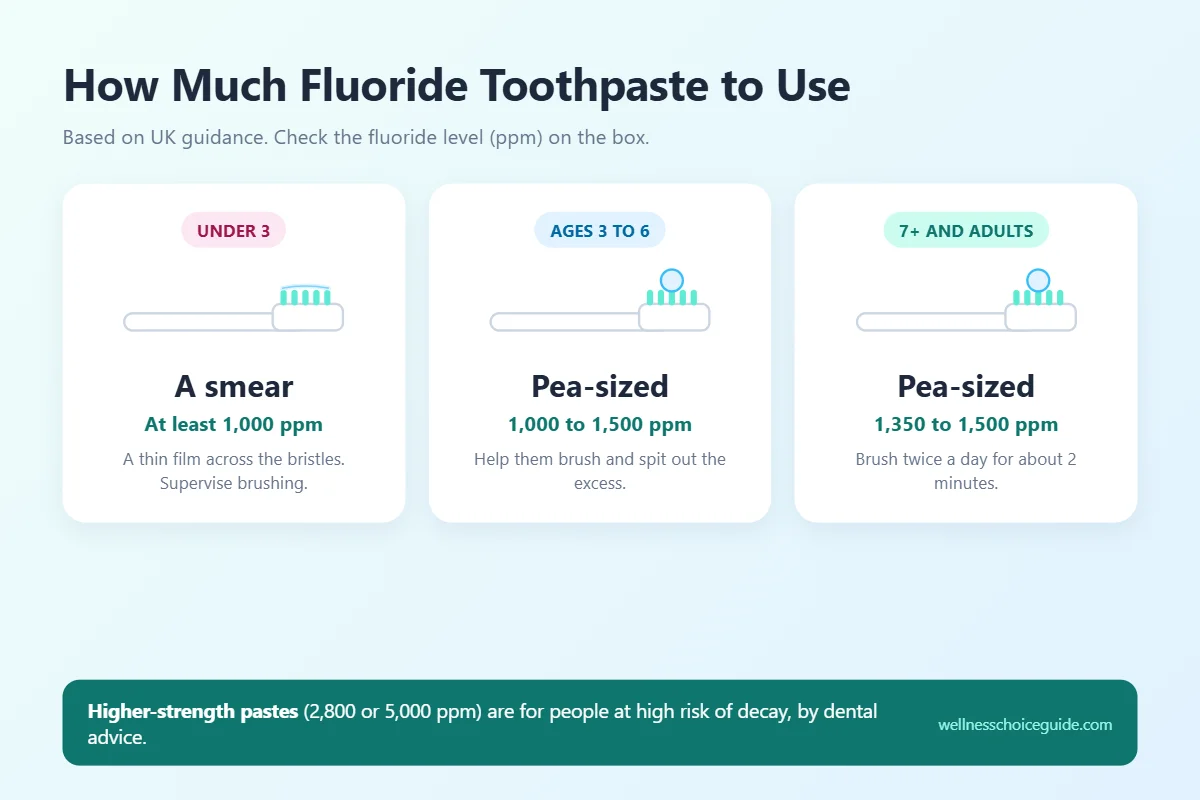
More toothpaste does not mean cleaner teeth. UK guidance from the NHS and the Oral Health Foundation recommends these amounts:
- Children under 3: a smear of toothpaste containing at least 1,000 ppm fluoride.
- Children aged 3 to 6: a pea-sized amount of toothpaste containing 1,000 to 1,500 ppm fluoride.
- Children aged 7 and older, and adults: a pea-sized amount of toothpaste containing 1,350 to 1,500 ppm fluoride.
“ppm” stands for parts per million and shows how much fluoride the toothpaste contains. You will usually find it in the small print on the tube or box. Recommendations can differ slightly between countries, so ask your dentist if you are unsure what suits your family.
Spit, Don’t Rinse
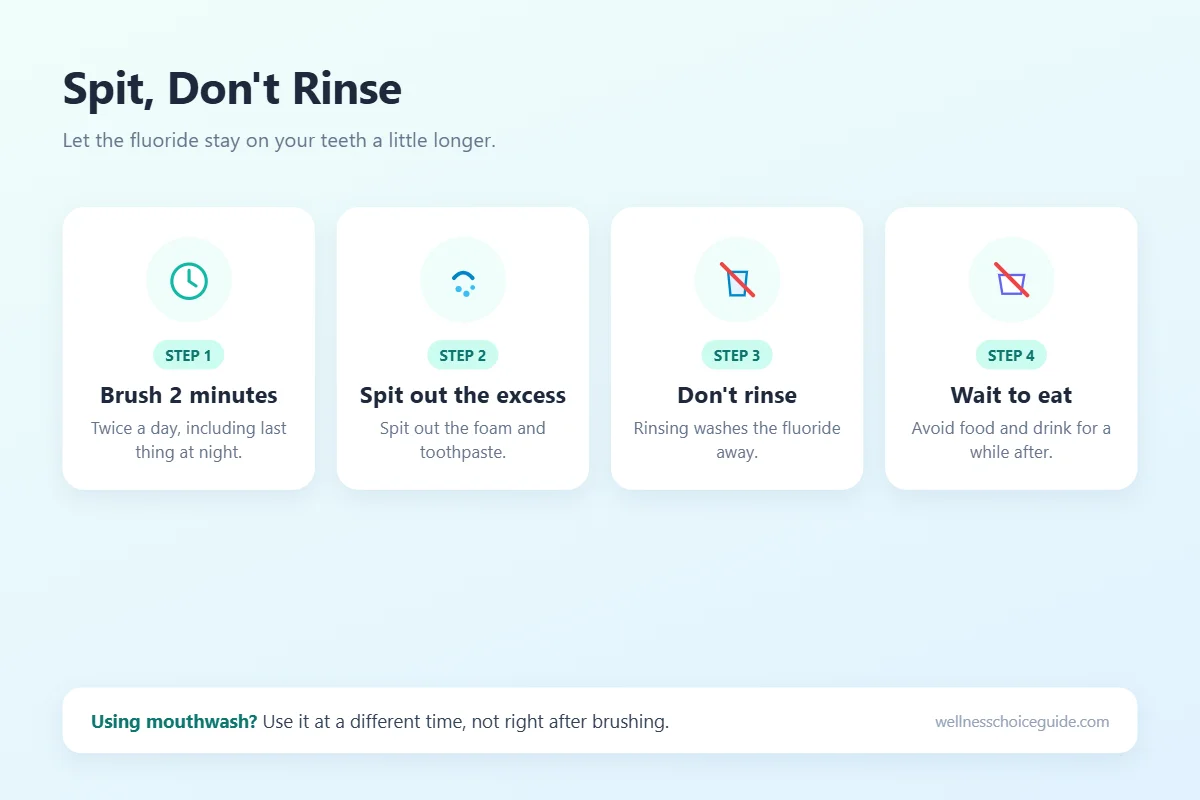
One of the most useful habits is also one of the simplest. After brushing, spit out the excess toothpaste but do not rinse your mouth with water. The NHS explains that if you rinse, the fluoride will not work as well, because rinsing washes away the concentrated fluoride left on your teeth.
A few related tips:
- Brush twice a day for about 2 minutes, including last thing at night.
- Spit out the foam and excess toothpaste when you finish.
- Skip the rinse so the fluoride stays in contact with your teeth longer.
- Use mouthwash at a different time, such as after lunch, rather than straight after brushing. Our guide on how to use mouthwash explains why.
It can take a few days to get used to not rinsing, but it is an easy change that helps you get more benefit from the toothpaste you already use.
Fluoride Toothpaste for Children
Fluoride is especially important while children’s teeth are developing. MouthHealthy notes that fluoride helps strengthen the enamel on baby teeth and helps rebuild damage caused by acid-producing bacteria as primary teeth come in.
At the same time, children should not swallow large amounts of toothpaste. The Oral Health Foundation explains that too much fluoride while teeth are forming can cause dental fluorosis, which usually shows up as faint white marks on the teeth. To reduce the risk:
- use only a smear or a pea-sized amount, depending on age;
- supervise young children while they brush;
- encourage children to spit out toothpaste rather than swallow it;
- keep toothpaste out of reach of young children.
Choosing a Toothpaste
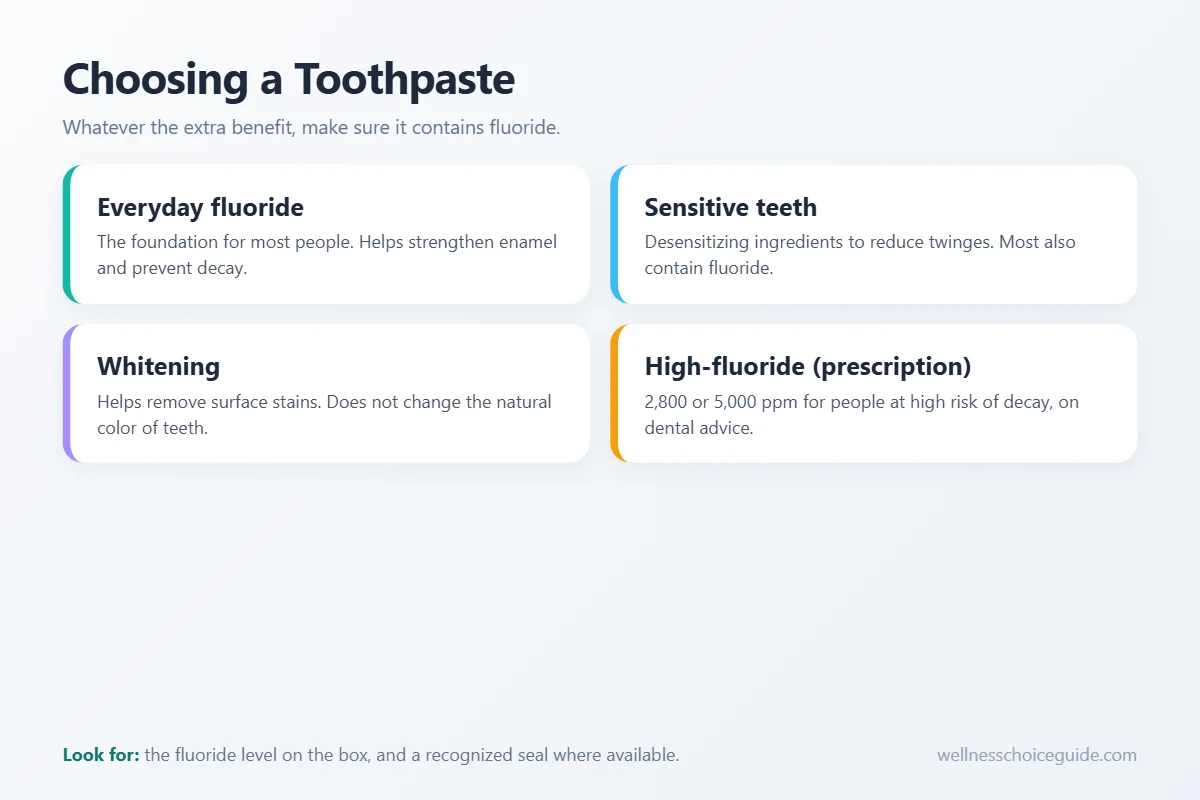
Toothpaste aisles are full of options, but the most important ingredient for most people is fluoride. MouthHealthy points out that not all toothpastes contain fluoride, so it is worth checking the label. Common types include:
Everyday Fluoride Toothpaste
A standard fluoride toothpaste is the foundation for most people. Look for the fluoride level on the box, and in the United States, MouthHealthy recommends looking for the ADA Seal.
Toothpaste for Sensitive Teeth
Desensitizing toothpastes contain compounds that help reduce tooth sensitivity, and most also contain fluoride. Our guide to tooth sensitivity causes and relief explains how they work.
Whitening Toothpaste
Whitening toothpastes contain polishing or chemical agents that help remove more surface stains than regular toothpaste. They do not change the natural color of your teeth.
High-Fluoride Toothpaste
For people at higher risk of tooth decay, a dentist may recommend a higher-strength fluoride toothpaste. The Oral Health Foundation notes that 2,800 ppm toothpaste may be used from age 10 for people with frequent decay, and 5,000 ppm toothpaste from age 16 for people at very high risk. These are usually available on dental advice or prescription.
Fluoride Is One Part of a Healthy Routine
Fluoride toothpaste works best alongside other everyday habits:
- brushing gently with a soft-bristled brush. Our guide comparing an electric vs. manual toothbrush covers technique;
- cleaning between your teeth once a day, with floss, interdental brushes, or a water flosser;
- limiting how often you have sugary foods and drinks;
- visiting your dentist regularly.
For a simple way to put these together, see our daily oral care routine guide.
Common Fluoride Toothpaste Mistakes
Even people who brush faithfully twice a day can miss out on some of fluoride’s benefits. Watch out for these common mistakes:
- Rinsing straight after brushing, which washes away the fluoride left on your teeth.
- Using a toothpaste without fluoride without realizing it. Check the ingredients and the ppm level.
- Using too much toothpaste for children, which increases the amount they may swallow.
- Skipping the bedtime brush. Brushing last thing at night is one of the two most important times to brush.
- Brushing too hard. More pressure does not mean more protection and can irritate your gums.
Frequently Asked Questions
How much fluoride toothpaste should adults use?
A pea-sized amount of toothpaste containing 1,350 to 1,500 ppm fluoride, twice a day, is recommended for adults in UK guidance.
Should I rinse after brushing my teeth?
It is better not to. Spit out the excess toothpaste but avoid rinsing with water, so the fluoride stays on your teeth and keeps working.
Is fluoride toothpaste safe?
Fluoride toothpaste used as directed is widely recommended by dental organizations. The main concern is children swallowing too much while their teeth are forming, which is why the right amount and supervision matter.
Is fluoride-free toothpaste a good option?
Fluoride-free toothpaste can help clean your teeth, but it does not provide fluoride’s protection against decay. If you are considering one, talk with your dentist about your cavity risk first.
Do oral probiotics replace fluoride toothpaste?
No. Oral probiotics are not a substitute for brushing with fluoride toothpaste, which remains the foundation of cavity prevention.
The Bottom Line
Fluoride toothpaste helps strengthen enamel and protect against tooth decay. Use the right amount for your age, check the fluoride level on the box, brush twice a day for about two minutes, and spit rather than rinse afterward.
If you get cavities often or are unsure which toothpaste is right for you or your children, your dentist can recommend a product and fluoride level that fits your needs.
Sources and Further Reading
- NHS: Taking care of children’s teeth
- Oral Health Foundation: Fluoride
- American Dental Association, MouthHealthy: Fluoride
- American Dental Association, MouthHealthy: Toothpaste